
Verticillium Wilt
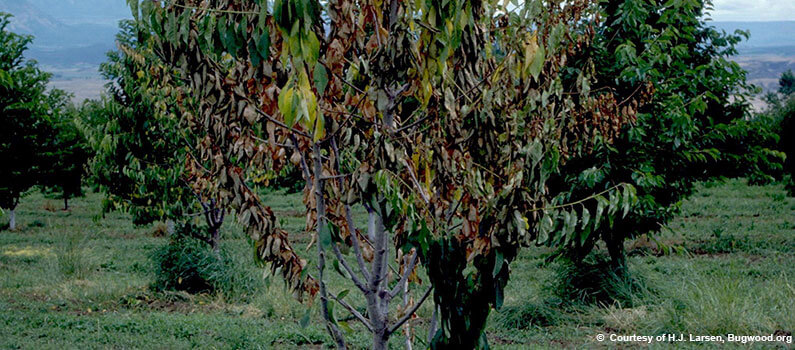
A soil-borne disease, verticillium causes wilting, decline, and failure of many species of landscape plants. Irrigation and pruning aid in recovery of affected plants. The site must be replanted with a resistant variety if plantings are replaced.
Scab
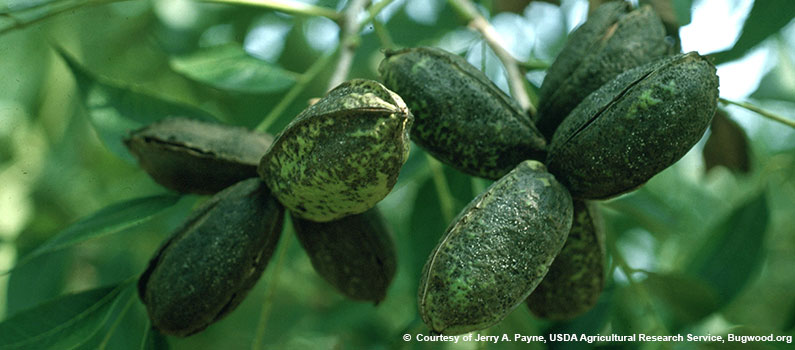
Scab is a foliage disease that produces raised, dark lesions on leaves, and premature defoliation of apples and crabapples. Applying fungicide treatments in spring, removing fallen leaves, and planting resistant varieties are the key considerations in controlling this disease.
Powdery Mildew
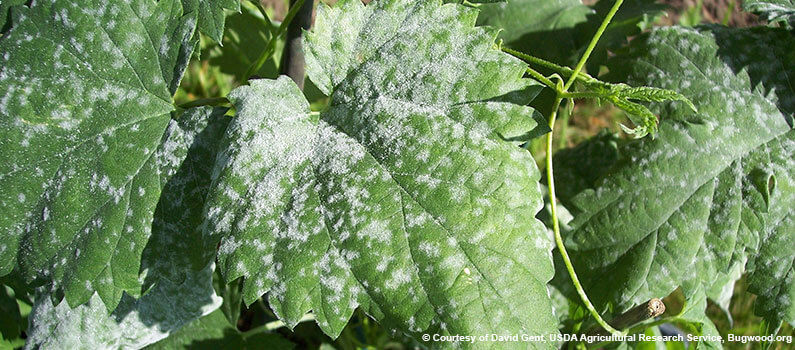
Powdery Mildew is a foliage disease which usually begins to appear in summer, when the weather turns warm and humid. Dogwood, lilac, rose, and crape myrtle are among the species that are most susceptible to mildew. Thinning dense plants and using preventative fungicide treatments help suppress this disease.
Phytophthora Root Rot
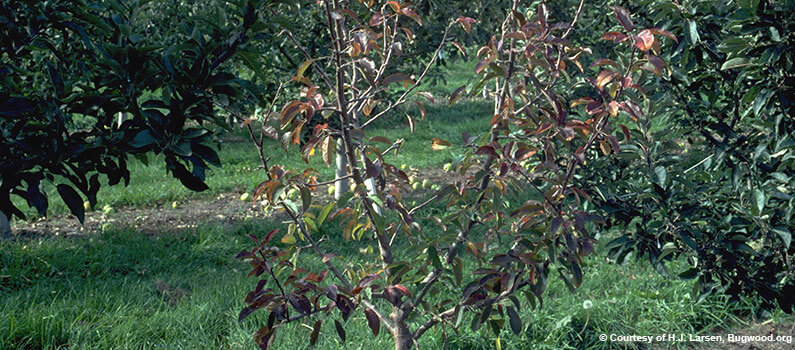
This fungus disease causes root rot and stem cankers on many landscape trees and shrubs. Phytophthora is most prevalent in clay soils that are poorly drained, and on sites receiving excessive irrigation. Fungicide treatments are available to suppress this disease. Judicious irrigation and careful selection of plant species for sites prone to root rot are […]
Needlecast
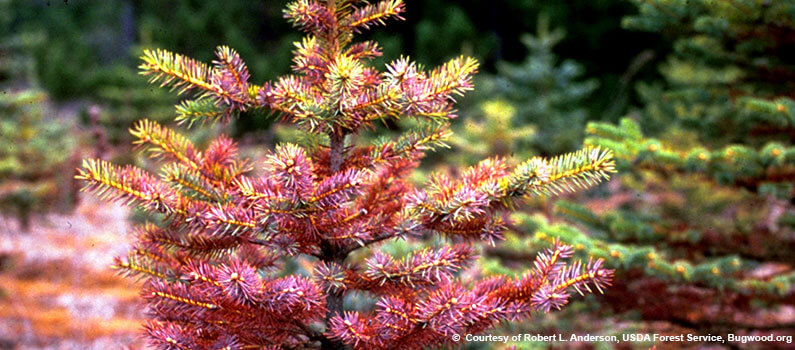
Needlecast is a fungus disease which causes premature defoliation of spruce, Douglas fir, and pine. Chronic infections will devitalize trees, causing branch dieback, especially on the lower portions of the tree. Although treatments are available to suppress this disease, planting conifers in full sun with adequate spacing to allow development is the key to prevention.
Iron Chlorosis
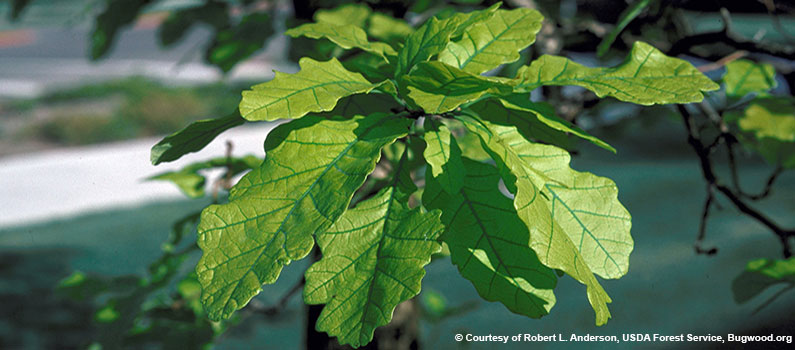
In eastern Nebraska, it is common to see slow-growing pin oak or silver maple trees with yellow leaves and possibly some branch die back. Many trees, shrubs, and other ornamental plantings in Nebraska suffer from this disease, called iron chlorosis. It is caused by poorly drained or compacted soils, or by soils with a high […]
Fireblight
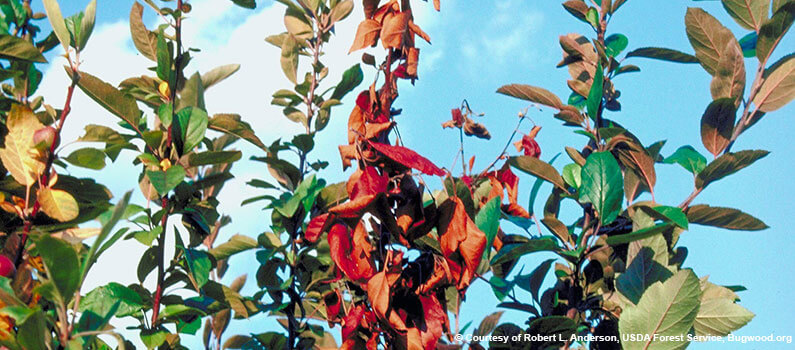
A bacterial disease, Fireblight causes shoot blight and stem cankers on certain plants in the rose family. Pear, apple, and crabapple trees are also affected. Highly susceptible species can be severely disfigured and even killed by this disease. In addition to preventive treatment to manage fireblight, many highly resistant apple, crabapple, and pear varieties are […]
Dutch Elm Disease
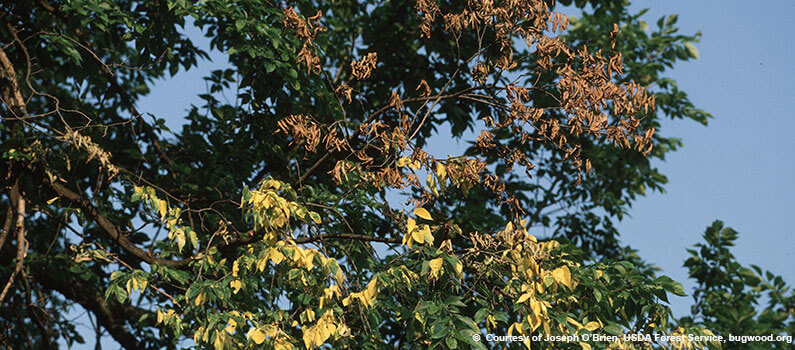
This fungus disease affects the vascular system of the elm, causing a rapid wilting and failure to all American and European species of elm. Millions of elms throughout North America and Europe have died due to this disease. Today, many new treatments are available to combat DED. Treatments include a new biological control agent. Hybrid […]
Drought (Moisture Stress)
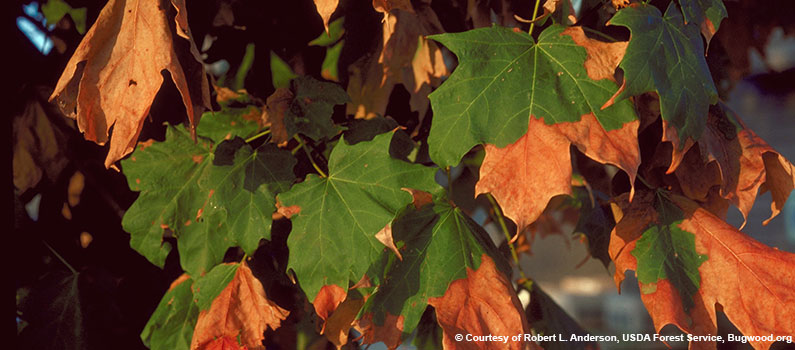
This is a non-infectious disease which accounts for most plant losses. Moisture stress is a particular concern for shallow-rooted plants such as dogwood or azalea. Recent transplants should be monitored, and judicious use of irrigation and proper mulching are critical for sensitive plants.
Dothistroma Needle Blight
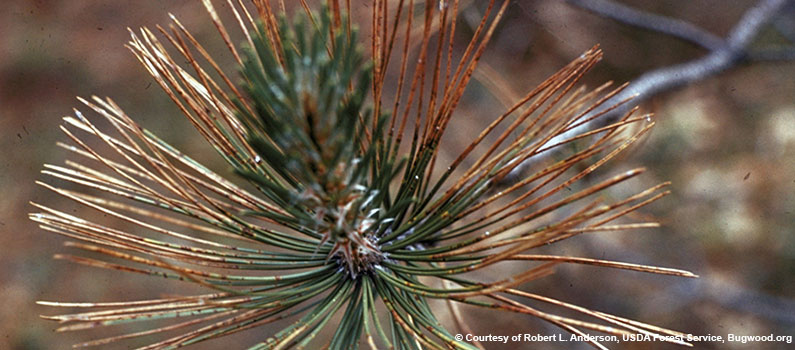
Dothistroma Needle Blight is one of the most common fungal diseases of pines in Nebraska. This disease is responsible for much of the premature needle drop that occurs in windbreaks and ornamental pine plantings. Twenty pine species are affected by this disease. It is found most commonly in the central and eastern United States and […]