Walk the tree: an arborist names what comes out, what stays and what it costs.
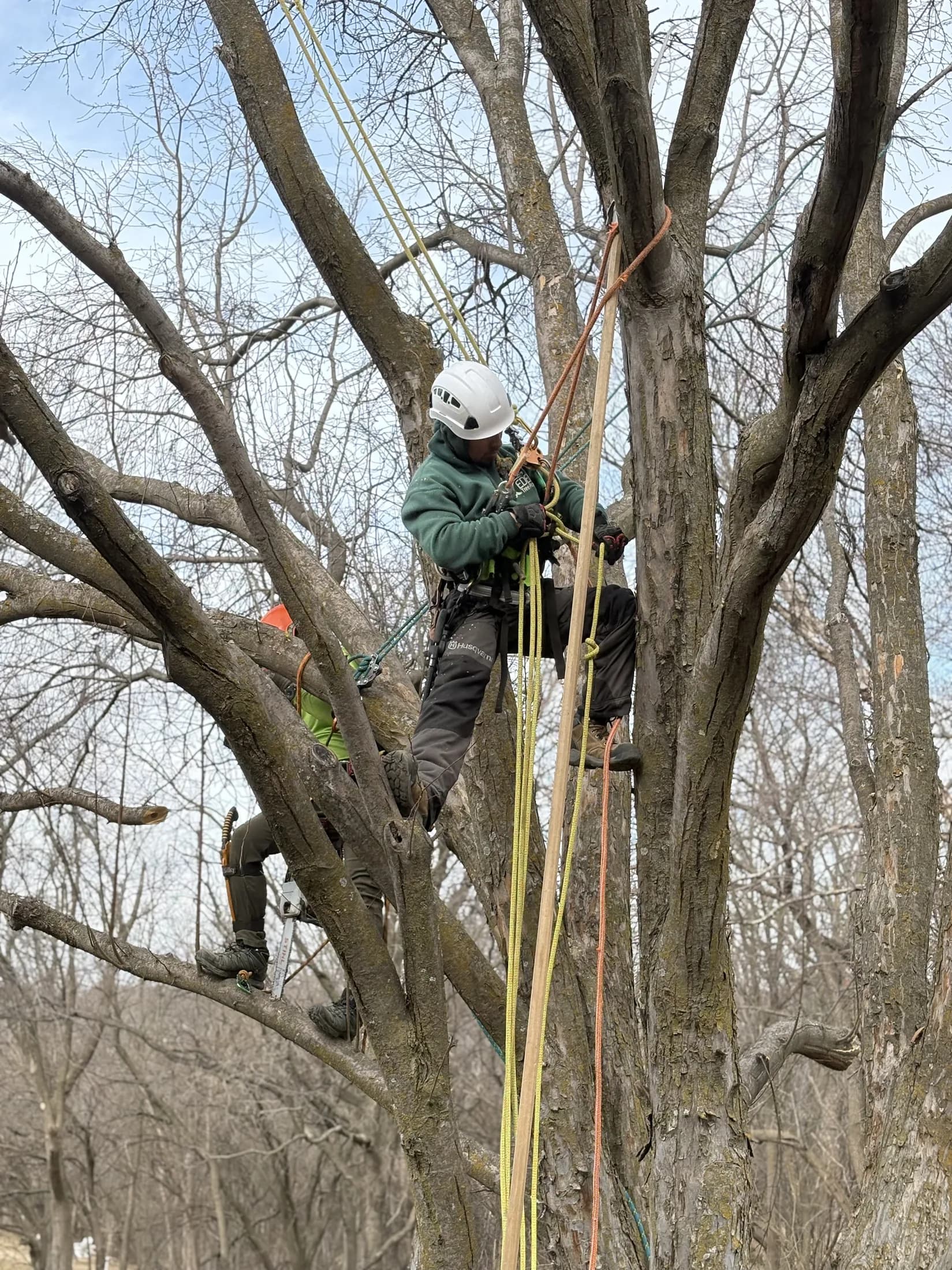
Pruning by experienced arborists, with the price in writing before anyone climbs. We will not top a tree.
Walk the tree: an arborist names what comes out, what stays and what it costs.
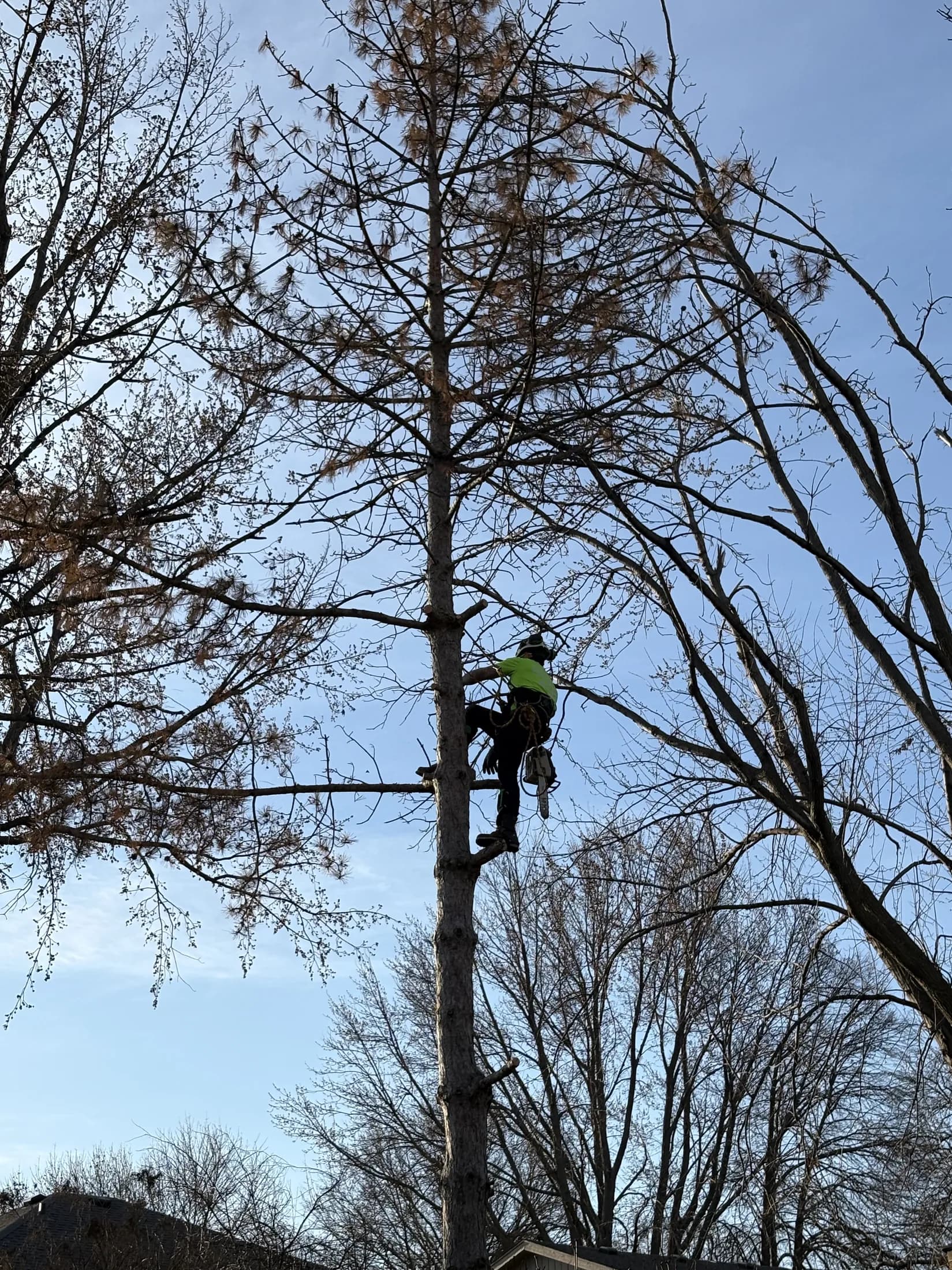
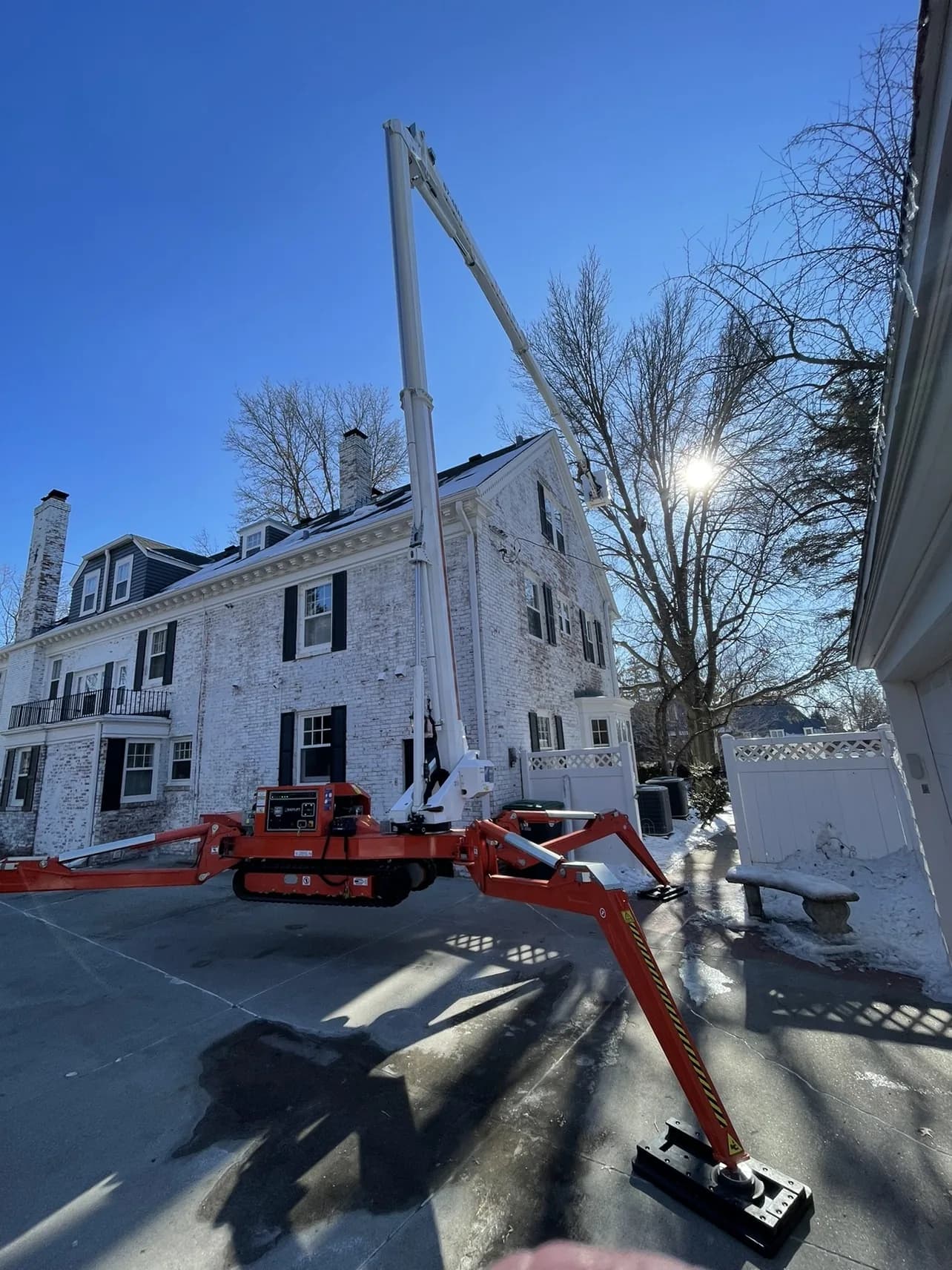
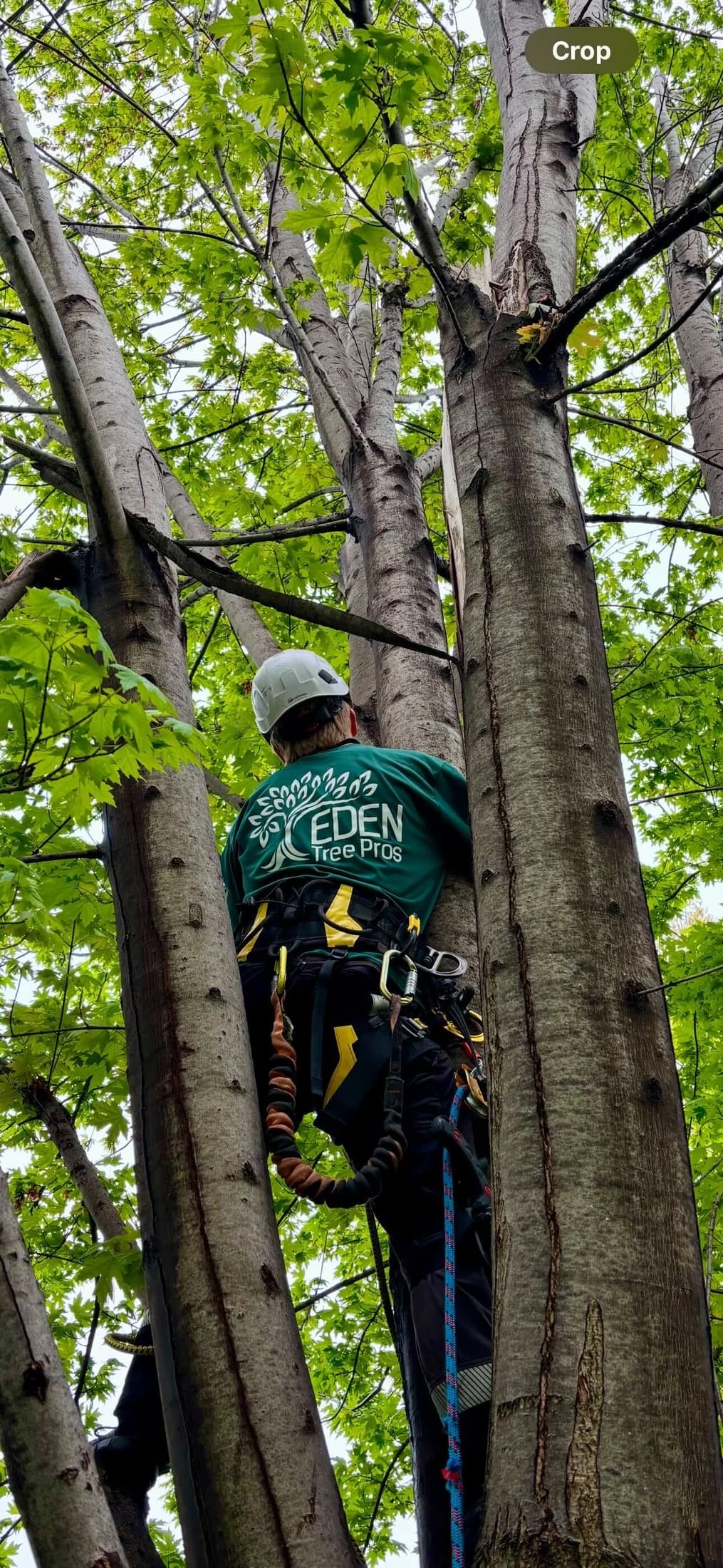
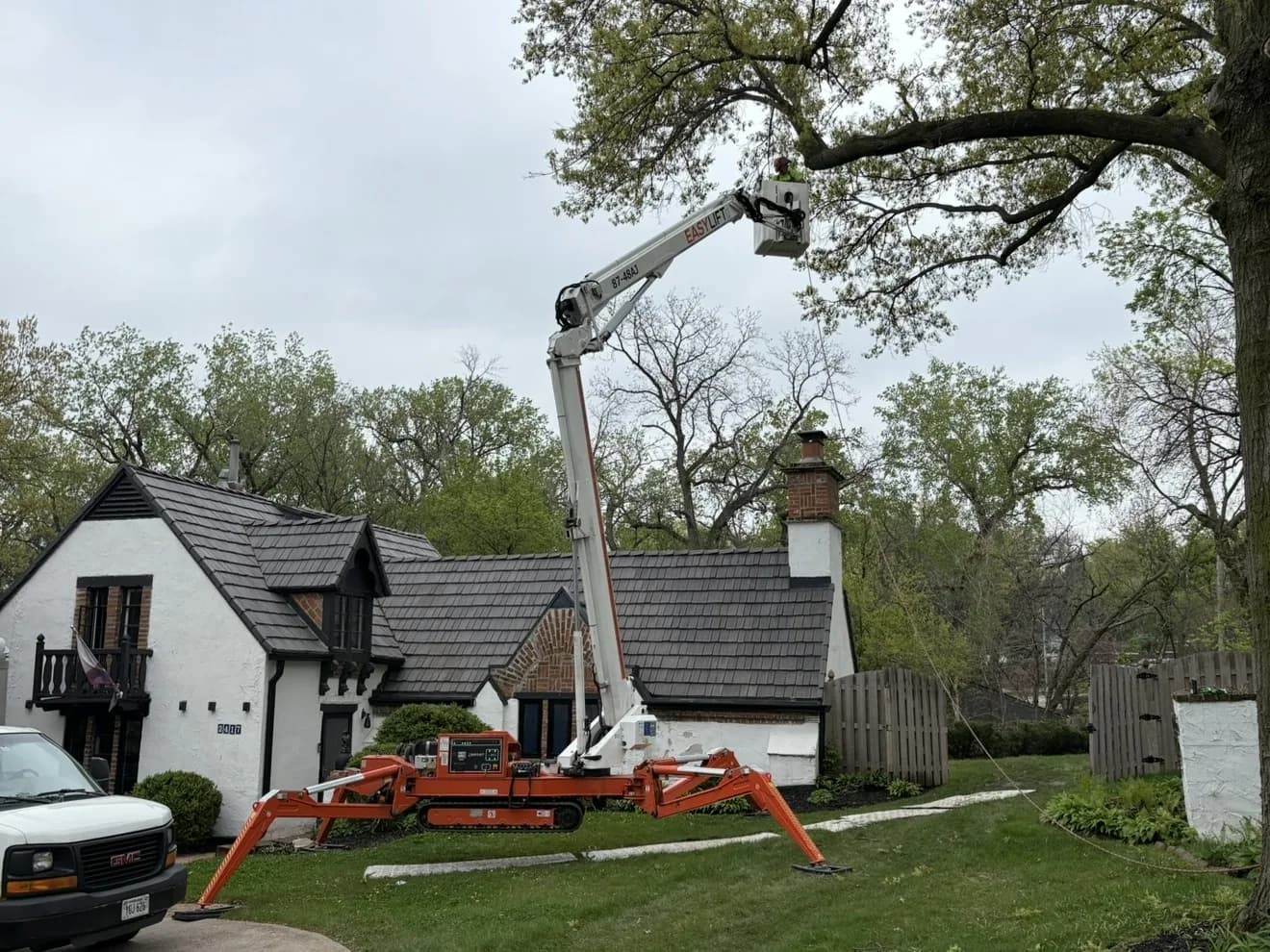
Prune on rope and saddle, with every cut made at the branch collar.
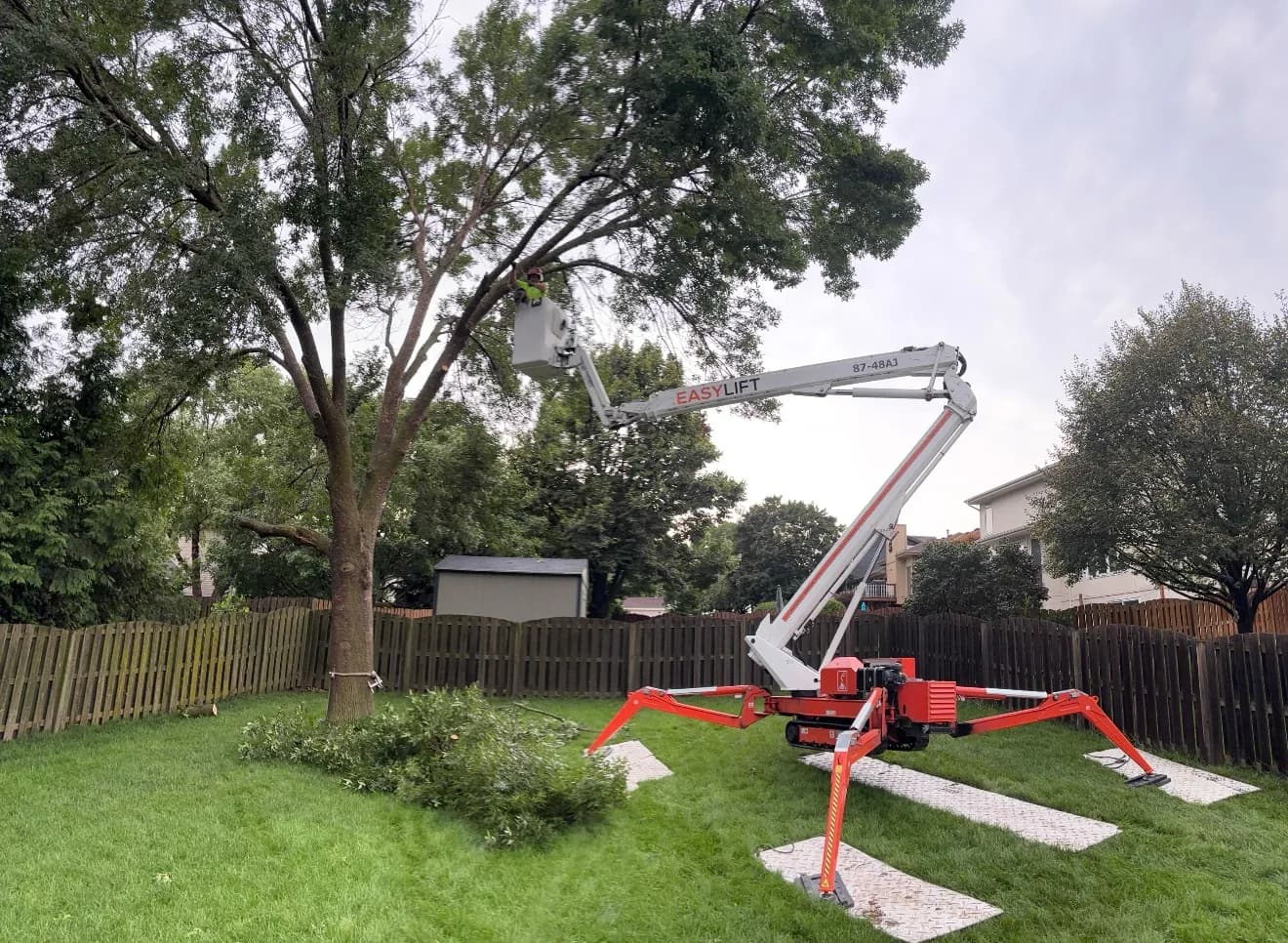
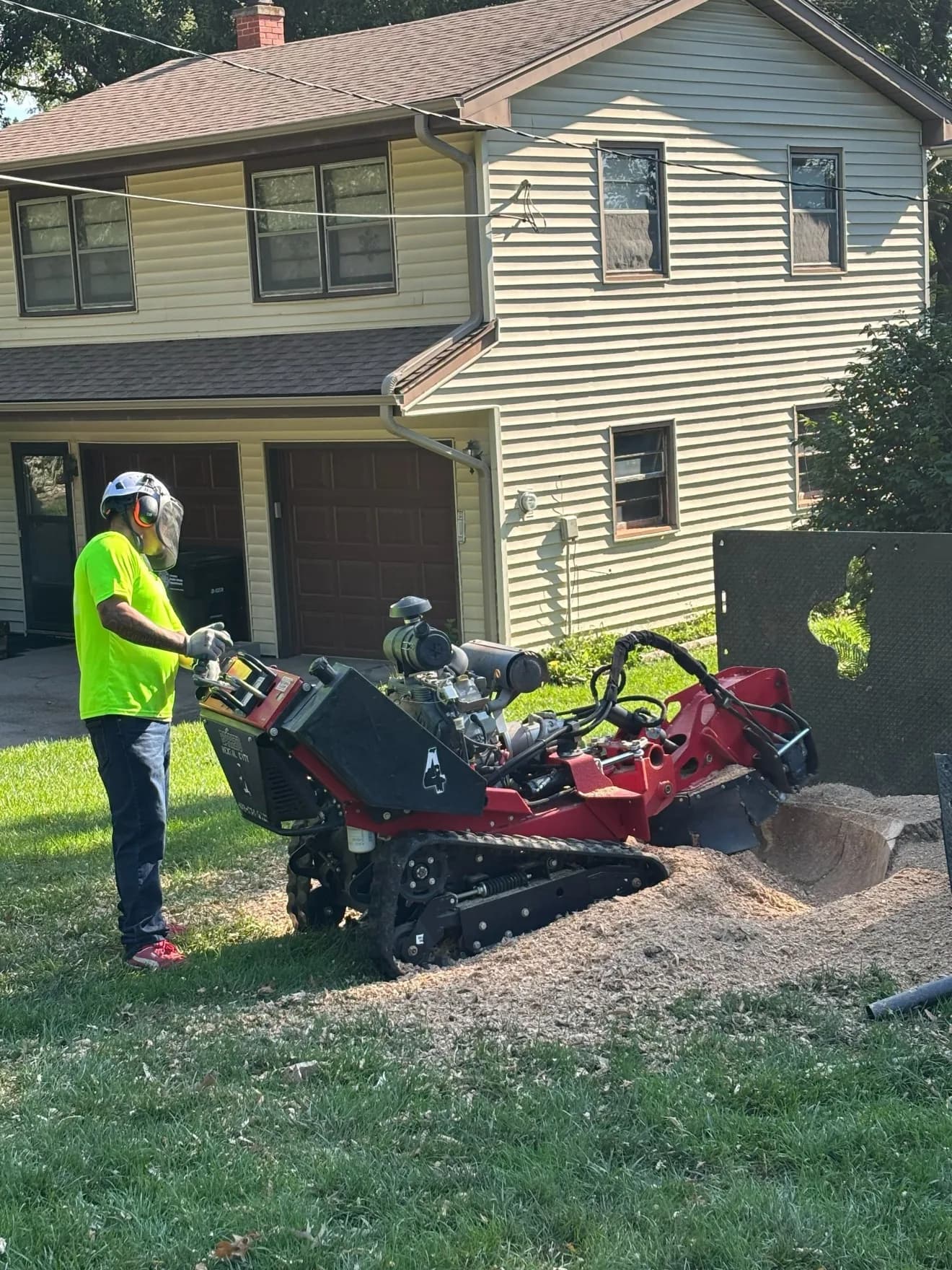
The yard is raked and blown clean before the crew leaves.
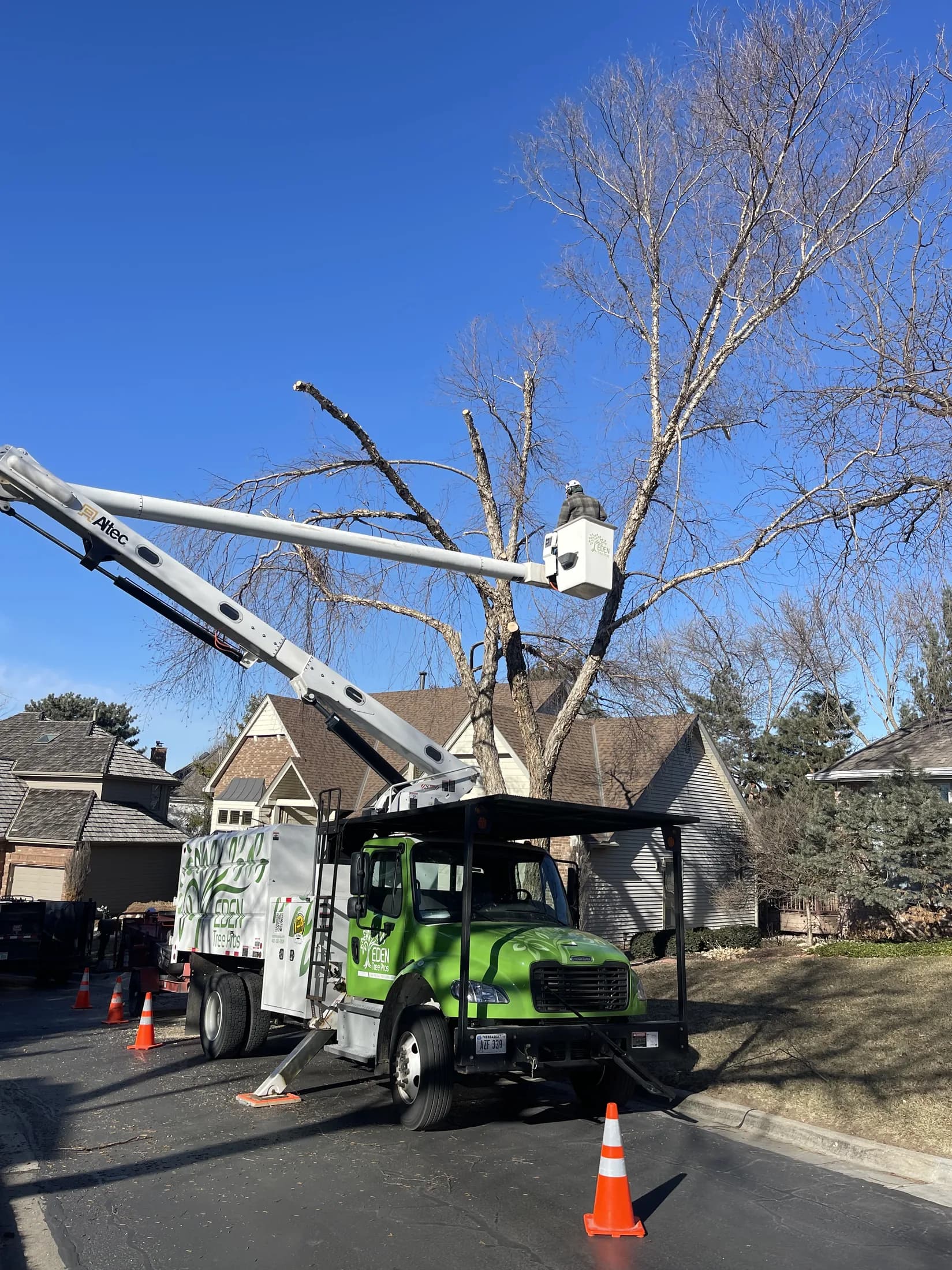
We will not top a tree. Cuts go at the branch collar, never with spikes on a live tree, and never more than a quarter of the canopy. Every estimate names the objective before anyone climbs.
Get a QuoteBare limbs in July
No leaves in midsummer means the wood is dead.
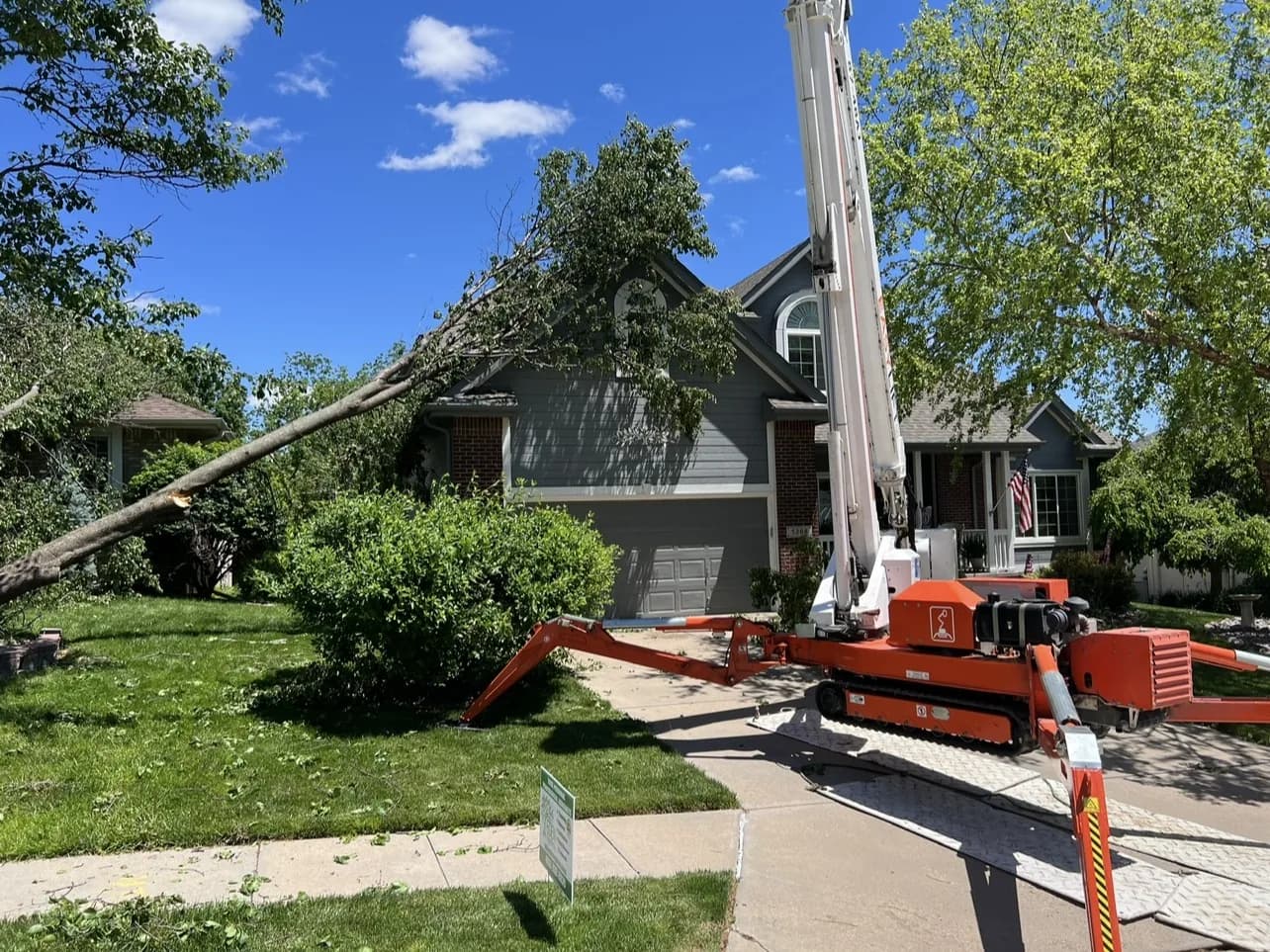
A limb over the roof
Target matters more than size.
Two trunks in a tight V
That is how mature trees split in a storm.
A canopy you cannot see through
Thinning lowers the sail before storm season.
Oak and elm
November to March. Never April to July.
Maple, birch, walnut
Late spring or summer, after the sap slows.
Crabapple, magnolia, lilac
Just after they flower.
Spruce, fir and pine
Late winter, or spring at the candle for pine.
Cleaning
Dead, broken and crossing wood comes out.
Thinning
Wind and light through the canopy, without stripping the interior.
Raising and reducing
Clearance off the house and the service line, cut back to lateral branches.
Structural pruning
Young-tree training: the cheapest, highest-return work we sell.
“Tyler was our crew foreman for a big tree removal project. He and his men did a wonderful job. They were courteous, on time, thorough, and did a good job cleaning up after themselves.”
“In the aftermath of the March 2025 windstorm, I had two large, damaged pine trees that posed a potential hazard to my home and surrounding property.”
“We have always used Eden Tree Pros for all of our tree trimming needs, and for iron treatments for our birch tree. We won't use anyone else. They have earned our trust.”
Most mature shade trees want attention every three to five years. Young trees do better on a light structural prune every two to three years, which is cheap now and saves a removal later. If a tree has never been pruned, the first visit is the big one and everything after it is maintenance.
The dormant season, November through March, for most species: the structure is visible, disease pressure is low and frozen ground protects the lawn. The exceptions matter: oaks and elms should not be cut April through July, and spring-flowering trees are pruned right after they bloom.
No. Topping cuts a canopy back to stubs with no regard for the branch structure, and it is condemned across the industry: decay at every cut, and a flush of weakly attached sprouts more likely to fail than the limbs removed. Too big for the spot means a proper reduction back to lateral branches, or an honest word that it is the wrong tree for that location.
Height, access, how much wood comes out and what sits underneath the tree. A small ornamental and a mature oak over a house are not the same job, and no honest phone number covers both. That is why the estimate is free and arrives in writing before anyone starts.
Correct pruning does not. Every cut is still a wound, so the goal is the fewest cuts that meet the objective, made at the branch collar so the tree can seal them. Past about a quarter of a live canopy in one season, pruning starts working against the tree. We hold that line even when asked to take more.