%20(1).JPEG&w=3840&q=75)
Annual / Grassy
Prevented, never chased
Crabgrass, foxtail, goosegrass
Pre-emergent before soil holds in the low fifties. Once it is up and visible, you are into expensive spot work and a wait until next March.

Crabgrass is decided in March and dandelions are decided in October. Which weed you have changes the whole answer, so we identify before we treat.

What actually crowds weeds out
Mow at three inches or higher
Taller grass shades the soil surface, and most weed seed needs light to germinate.
Water deep, not often
Shallow daily watering suits crabgrass and shallow-rooted weeds better than it suits your lawn.
Feed properly in the fall
The September feeding thickens the stand going into next spring, which is when weeds try their luck.
Overseed the thin areas
Bare ground is where every weed in this metro starts. Seed is cheaper than herbicide.
If a lawn is producing weeds despite treatment, it is usually too thin rather than under-sprayed.
Grassy
Broadleaf
Annual
Annual / Grassy
Crabgrass, foxtail, goosegrass
Pre-emergent before soil holds in the low fifties. Once it is up and visible, you are into expensive spot work and a wait until next March.
Annual / Broadleaf
Spurge, purslane, knotweed
Pre-emergent catches most of it. Where these take hold in quantity, the real problem is bare or compacted ground rather than the weed.
Perennial
Perennial / Grassy
Nutsedge, quackgrass, tall fescue clumps
Selective products exist for some and not for others, and pre-emergent does nothing to an established plant. Several of these are identified, then managed rather than eliminated.
Perennial / Broadleaf
Dandelion, clover, creeping charlie, violet
In fall these move sugars down into the roots and carry the product with them. The same spray in May kills the top and leaves the root to come back.
The two highlighted boxes carry most of the weed pressure in this metro, and they are treated six months apart.
Send a photo of the weed and a wider shot of the lawn. That is usually enough to place it.
Most common, and what each one means
Crabgrass
Annual grass, germinates in spring, obvious in July. Entirely a pre-emergent timing question.
Dandelion
Perennial. Spring treatment looks impressive and fall treatment actually finishes it.
Creeping charlie
The hardest common weed here. Spreads by runners, needs fall timing and usually more than one season.
White clover
Often a sign of low nitrogen. Feeding the lawn properly does half the work.
Nutsedge
Lighter green, grows faster than the turf, loves wet ground. Needs its own product and a drainage conversation.
Spurge and knotweed
Along drives and paths where soil is compacted and hot. Usually a surface problem rather than a lawn problem.
Identification happens on the visit. Several of these look alike from a doorway and are treated completely differently.
Pre-emergent timed off soil temperature rather than a date
Broadleaf treatment scheduled for fall, where fall is the right window
Spot treatment through the season on what comes through
Weed identification before anything is applied
Turf areas across the property, including the strip by the street
Landscape beds, mulch and rock, which are quoted separately
Poison ivy, brush and volunteer trees along a fence line
Gravel drives, cracks in concrete and bare-ground clearance
Vegetable gardens and anything you intend to eat from
Total kill and re-sod, which is a landscaping job rather than a program
Want the beds and the drive done as well? Ask and both go on the same estimate.
“Nobody had told us that dandelions should be hit in October. One fall treatment did more than three springs of the last company.”
Weed seed is in the soil, in the wind and in every neighboring yard, and it germinates wherever it finds bare ground and light. That means the durable answer to weeds is a stand of grass thick enough that neither is available. Mowing height, watering depth, fall feeding and overseeding do more over three years than any spray program does, and they are the parts most often skipped.
What treatment adds is speed and reach. Pre-emergent stops an annual germinating at all, which is something cultural practice cannot do on its own. Systemic broadleaf herbicide applied in fall reaches the roots of perennials that would otherwise regrow indefinitely. Both are worth having, and both work far better on a lawn that is already dense.
The pattern worth watching for is a lawn that needs more herbicide every year. That is not a weed problem getting worse; it is turf getting thinner, and the answer is a core aeration and seed in September rather than a fourth application in June.
Before it germinates, which means a pre-emergent going down as soil temperature approaches the low fifties, generally mid to late March here. The product forms a barrier in the top layer of soil that stops seedlings as they emerge. Once crabgrass is visible in July, that barrier is irrelevant and you are into repeated spot treatment on a plant that will set seed anyway.
Because of what the plant is doing. Perennial broadleaf weeds spend fall moving sugars from their leaves down into the roots for winter, and a systemic herbicide applied then travels with them and reaches the whole plant. The same product in May mostly kills the top growth, the root survives, and it comes back. Fall treatment is the single biggest improvement most Omaha lawns could make to their weed program.
Because weed seed blows in, and no pre-emergent is a hundred percent. A good program massively reduces pressure rather than sterilizing a lawn, and the residual weeds get spot treated on the following visits. If a lawn is producing a lot of weeds despite treatment, the honest answer is usually that the turf is too thin, and the fix is aeration and seed rather than more herbicide.
Yes, and it takes patience. It spreads by runners that root at every node, so a single treatment kills what it touches and leaves the rest. Fall timing works best, it usually takes more than one season, and it comes back from any untreated ground next door. We will tell you that up front rather than after the first application.
Applications are made at labeled rates, and the lawn is safe to use again once it has dried, which is generally a couple of hours. If you would rather we skip an area, work around a party, or leave a vegetable bed alone entirely, say so when you book and it goes on the work order.
Beds and hard surfaces can be quoted, and they are separate work with different products, because a selective turf herbicide is designed to leave grass alive and that is exactly wrong in a gravel drive. Ask for it on the estimate and it gets priced alongside the lawn.
If the lawn is too thin to hold weeds out, we will say so rather than sell another application.
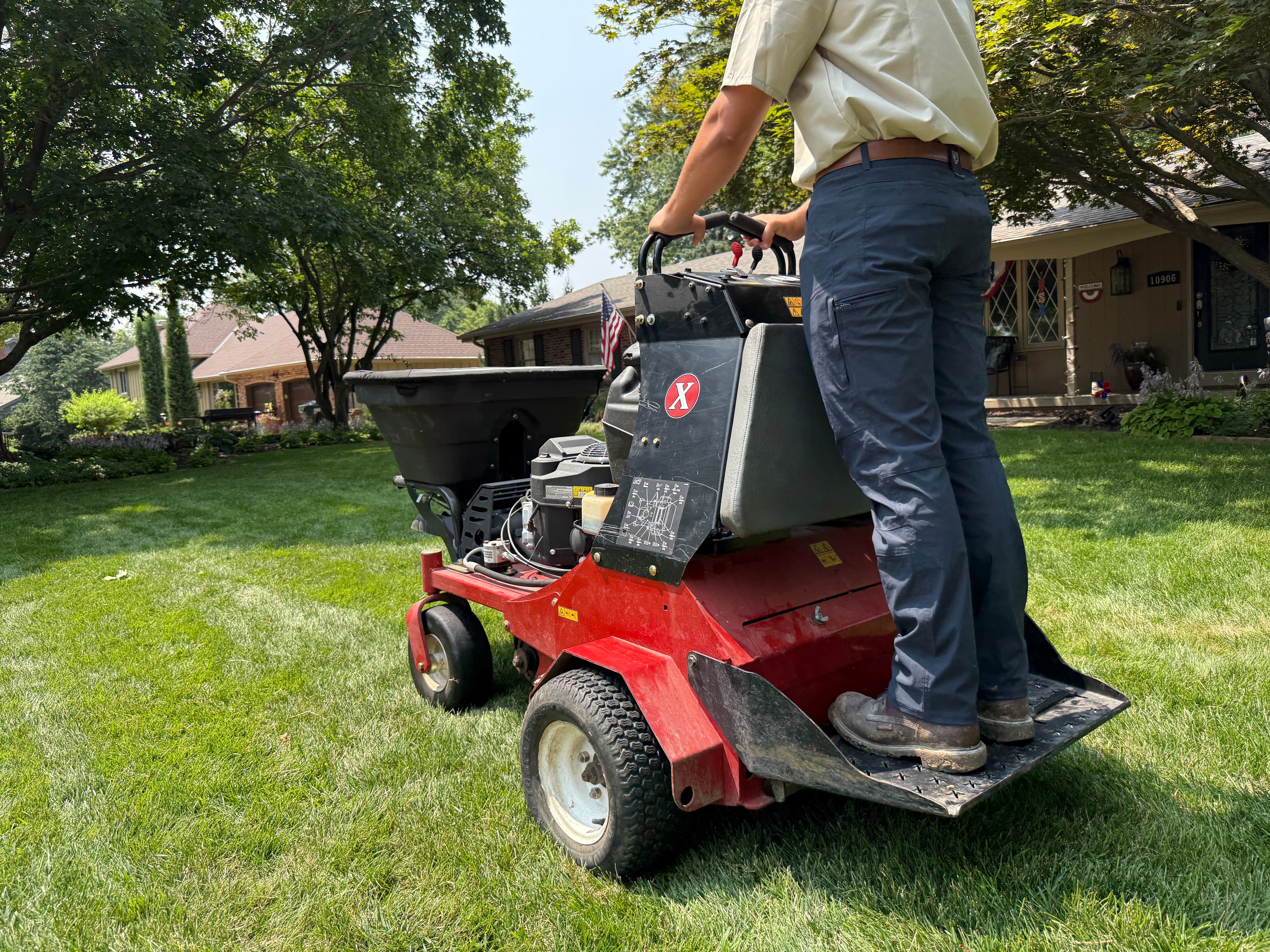
Thin turf is why weeds get in. Seed does more than herbicide over a few seasons.

Feeding and weed control run on the same visits and the same calendar.

Weeds fill in fast wherever grubs have opened up the turf.