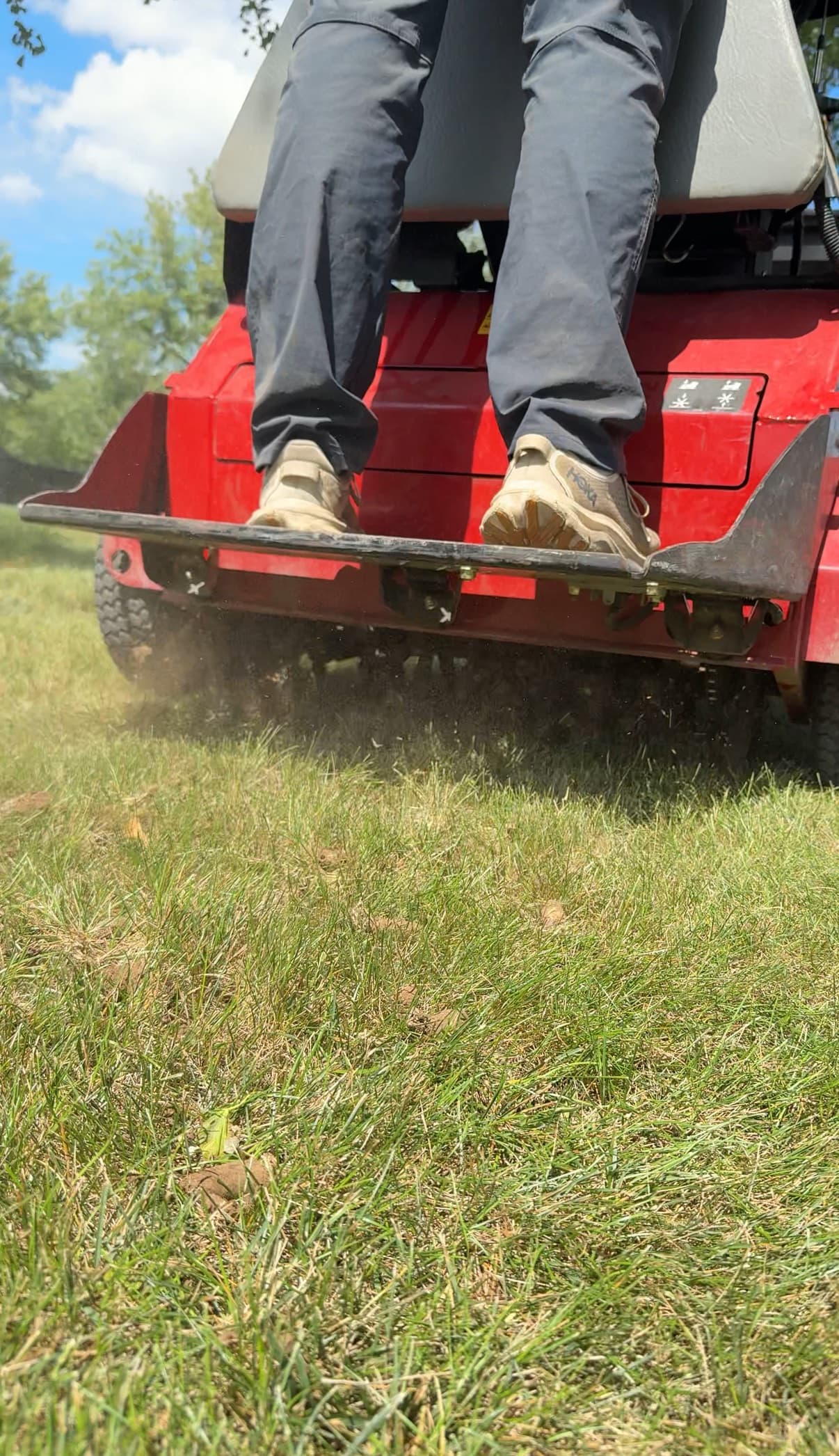
What does core aeration actually do?
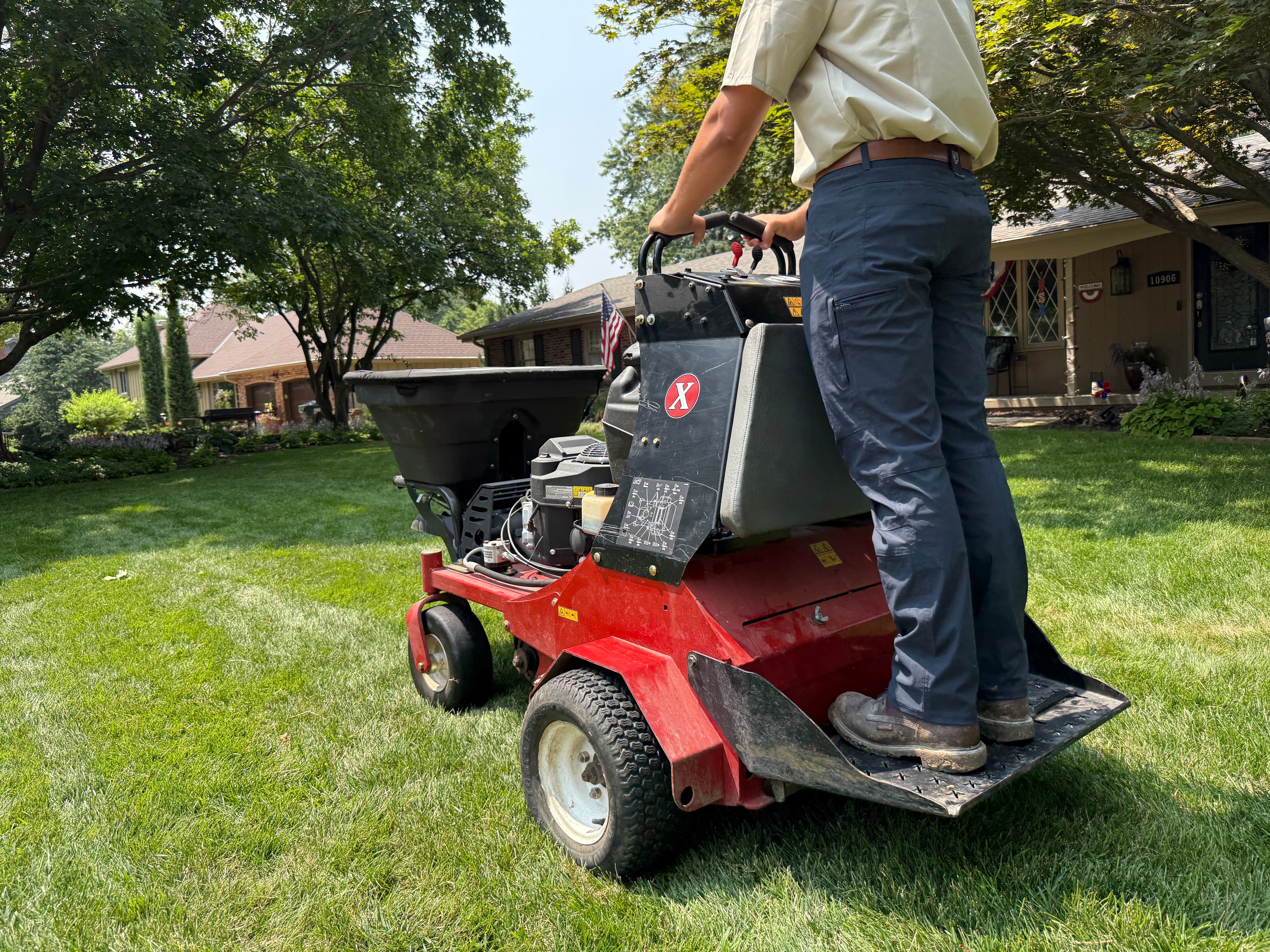
It removes plugs of soil, which relieves compaction, opens channels for water and air to reach the root zone, and gives grass seed somewhere to land where it touches soil. On the heavy clay most of this metro is built on, compaction is the most common reason a lawn thins out, and aeration is the only routine treatment that addresses it directly.
When should aeration be done in Omaha?
Late August through September. Cool-season grass here puts on root growth as the soil cools from summer highs, so it recovers into the holes fast, and any seed sown at the same time establishes before winter. That window does not move much, and it is the reason the schedule fills up in August.
How often does a lawn need it?
Most lawns on clay in this metro do well with it every year, and few need it more often than that. A lawn on lighter soil, with low traffic and no history of thinning, can go every second or third year. If a screwdriver will not push into the ground easily after a rain, that is compaction and it is worth doing.
Do I have to overseed at the same time?
No, but it is the cheapest time to do it by a wide margin, because the holes are already there. Aeration alone relieves compaction; aeration plus seed also thickens the stand, and a thick stand is the best weed control there is.
What do I have to do afterwards?
Water, mostly, and it is the part that decides whether the seed takes. Light watering twice a day for the first two weeks keeps the surface damp while the seed germinates, then you shift back to deep and infrequent. Keep traffic off, mow high once the new grass is up, and skip the spring pre-emergent, because it would kill the seedlings along with the crabgrass.
Will it damage my sprinkler heads or invisible fence?
Not if they are marked. Flag anything shallow before the visit — heads, valve boxes, pet fence wire, low-voltage lighting cable — and the machine works around them. Tell us when you book and we will remind you the day before.


%20(1).JPEG&w=3840&q=75)