
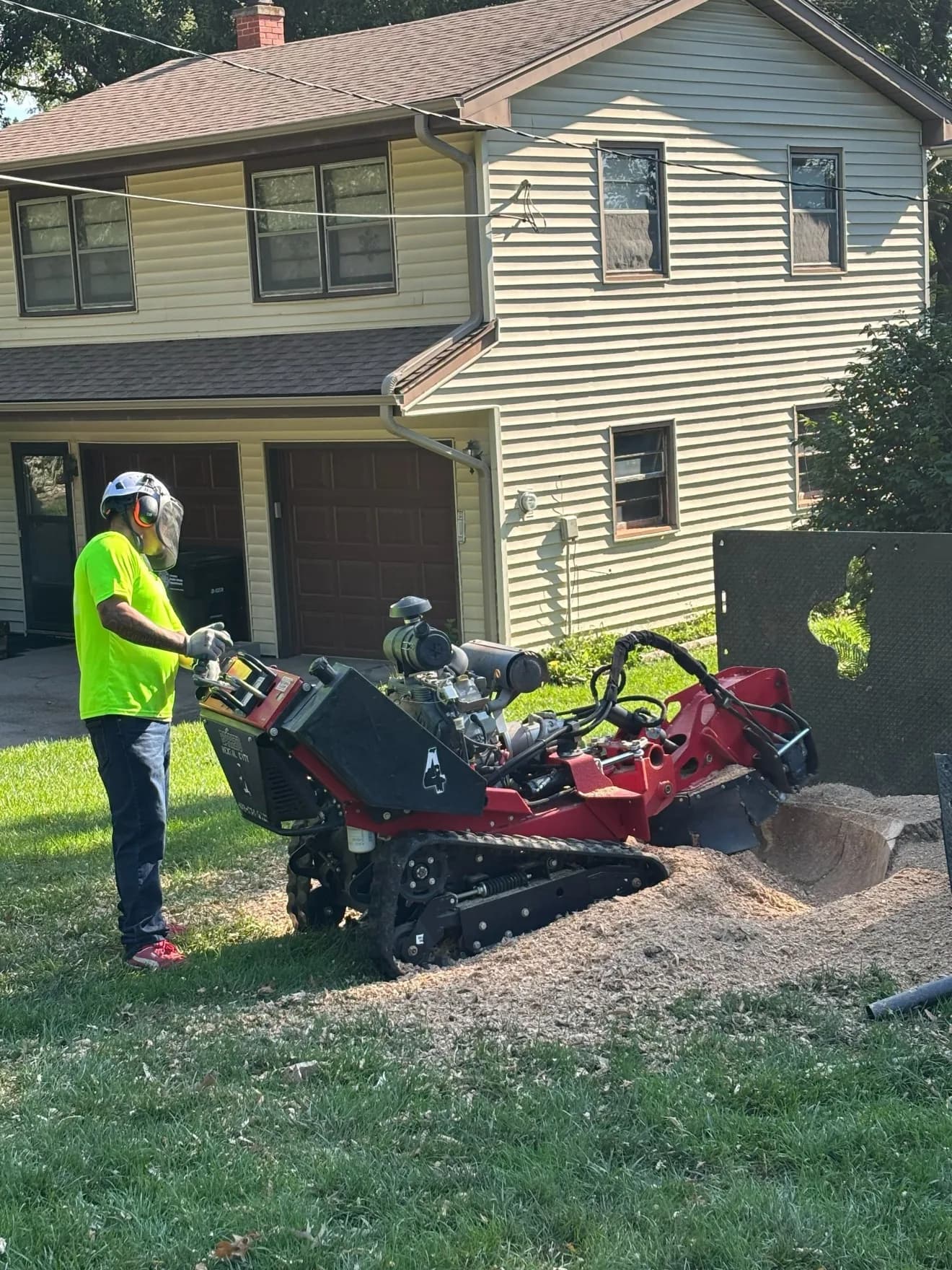
Stump Grinding in Omaha, NE
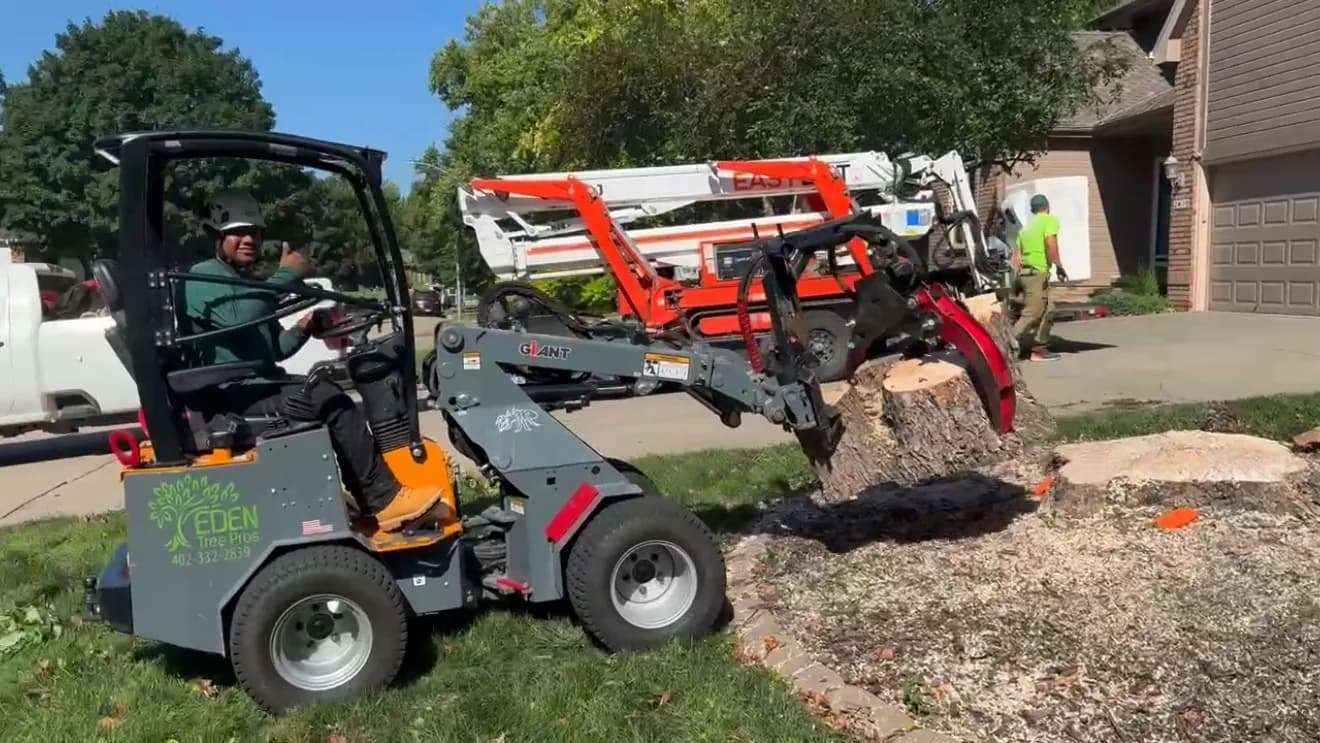
Ground below grade, root flare and all, then backfilled and raked level. The lawn closes over it and nobody can tell there was a tree there.
Free Stump Estimate
What the yard looks like afterwards
See the whole process
The grade
Level, not a crater
The hole is backfilled and tamped so the lawn does not sink into it over the next two summers.
The chips
Yours or gone
Grindings make good bed mulch. If you would rather not have the pile, it leaves on the truck.
The mess
Blown off the hard surfaces
Grinding throws further than people expect. Drives, walks and siding get cleaned before we go.
Got a stump, or six? Send a photo and a rough width and we will price it from that.
The stump and the root flare
What you see
The visible wood, plus the flare where the trunk widens into the ground. The flare is wider than the stump and it all has to go.
Below grade, into the soil
6 to 12 inches
Deep enough to plant grass, lay sod or set a paver over the top of it. Deeper if you tell us something is going in that spot.
The root system, left in place
Stays
Grinding takes the stump, not the roots running out under the lawn. They rot away on their own, and digging them out would take the yard with them.
Planting a tree in the same hole? Tell us on the estimate and we take it deeper.
What has to be true for the machine to reach it
How we schedule work
A gate or a side yard the machine can get through, usually about three feet
Sprinkler heads and invisible fence lines marked, or pointed out on the walk-around
Utilities located before we grind — free, and we make the call
Cars off the drive if the stump is near it, because grindings travel
Any landscape lighting or low-voltage wire flagged, since it hides in the mulch
Somewhere to put the chips, or a decision to have them hauled
We locate utilities before the wheel turns, and that call is on us.
“Michael, Rico and Matt did a great job removing three trees. One tree was very large and towered over our neighbor's house. They removed the tree beautifully and also managed to save our old dilapidated garden shed!”
Under 12"
12" to 24"
24" to 36"
Over 36"
Under 12"
Ornamentals and young trees. Usually the same trip as something else.
12" to 24"
The common one. A single stump in this range is a short visit.
24" to 36"
Mature shade tree. The flare is doing most of the work here.
Over 36"
Cottonwood, silver maple, old elm. Priced on the walk-around.
One tape measure, one photo, and a stump is one of the few jobs we can quote sight unseen.
Send the width and a photo and you will have a written price back the next business day.
Common questions about stump grinding in Omaha
Ask us something elseWhat happens if I just leave the stump?
Nothing dramatic, and that is why people leave them for years. What actually happens is slower: a maple, elm or cottonwood stump throws sprouts that come back every time you cut them, the wood gets soft and becomes a mowing hazard hidden in long grass, and decaying wood close to the house is an open invitation to carpenter ants and termites looking for somewhere damp. A stump in the middle of a lawn is also the thing that makes an otherwise tidy yard read as unfinished.
What is the difference between stump grinding and stump removal?
Grinding chews the stump and the root flare down below grade with a cutting wheel and leaves the soil intact. Removal means excavating the whole root plate out of the ground, which needs a machine, wrecks the surrounding lawn and costs several times as much. For all but a handful of situations — a new foundation, a pool, a driveway going in over the top — grinding is the right answer and the one we recommend.
How deep do you grind a stump?
Six to twelve inches below grade as standard, which is enough for grass, sod or a paver. If you are planting a new tree in the same spot, say so on the estimate and we go deeper, because a new root ball needs real soil rather than a bed of old grindings.
How much does stump grinding cost in Omaha?
Diameter across the root flare is the main driver, not the height of what is left. After that: how many stumps, whether the machine can reach them, and whether there is rock or old concrete in the soil, which is hard on the teeth. Multiple stumps on one visit are always cheaper each than the same stumps on separate trips.
Do you take the chips away?
Your choice, and it goes on the estimate either way. Most people have the hole backfilled with the grindings and tamped level, which is free and settles well. If you want the pile gone or the grade topped with clean soil instead, we can do that too.
Can I plant grass or a new tree where the stump was?
Grass, yes — backfill, a little topsoil and seed will take. A new tree in the exact same hole is harder, because decomposing wood chips tie up nitrogen and the old root plate is still down there. Either grind deeper and replace the soil, or plant the new tree a few feet to one side, which is what we usually suggest.
How soon can I seed or sod the spot?
As soon as the grindings are settled, which in practice means the same week. Rake the surface level, top it with an inch or two of screened soil so the seed has something other than wood to sit in, and water it like any other patch. Sod takes the same preparation. The one thing worth waiting for is a settling rain, because backfilled grindings drop an inch or so once they get wet and it is easier to top the low spot before the grass is in than after.
Will grinding damage my lawn?
The machine is tracked and heavier than it looks, so it leaves marks on soft ground the way any equipment does. We lay mats on the route where it matters and time the work for dry ground when we can. The area right around the stump gets disturbed by definition — that is where the wood was.
One stump or a whole fence line, the estimate is free and it comes in writing.
What goes with a stump job
All services
Stump Removal vs. Grinding
The full-excavation question, answered honestly: when grinding is enough, and the rare cases it is not.
Tree Removal
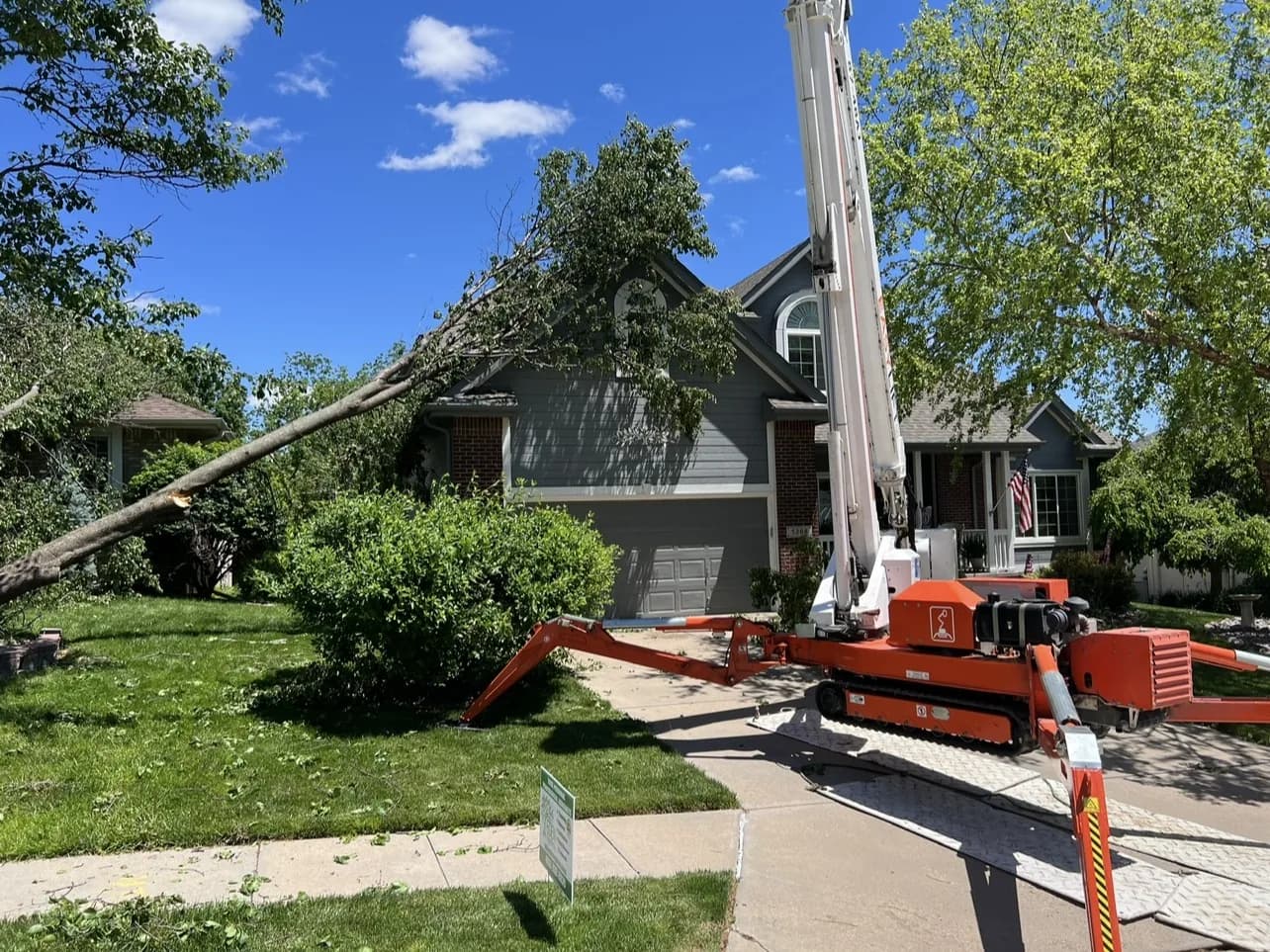
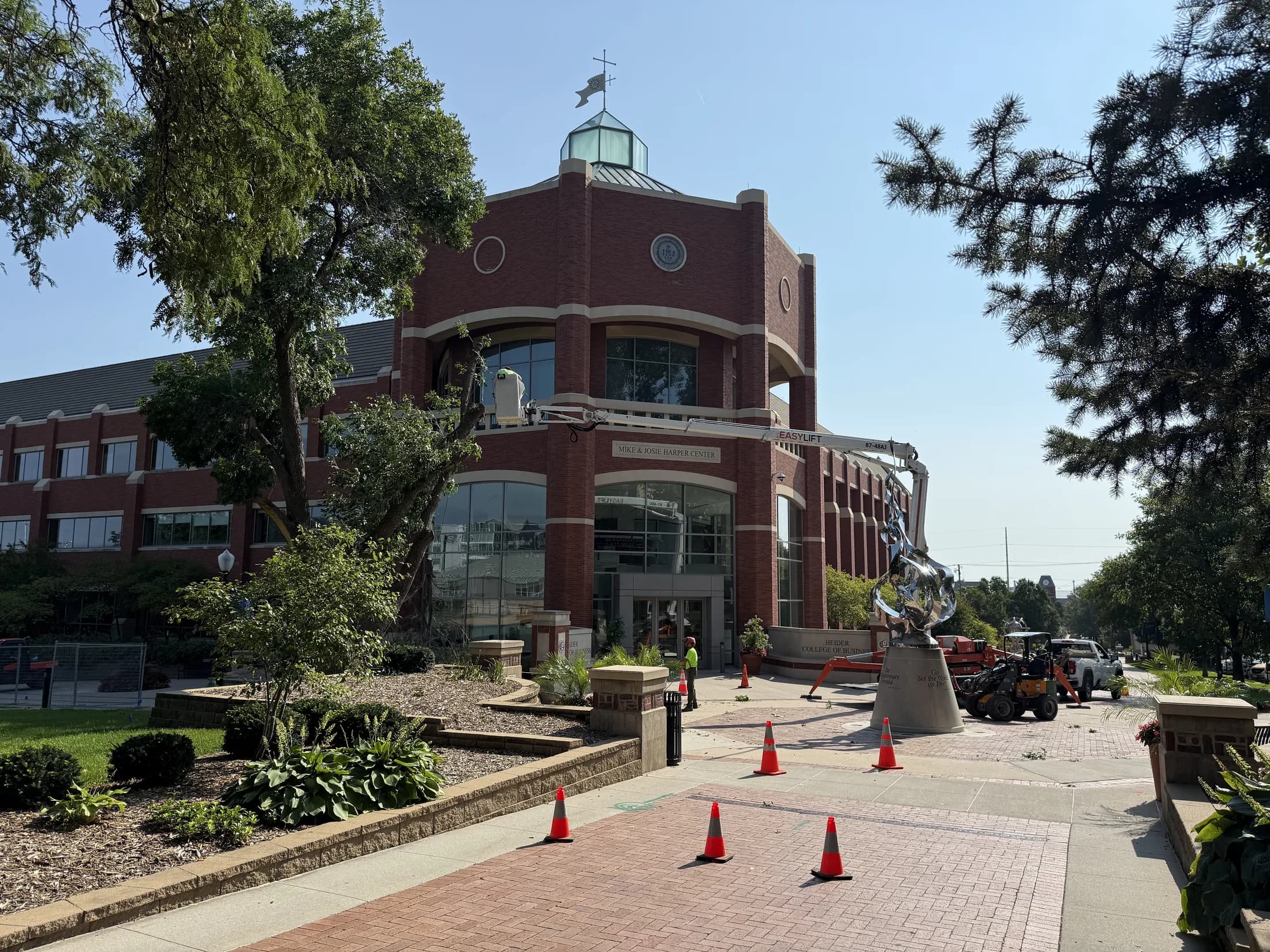
The stump is what a removal leaves behind. Both on one visit is the cheaper way to do it.
Tree Planting
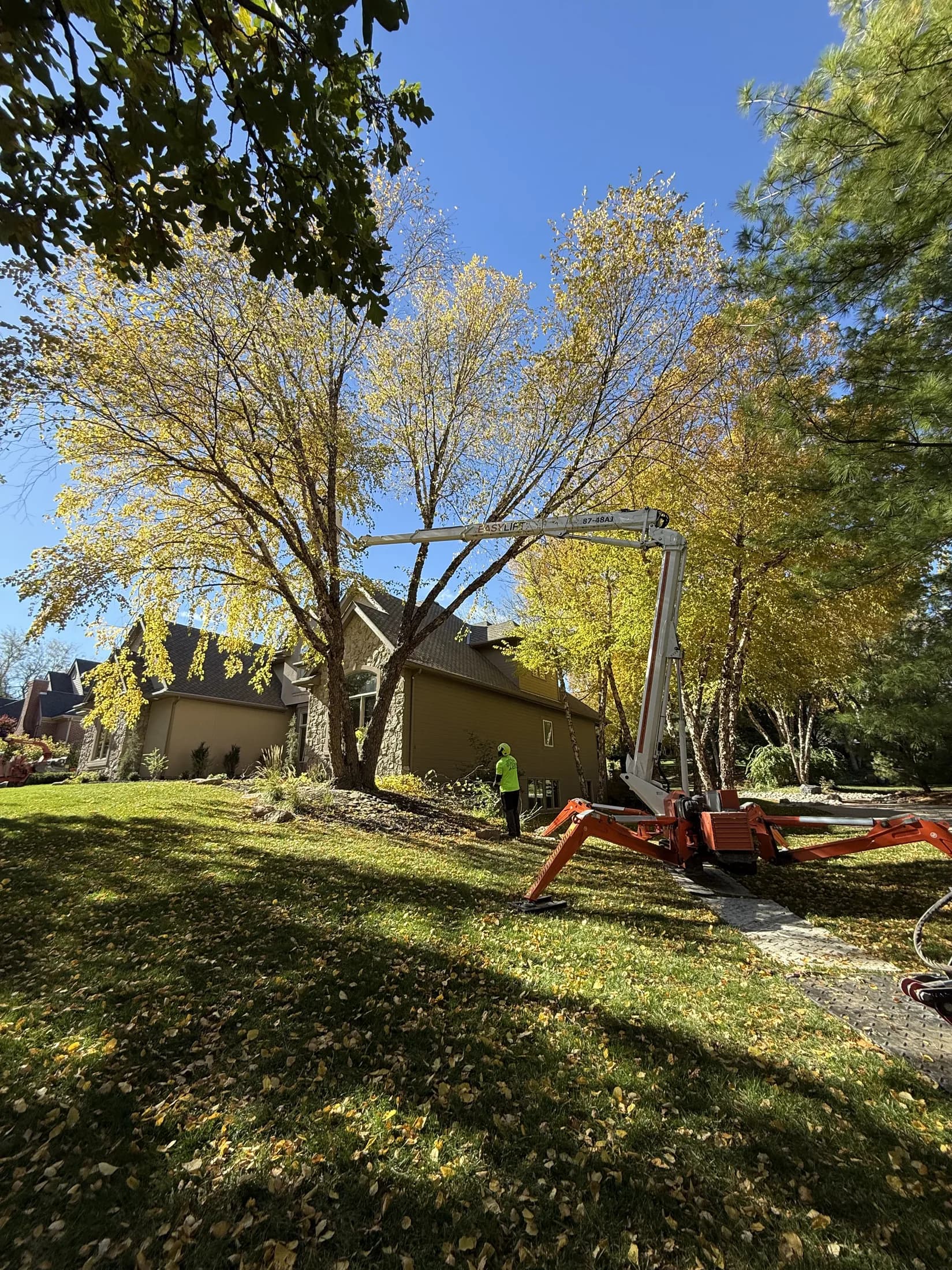
Putting something back in the gap, and far enough off the old root plate to take.
Lawn Care Program
Seeding the patch is the easy part. Keeping the rest of the lawn worth matching is the job.