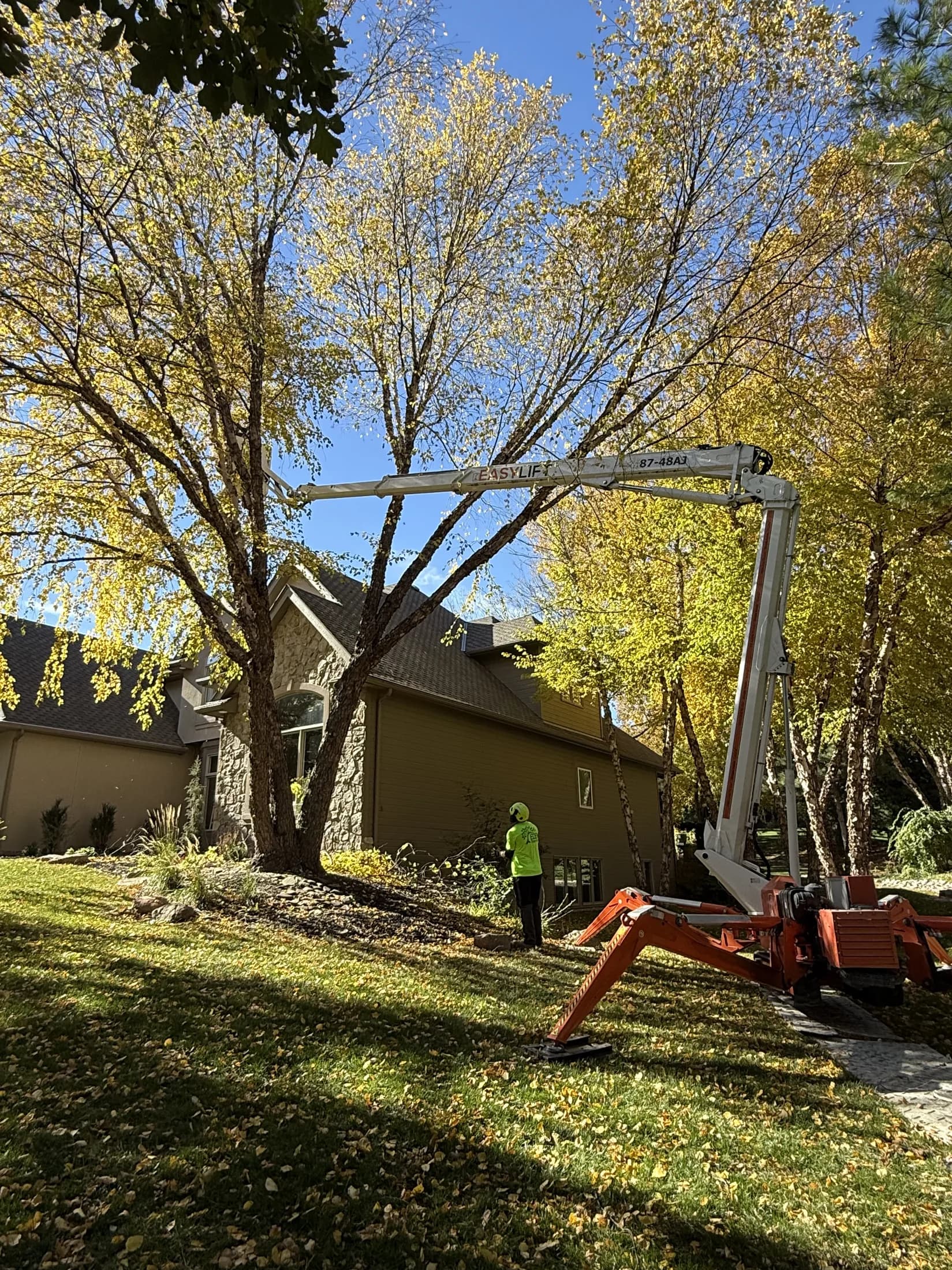

The worst affected
Pin oak
The species this metro plants most and the one least suited to its soil. Almost every yellow oak here is a pin oak.

Yellow leaves with green veins on a pin oak, river birch or maple. Injected at the trunk, past the soil chemistry that caused it, and green again within weeks.

Our clay runs alkaline
Iron is in the soil already. Above about pH 7 the tree simply cannot take it up, which is a chemistry problem rather than a shortage.
The wrong species in the wrong soil
Pin oak, river birch and red maple all evolved on acidic ground. Planted here, chlorosis is close to inevitable.
It compounds every year
A chlorotic tree makes less food, so it grows less root, so it takes up less iron. Left alone the decline accelerates.
Healthy
Leaf and veins the same color. Nothing to do here beyond the usual feeding.
Early
The veins stay green while the tissue between them lightens. This is the cheapest stage to fix.
Moderate
The classic look. Clearly chlorotic from across the street, and still very treatable.
Advanced
Margins browning and twigs starting to die back. Treatable, but recovery takes seasons rather than weeks.
Yellowing from the leaf edge inwards, or whole leaves going uniformly pale, is a different problem with a different answer.
Send a photo of a few leaves against the sky. That is enough to tell you which stage you are at.
The worst affected
The species this metro plants most and the one least suited to its soil. Almost every yellow oak here is a pin oak.

Chlorosis and borer
Yellows early and gets bronze birch borer while it is stressed. Treat the iron and you head off the second problem.

Common
Yellows later in the season than the oaks, often on one side of the canopy first.

Occasional
Less common here, same cause and the same treatment when it happens.
If you have one of these and it is yellow, it is almost certainly this and it is fixable.
“The pin oak went from yellow to properly green in about a month. Neighbors asked what we had done to it.”
313+ Google reviews
Voted Best of Omaha, and rated across tree work, plant health care and storm response by homeowners in every town we serve.
Read the reviewsNot usually a lack of iron. Most Omaha soil has plenty, but it is alkaline clay, and above roughly pH 7 iron binds up in a form roots cannot absorb. So the tree starves in the middle of a full pantry. That is why adding iron to the soil so often does nothing, and why the species that suffer are the ones that evolved on acidic ground.
The pattern is distinctive: the leaf goes yellow while the veins stay green, giving a green net over a yellow background. It usually shows worst on the newest growth at the ends of branches, and it is often worse on one side of the tree. Whole leaves going uniformly yellow, or yellowing from the leaf edge inwards, is something else.
Because the soil is the problem. Soil applications have to overcome the pH that caused the deficiency in the first place, and in heavy clay they are unreliable and slow. Injection puts chelated iron directly into the tree's vascular system, past the chemistry entirely, which is why the result shows in weeks rather than never.
Green usually returns within three to six weeks on a tree treated during the growing season, and it is dramatic — people photograph it. A treatment typically holds for two to three years before it needs repeating, depending on the severity and the species.
In a bed, sometimes. Under an established shade tree, realistically no. Acidifying the entire root zone of a mature oak means treating a soil volume the size of the canopy, repeatedly, against the buffering of the clay. Sulfur applications help at the margins and they are not a substitute for treating the tree.
It stops the decline and greens up what is still alive, but branches that have already died stay dead and get pruned out. A severely chlorotic tree recovers over several seasons rather than in one, and we will tell you honestly if it has gone too far to be worth the money.
Treated in the growing season, most trees are visibly greener inside six weeks.
Often paired with injection: the iron fixes the color, the feeding rebuilds the tree.
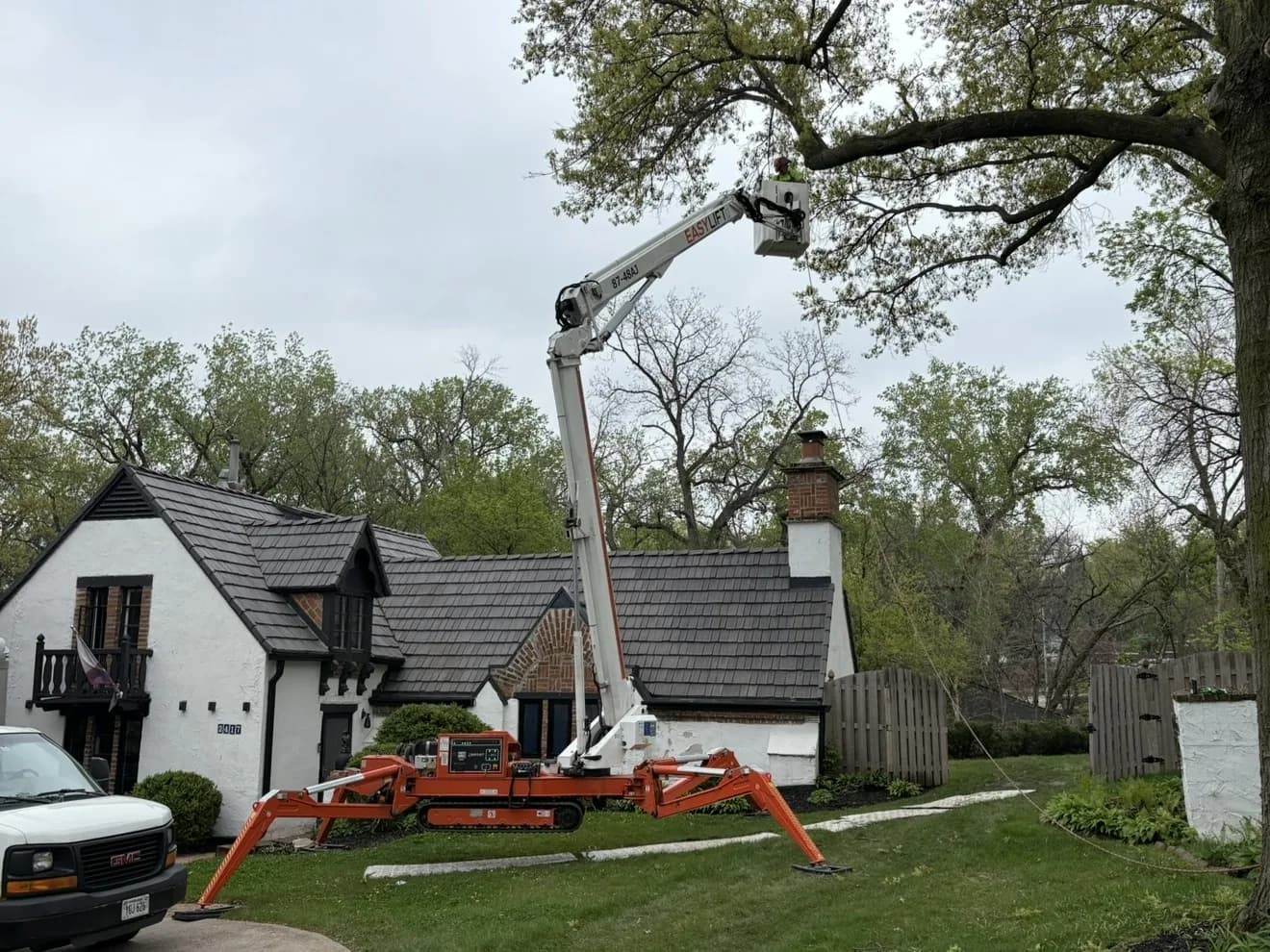
Where chlorotic trees end up, because it recurs on a predictable cycle.
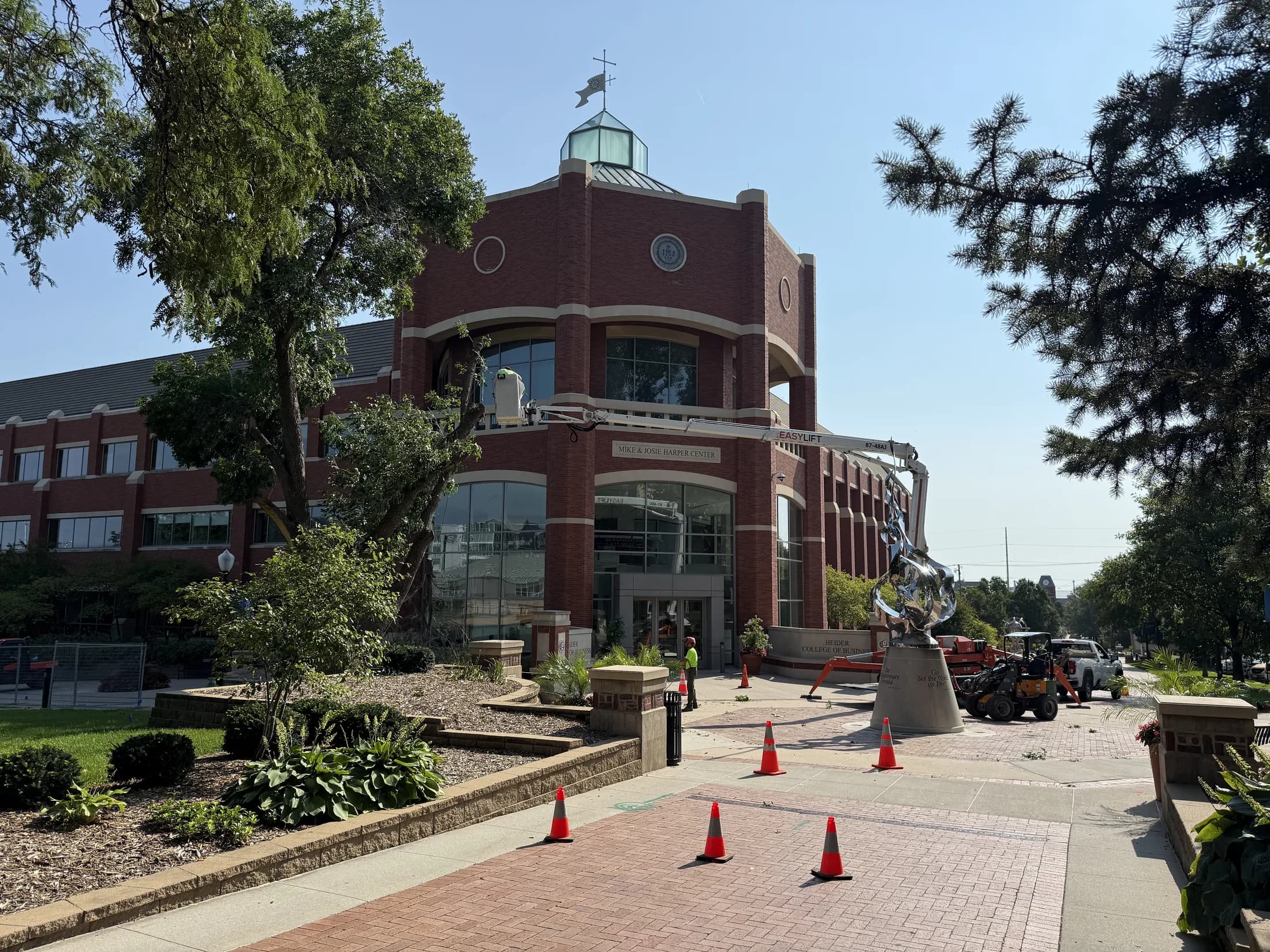
The permanent fix for chlorosis is not planting the species that get it.