
The long game
Bur oak
Native, tolerates our clay, and outlives everyone who argues about it. Slow, and worth it.
The right species for our clay, in a spot that still works in forty years, planted at a depth the tree survives. Most new trees are lost on the day they go in.
What the arborist is reading
Mature height against the wires
The overhead easement decides your species list before taste does.
Distance off the foundation
Big shade trees need room. A silver maple against the house ends one way.
Soil, and how it drains
Our clay is alkaline and heavy. Half the chlorosis in this metro starts here.
What is already there
Planting under a mature canopy is a different job from planting into open lawn.
Send a photo of the spot. We will tell you what will still be happy there in thirty years.
Mulch, and not against the trunk
2 to 3 inches
A flat ring out to the drip line, pulled back off the bark. Mulch piled up a trunk rots it slowly and invisibly.
The root flare sits here, visible
At grade
You should be able to see the trunk widen into roots. If the tree looks like a telephone pole going into the ground, it is planted too deep.
The root ball, in native soil
Slightly proud
Set a touch high rather than a touch low, because backfill settles. Backfilled with the soil that came out, not with bagged compost.
We check flare depth in the pot before the hole is dug, not after the tree is in it.
The long game
Native, tolerates our clay, and outlives everyone who argues about it. Slow, and worth it.

Underplanted
Native, tough, handles alkaline soil, and almost nothing eats it. Should be in more Omaha yards.

Bulletproof
Ugly galls, no real disease threat, and it will grow where nothing else will.

Small spaces
For under wires and beside patios. Spring flower, fall color, and birds in June.
There is no universal right tree. There is a right tree for your spot, and it takes ten minutes to work out.
“DJ and his crew were fantastic. They got everything done just the way it needed to be and gave me some advice on how to care for everything.”
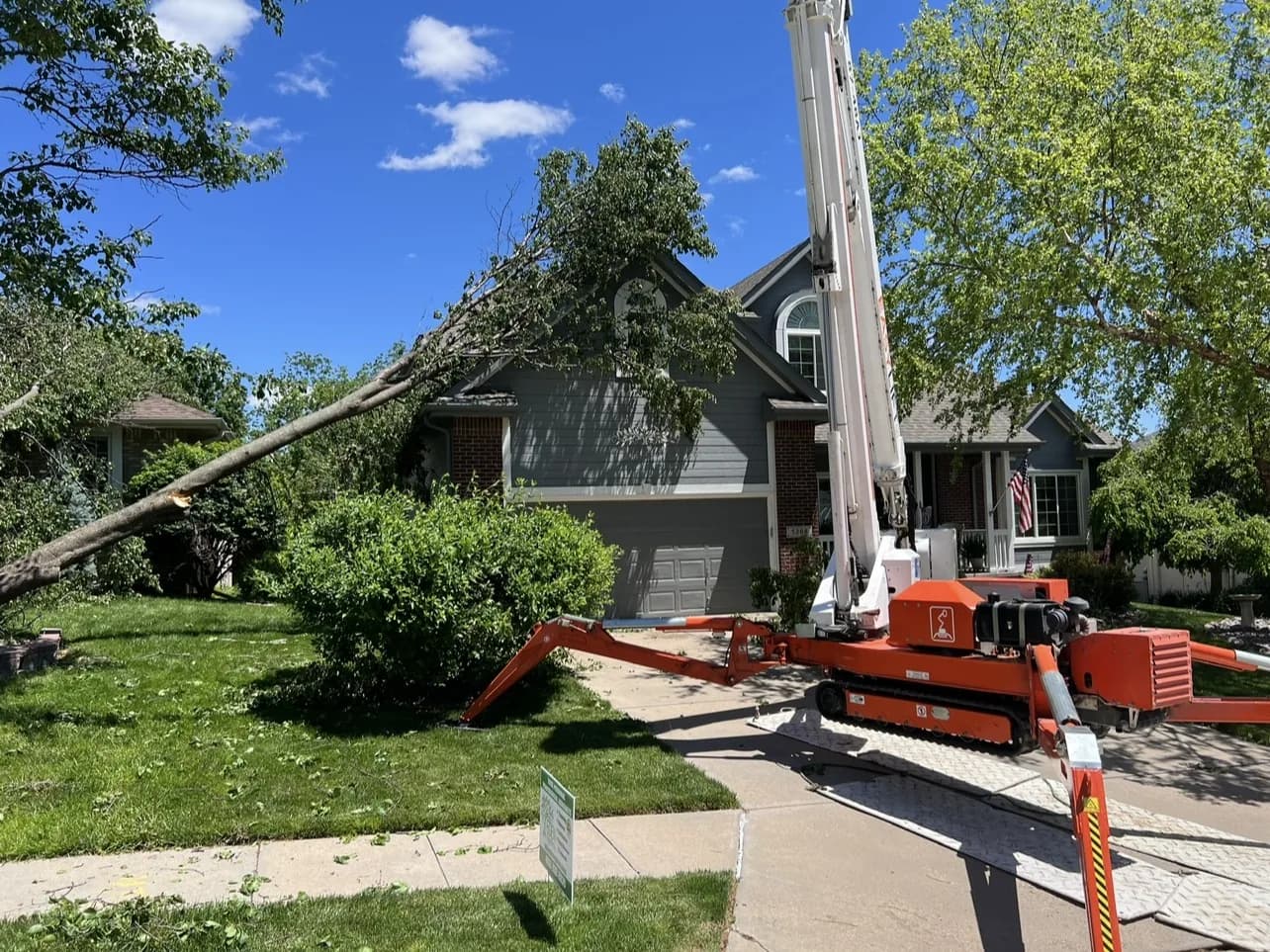
Slow and deep, at the root ball, not a sprinkler pass over the leaves
Twice a week through the first summer, more in a dry August
Straight through the second summer as well, which is where most people stop too early
Right up until the ground freezes, because winter kills more new evergreens than cold does
Mulch ring kept flat and pulled back off the trunk, topped up once a year
No staking after the first year unless the site is genuinely exposed
We leave this on paper with the invoice, because a tree that is watered properly is a tree nobody has to replace.
Fall is the best window here and spring is second. Planting in September or October gives roots two cool, damp months to establish before the ground freezes, and then a full spring before the first real heat. Spring planting works but the tree goes into a Nebraska July with a root system it has not finished building. Midsummer planting is possible and it is the hardest on both the tree and the person doing the watering.
Planting depth and water, in that order, and it is nearly always one of those two rather than anything exotic. A tree planted with its root flare buried a few inches too deep will look fine for three or four years and then decline for reasons nobody connects to the day it went in. The second cause is watering that stops after the first summer, when the tree still has two years of establishment left.
No. Emerald ash borer is established in this metro and any ash planted now is a tree you will be injecting every two years for its whole life or removing later. There are better options for every place an ash would have gone, and we will name them.
Something that tops out under about twenty-five feet, which rules out every shade tree people actually want. Serviceberry, hornbeam, crabapple and the smaller maples all work. The alternative is planting a big tree under a wire and paying somebody to butcher it every four years, which is a bad deal for you and worse for the tree.
Nursery stock and planting are warrantable; weather and watering are not, and we would rather say that plainly than write a guarantee with conditions you would only discover on the day you tried to use it. Ask when you book and you will get the exact terms in writing on the estimate.
Smaller than you want. A two-inch caliper tree overtakes a four-inch one within about five years, because a smaller root ball loses proportionally less of its root system in the move and spends less time recovering. Buying big buys you three years of appearance and costs the tree a decade of vigor.
Planting one tree or lining a drive with them, the estimate is free either way.
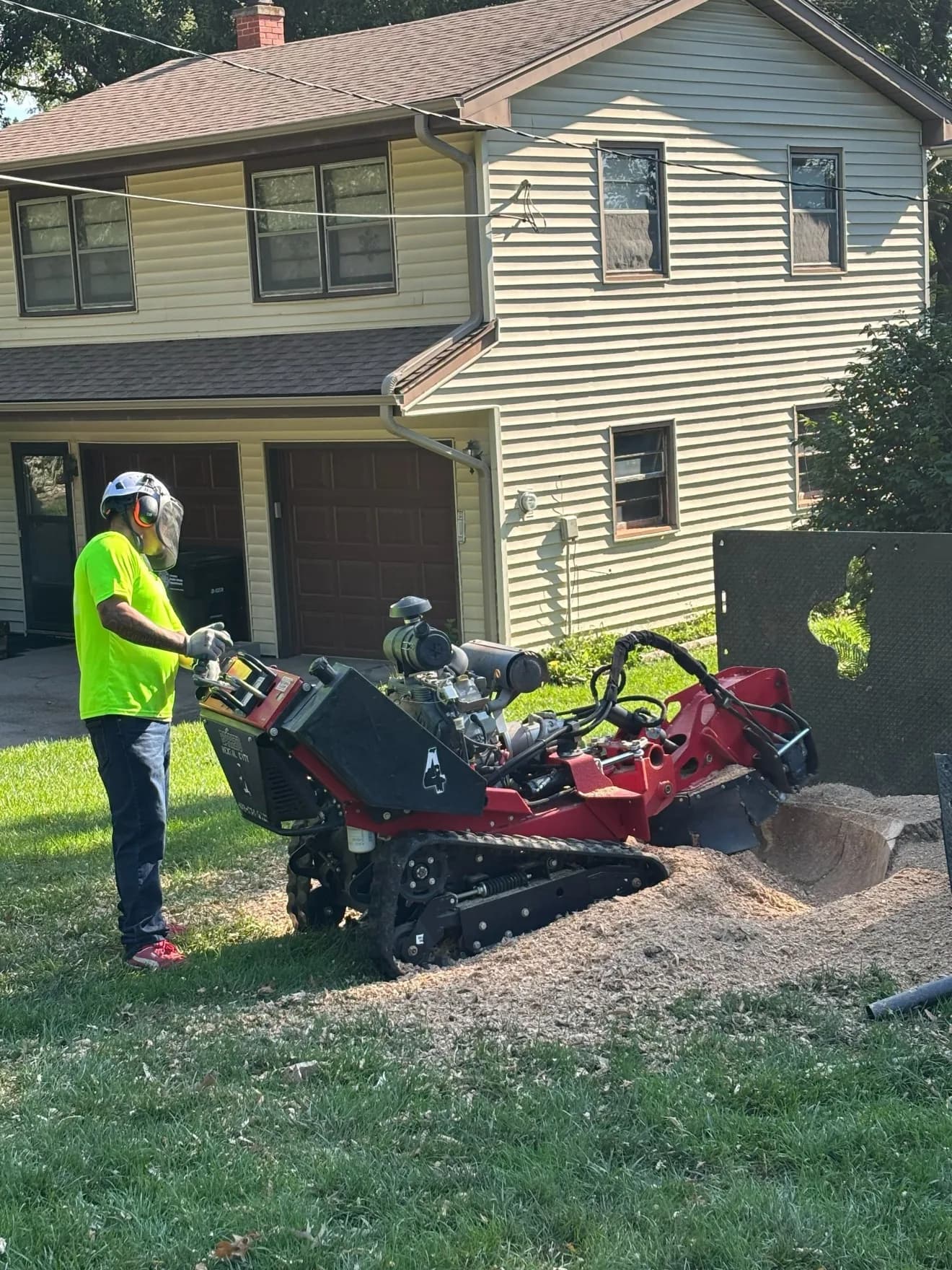
Grind deeper if the new tree is going near the old one. It usually should not.

Feeding and treatment through the establishment years, when it matters most.
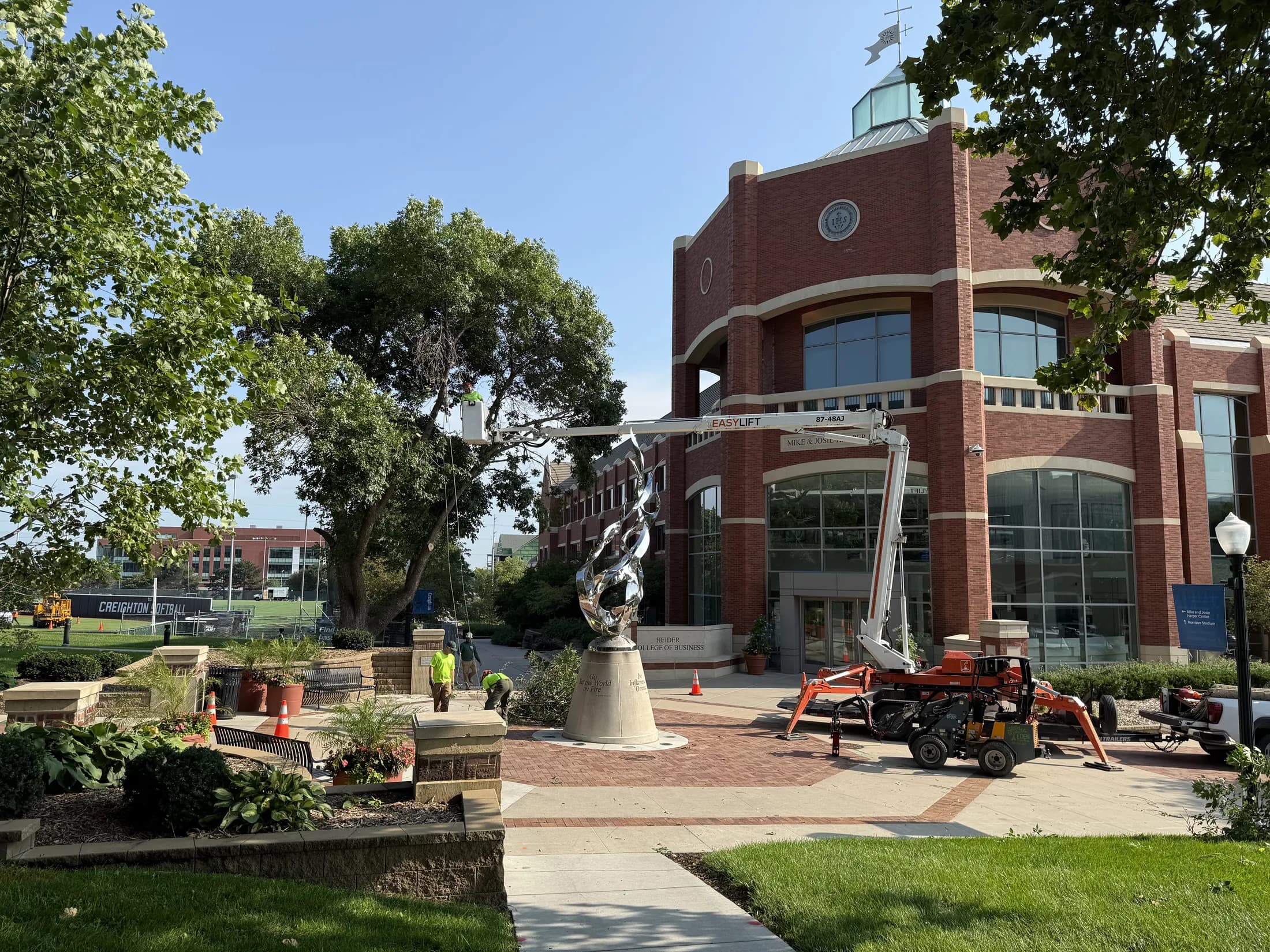
An hour on species selection before you buy anything is the cheapest tree advice going.