The idea
Somebody is already watching your trees
Visits are booked against the calendar before the season starts, so the work lands in its window instead of after you notice something.
A year of plant health visits booked in advance, on the windows eastern Nebraska actually runs on. An arborist walks the whole property each time and treats what is due.
The idea
Visits are booked against the calendar before the season starts, so the work lands in its window instead of after you notice something.
The property
Shade trees, ornamentals and the shrub beds along the house are all on the same visit.

The people
Familiar ground beats a fresh diagnosis. Change gets caught because somebody remembers last year.
The walk that scopes a program is free, and it ends with a plan you can read.
Late winter
Structure, cavities and old wounds are visible without leaves in the way. Dormant oil goes on before bud break, and the year gets planned here.

Spring
Apple scab, needle cast and fireblight are decided by timing, not product. Miss a crabapple window and the next one is a year away.

Summer
Bagworms, Japanese beetle and mite pressure arrive on their own schedule. A visit in July finds them while the numbers are still small.

Fall
Once the canopy shuts down the tree pushes root growth in warm soil. Feeding lands here, and so does the talk about anything that did not recover.
Windows shift a week or two with the weather. The order does not.
Most windows are set weeks before they open, so the schedule is built ahead of the season.

On a program
Windows get hit
The visit is already booked, so treatment lands in its window.
Problems stay small
A first bagworm season is found while it is still cheap to deal with.
History travels with the tree
One arborist knows last year’s yard and can tell change from normal.
Calling when something looks wrong
The window has usually closed
By the time damage is visible, the useful window is often months gone.
Late products underperform
Preventive material applied after the fact reads as a treatment failing.
Every visit starts cold
No record of last season means rebuilding the diagnosis from what is left.
If you are not sure your property needs a program, we would rather look before selling one.
A walk of the whole property by an experienced arborist on every visit
Dormant oil timed to late winter, before bud break
Preventive fungicide timing on susceptible species — crabapple, spruce, pear
Insect control as pressure appears: bagworm, Japanese beetle, aphid, mite
Soil and root zone feeding on the fall window
A written note after each visit: what was found, what was done
Pruning and structural work, which is quoted separately as tree trimming
Removals and stump grinding
Lawn fertilization and weed control, on its own program
Mosquito and perimeter pest treatment around the house
Emerald ash borer trunk injection, which sits on a two-year cycle of its own
One walk covers the whole property, including the work that will not end up on the program.
Common program plants
Spruce and pine
Needle cast, tip blight and mite pressure. The most common program tree in this metro.
Crabapple and ornamental pear
Apple scab, rust and fireblight, all decided on spring timing.
Maple, pin oak and river birch
Chlorosis from alkaline soil, plus borer pressure on stressed trunks.
Ash
Watched rather than treated on the program; injection runs separately.
Shrub beds and hedges
Boxwood, arborvitae, burning bush and yew all sit on the same visit.
Anything healthy and low risk stays off the schedule until it needs to be on it.
“They caught bagworms on our arborvitae in June before we had any idea they were there.”
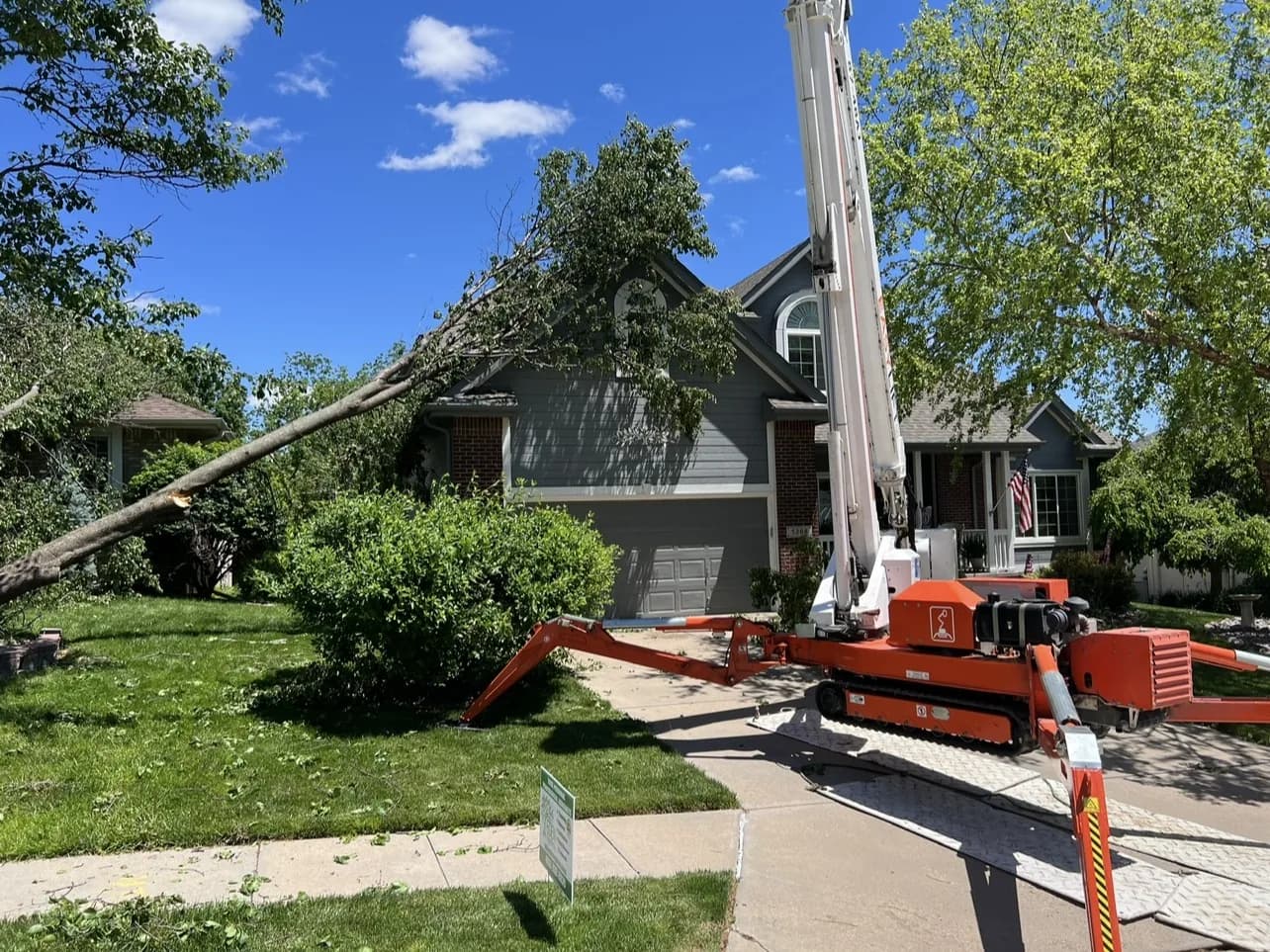
This metro is hard on ornamental plants in ways that are easy to miss until a tree is already in decline. The soil is heavy clay with a high pH, which locks up iron and turns pin oak, river birch and silver maple pale over a few seasons. Most new subdivisions sit on graded subsoil, so a tree planted in a Gretna or Elkhorn yard starts in ground a forest would never have produced.
The weather compounds it. Hot, dry summers push mature trees into the drought stress that borers key on, because beetles attack struggling trees rather than vigorous ones. None of that is a reason to give up on a landscape. It does mean almost everything that goes wrong here is cheaper and more likely to be fixable if it is caught a season early.
A schedule of plant health visits booked across the year instead of one call at a time. An arborist walks the property on each visit, treats what is due for that window, and records what was found. In this metro that means dormant oil in late winter, disease timing in spring, insect work through summer, and root zone feeding in fall.
Most plant health products are preventive rather than curative. Apple scab is decided around bud break, needle cast when the new shoots are half elongated, bagworms while they are still small. The same product applied a month late does almost nothing, which is why a program is a calendar with treatments attached rather than a set of sprays.
No. A young, tough, well-sited shade tree with no history usually needs water and time more than a treatment schedule. Programs earn their keep on plants with a known problem coming: spruce, crabapple, chlorotic maple and pin oak, and anything mature enough that replacing it is not a real option.
It depends on what is growing there. A yard of spruce and crabapple needs more windows than a yard of oak and hackberry, so the schedule is written from the property rather than sold as a fixed package. You see the plan and what each visit is for before anything starts.
Yes, and that conversation happens most often in fall. A spruce that has lost its lower third to needle cast will not grow those branches back, and there is a point where the honest answer is replacement rather than another season of fungicide.
Call us. Program properties get priority scheduling, and because we already have the history the diagnosis usually takes minutes. If it is a storm or a limb on the house, that is emergency work and it moves to the front of the list regardless.
A program should be scoped from your yard, not sold from a package sheet.

Trunk injection on its own cycle, with a straight treat-or-remove answer first.
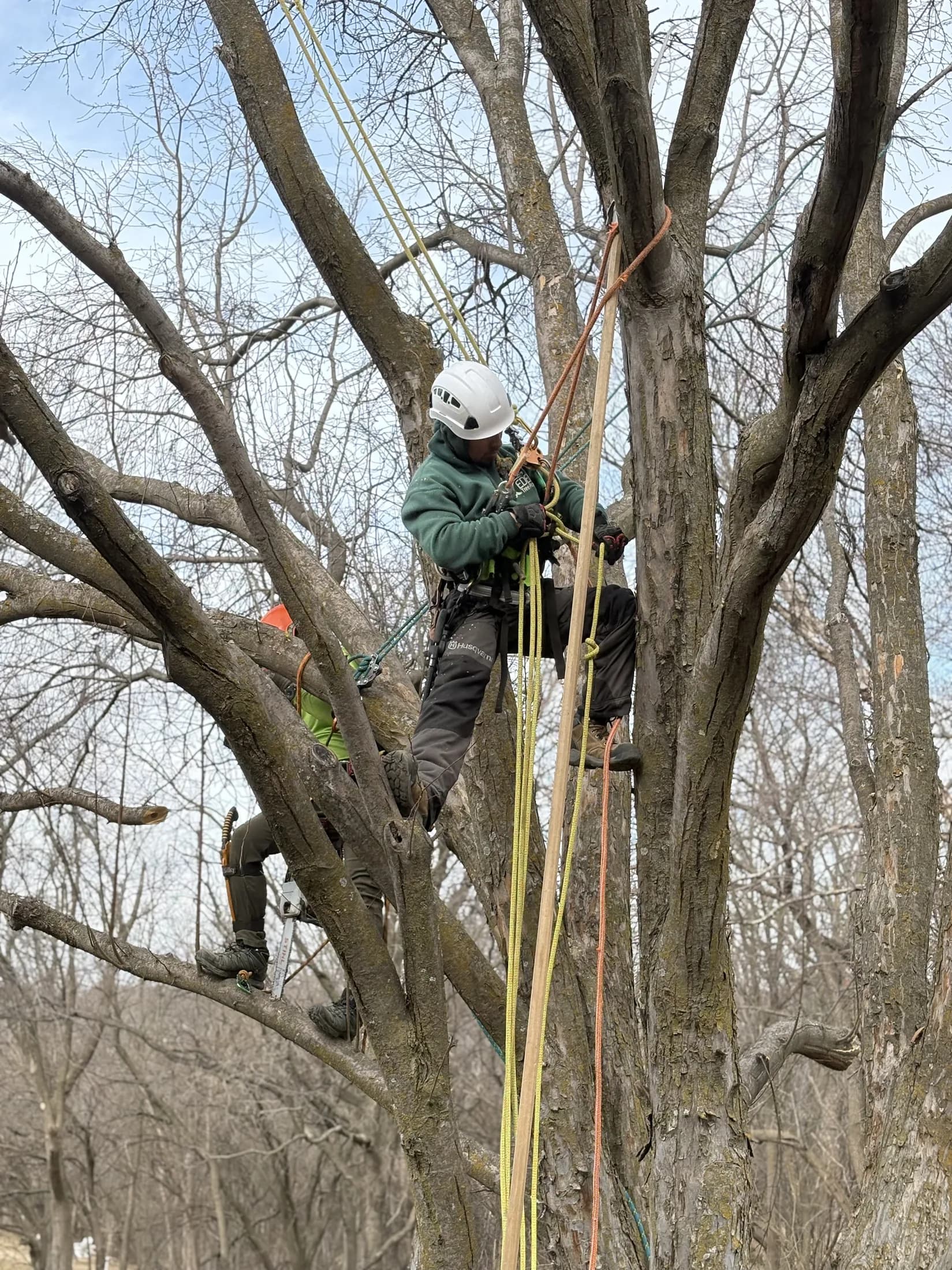
Structure is quoted separately, and it is the other half of keeping a mature tree.
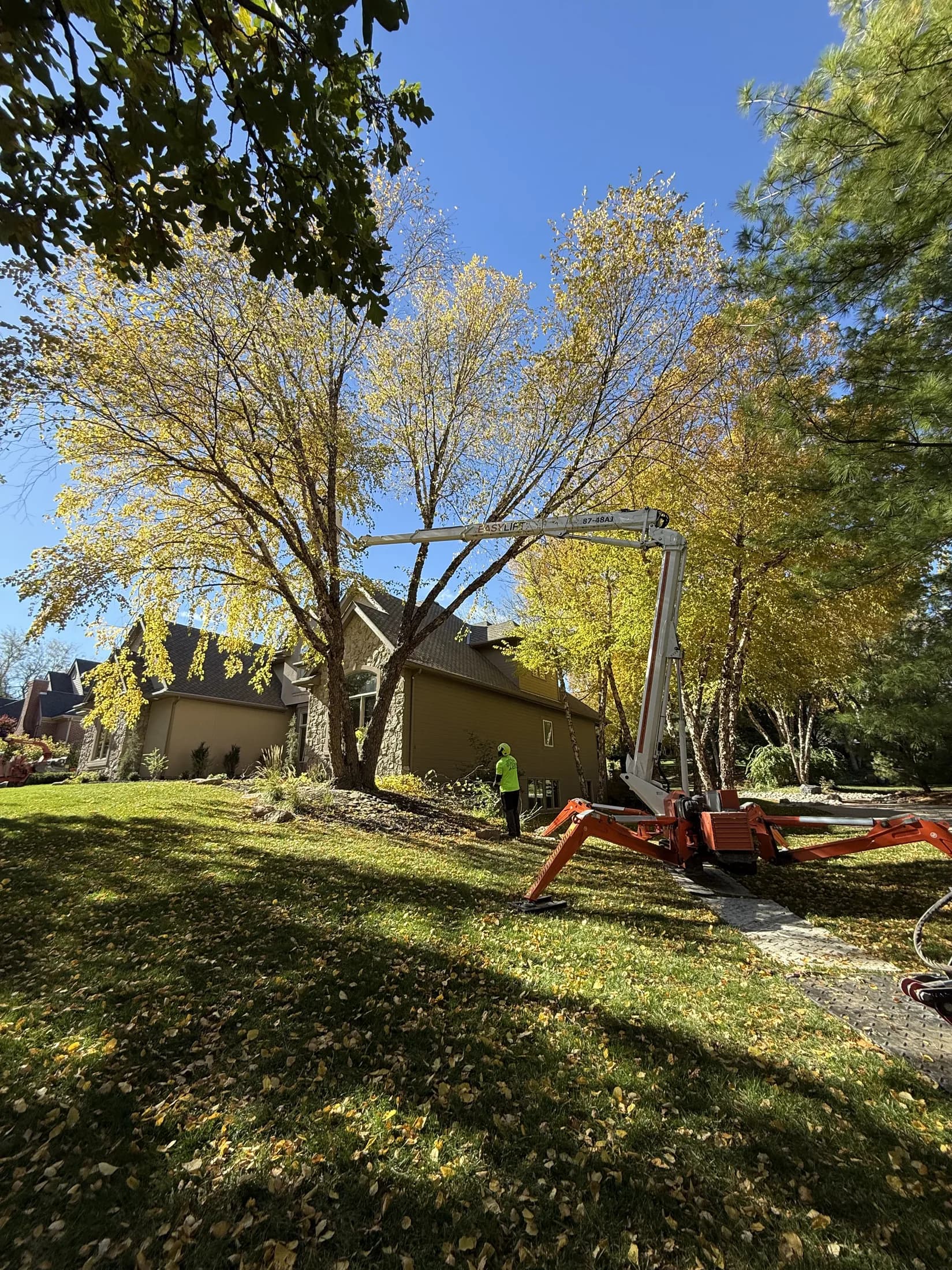
The turf runs on its own eastern Nebraska calendar, on the same property.