December – February
The pruning season nobody expects
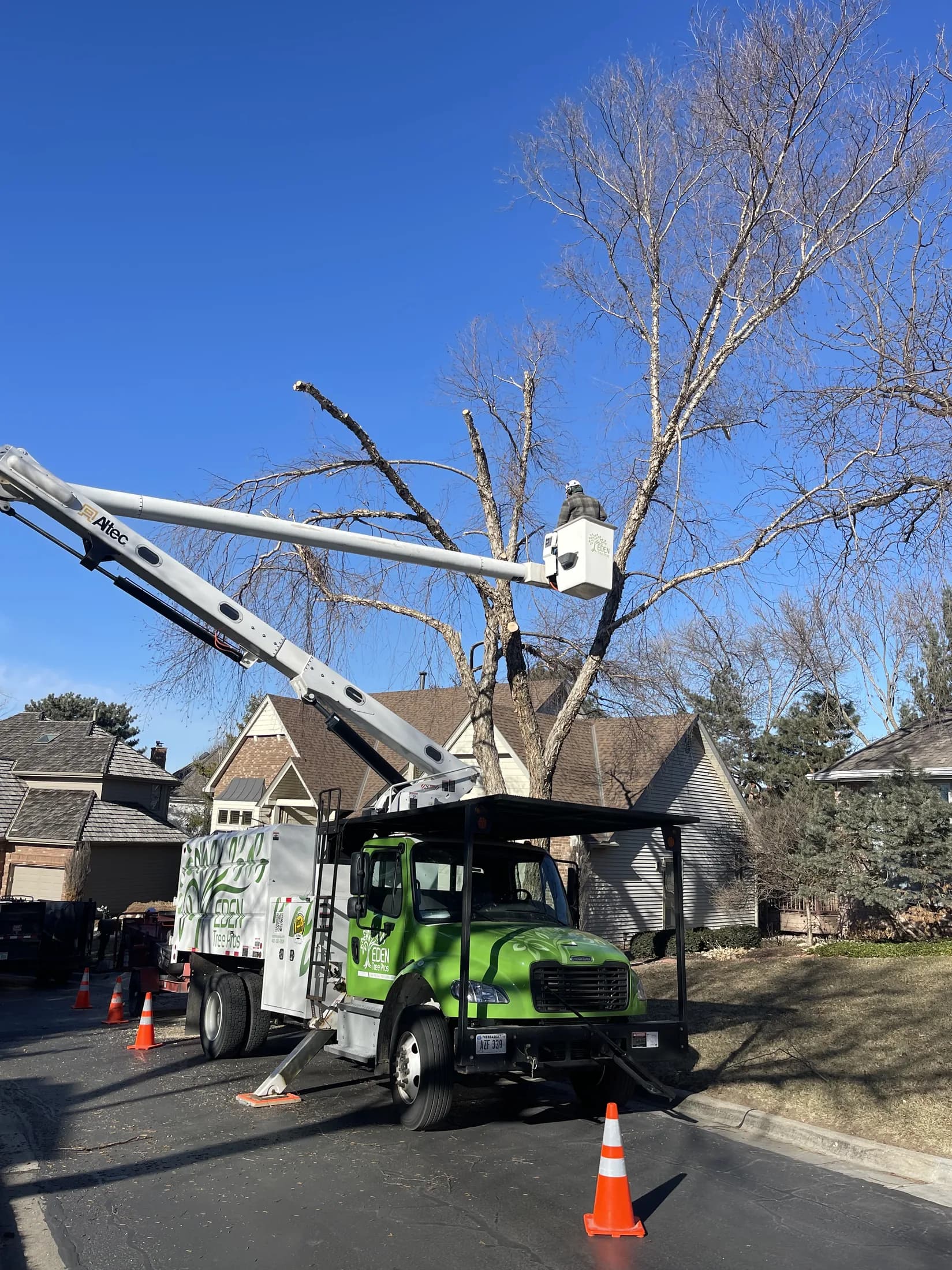
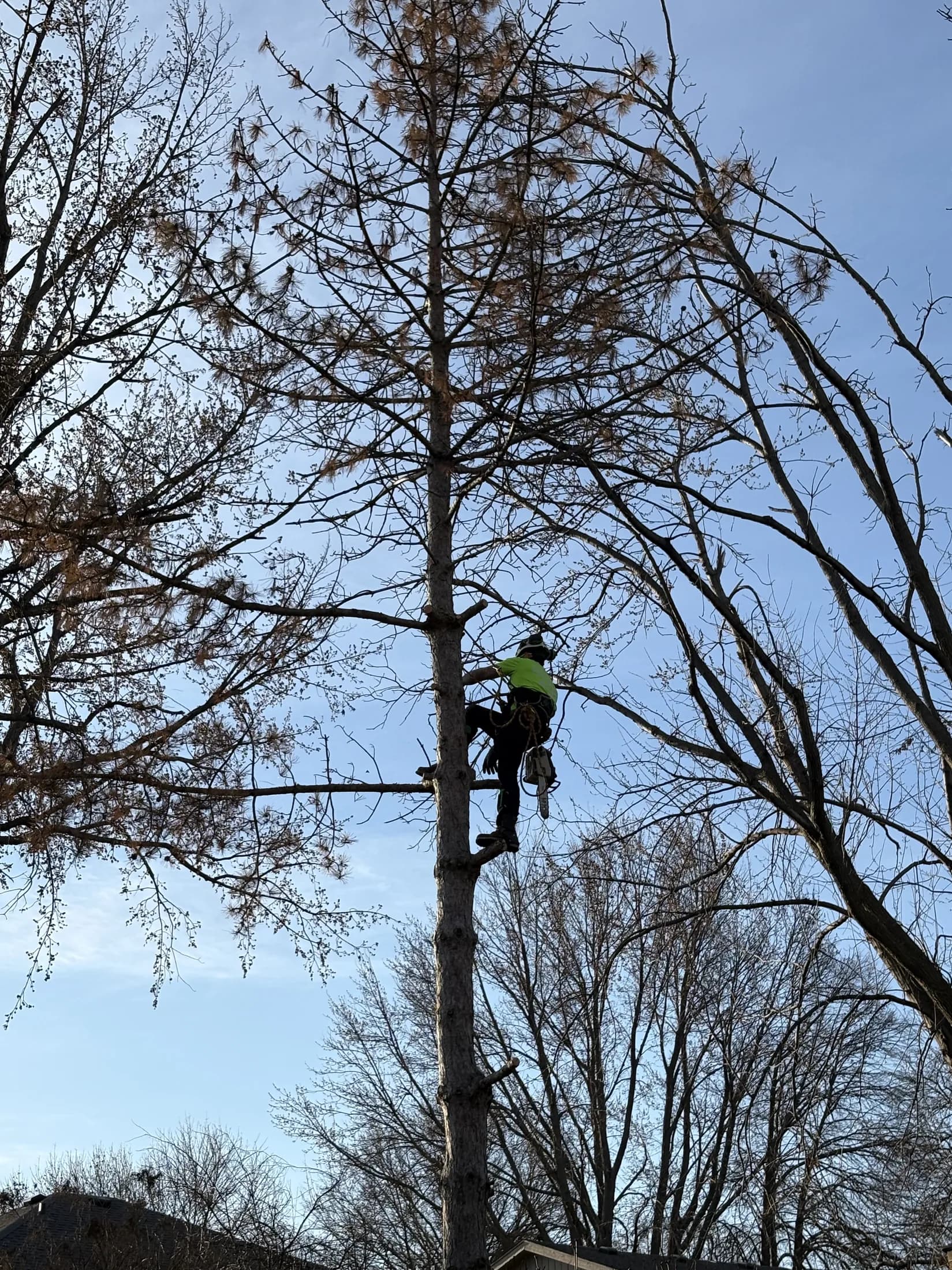
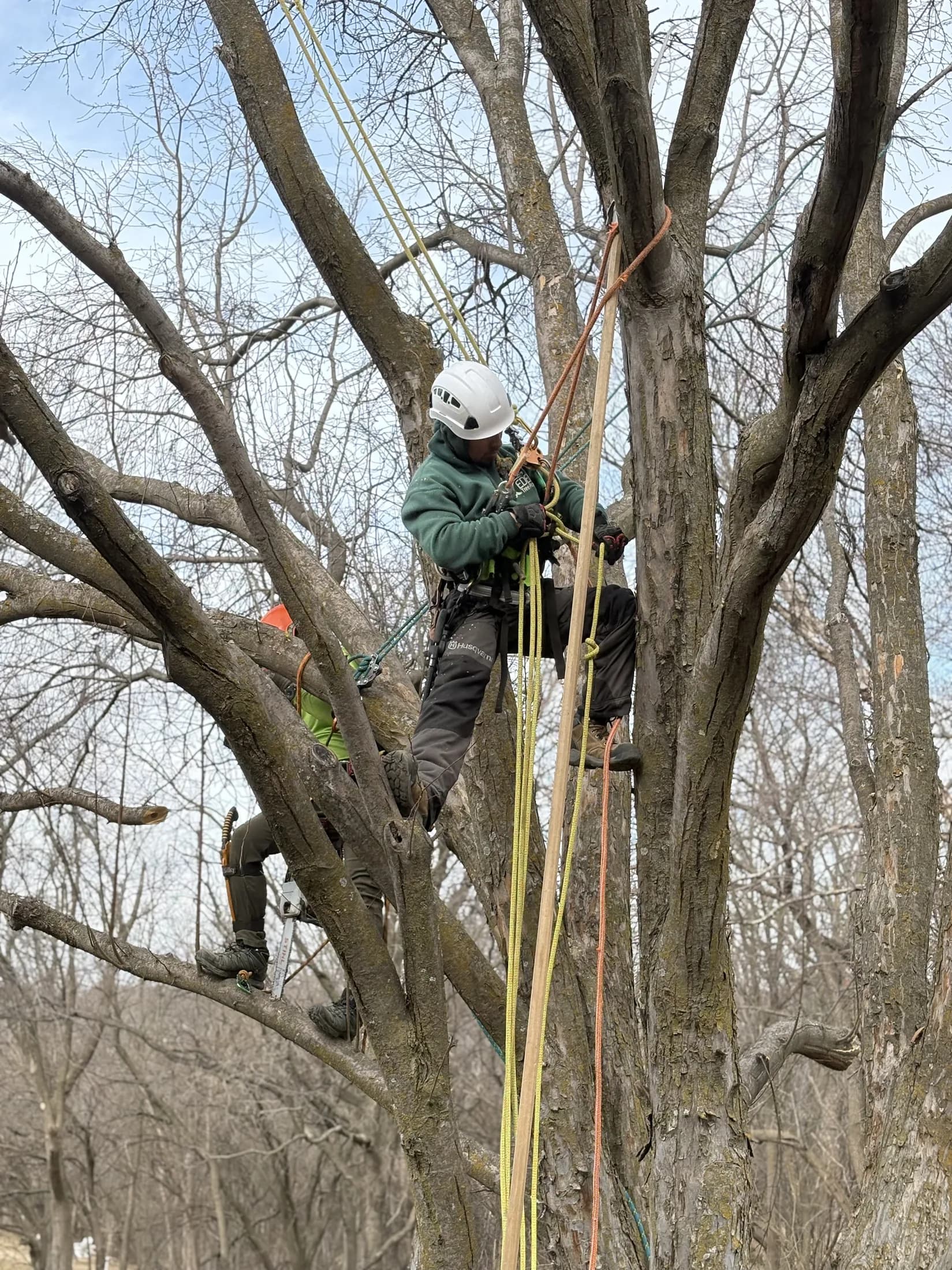
Bare canopies show every defect, frozen ground carries equipment without rutting turf, and dormant trees seal cuts cleanly in spring. The best structural work of the year happens in coats.
What happens when in eastern Nebraska — pruning, injections, sprays, feeding, aeration, planting — and why the working seasons are not the ones you would guess.
December – February
Bare canopies show every defect, frozen ground carries equipment without rutting turf, and dormant trees seal cuts cleanly in spring. The best structural work of the year happens in coats.

March – May
Injections, fungal sprays, pre-emergent, planting. Nearly every treatment window of the year opens in these three months, and most are measured in weeks.
June – August
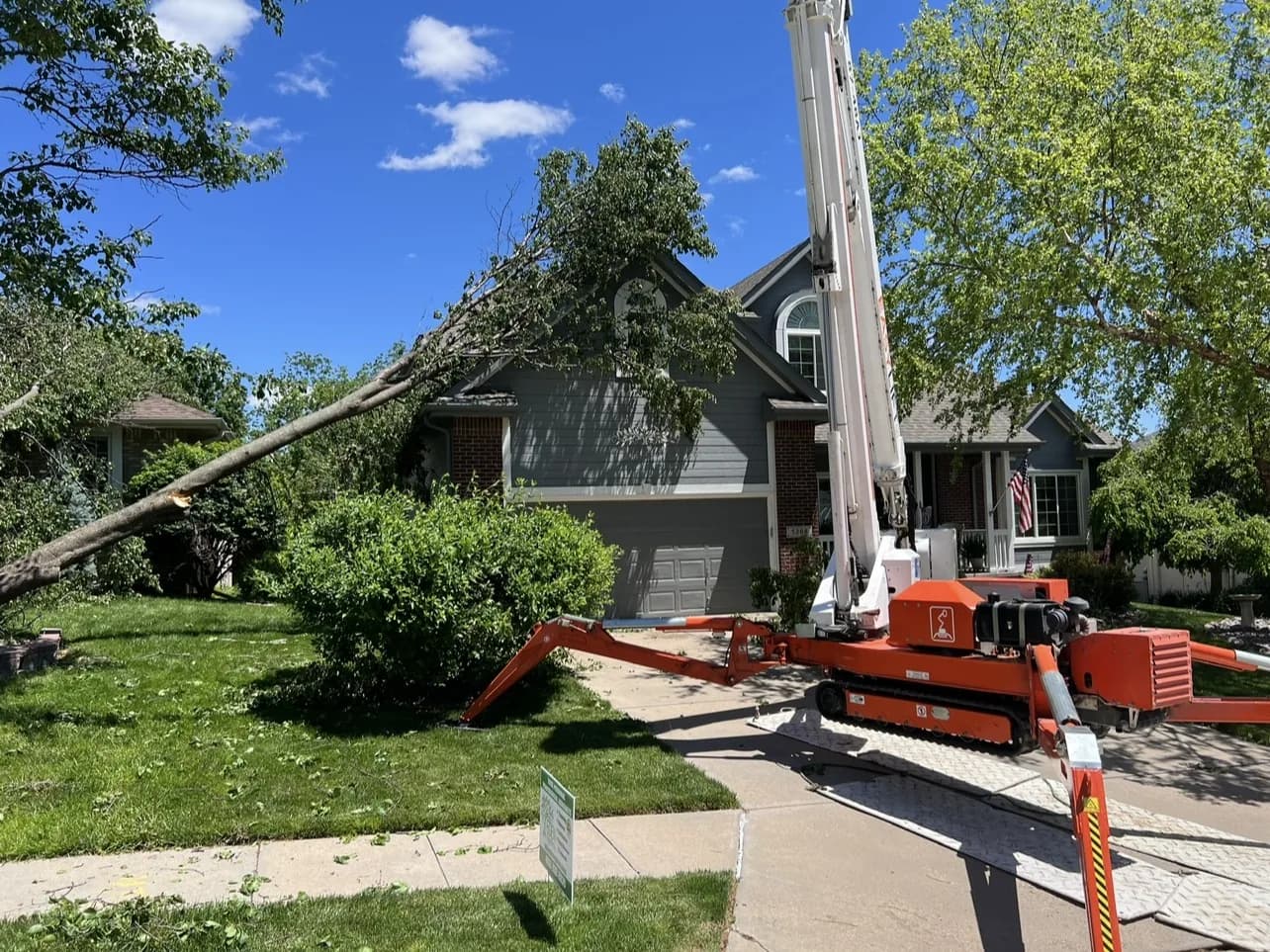
Straight-line wind season, Japanese beetle flight, mosquito rounds. Summer is response and protection rather than prevention.
September – November
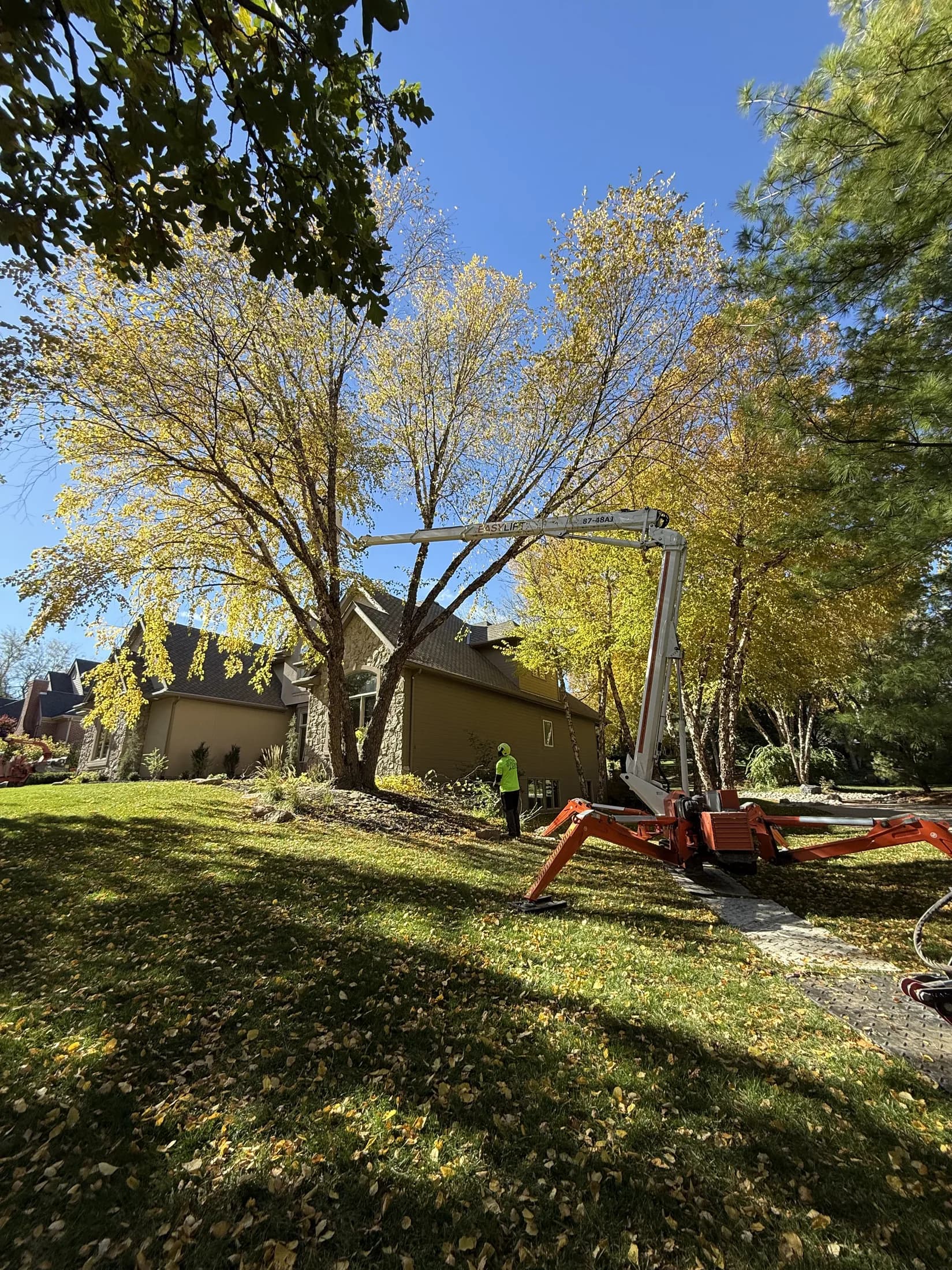
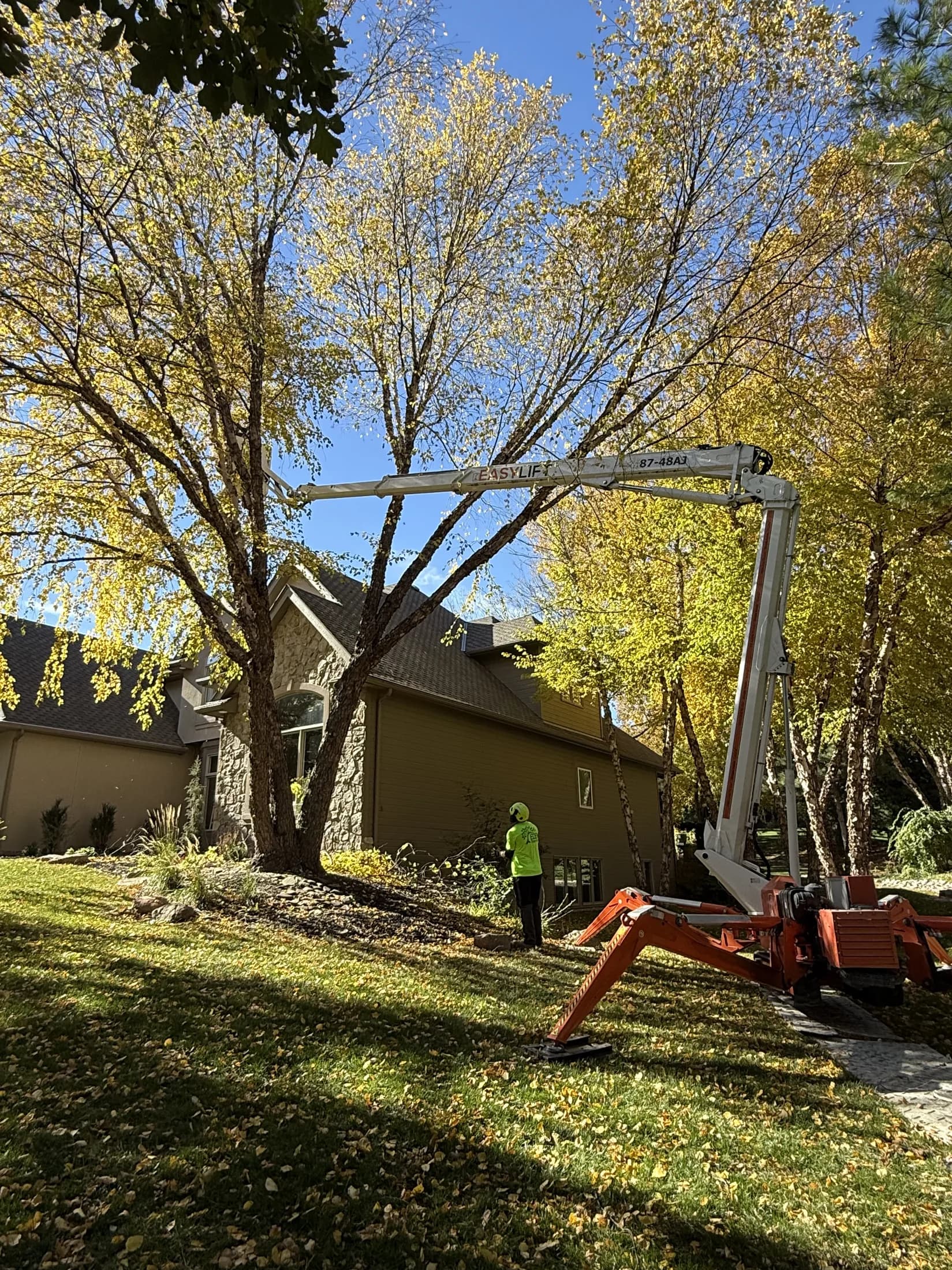
Aeration and overseeding on clay lawns, deep root feeding before dormancy, and the best planting window of the year while the ground is still warm underneath.
“This is the second year I have had them help me with my trees. They do a great job and I will stay with them in the future. DJ was wonderful.”
J
F
M
A
M
J
J
A
S
O
N
D
Structural and clearance pruning
Dormant season, when the architecture is visible and the lawn is frozen hard enough to work over.
Oak pruning (wilt-safe window)
Oaks are only cut in the coldest months here, when the beetles that spread oak wilt are not flying.
Emerald ash borer injection
When the tree is moving water hard enough to carry the product up. A two-year cycle, timed to late spring.
Iron injections for chlorosis
Applied in the growing season, with visible green-up in weeks on the right candidate.
Needle cast and apple scab sprays
Protectants on new growth. The first application is the most important treatment of the year.
Bagworm treatment
A roughly two-week window after hatch. The single most timing-critical item on this page.
Japanese beetle protection
Ahead of and through the flight, on the lindens and birches they hit first.
Deep root fertilization
Spring and fall, into the root zone rather than onto the lawn above it.
Aeration and overseeding
The one fall job that changes a compacted clay lawn more than anything else on this page.
Pre-emergent and weed control
Down before soil temperature wakes the crabgrass, with a fall pass for the broadleaves.
Grub prevention
Before the damage, not after it. Curative treatment in September is a far worse deal.
Tree planting
Spring works; fall is better here. Warm soil below, cool air above, and a full winter of root growth before the first hot July.
Mosquito barrier rounds
Roughly every three weeks through the season, set by product breakdown rather than the calendar.
Holiday lighting
Designed in early fall, installed in November, down and stored in January.
Windows shift a week or two with the season. Crews work to soil temperature and degree days rather than to dates.
The whole calendar, managed for you, visit by visit.
Why the dormant season produces the best pruning of the year.
Every treatment window on this page, in detail.
The turf half of the calendar: fertilizer, weeds, grubs, aeration.
Why fall planting beats spring planting in Nebraska clay.
Season pricing published by lot size.
40°F
Reading
soil, early March
Roots wake before leaves do. Deep root feeding and early planting start here, weeks before the yard looks like anything is happening.
50°F
Reading
soil, late March to April
Crabgrass germinates as soil crosses the mid-50s. Pre-emergent has to be down and watered in before that line, not after it.
55°F
Reading
soil, April to May
Trunk injections need a tree that is actively moving water. This is the gate the ash and iron treatments wait behind.
70°F+
Reading
air, sustained, June on
Beetle emergence, mosquito cycles and bagworm growth all run on heat. Rotations tighten in July rather than relax.
Soil temperature lags air temperature by weeks in both directions, which is why March feels earlier than it is and September later.
The belief, and what the calendar actually says
“Prune in spring, when the tree is growing”
Backward for most trees here. A dormant cut is sealed by the first flush of spring growth, and on oaks, spring pruning is how oak wilt spreads.
“Fall cleanup means cutting everything back”
Fall is for roots, not saws. Heavy fall pruning pushes tender regrowth into the first freeze; the high-value fall work is aeration, feeding and planting.
“Treatments work whenever you apply them”
Most work for a few weeks a year. Protectants only shield new growth, injections need sap flow, bagworm sprays need larvae outside the bag. The date matters more than the product.
“Nothing happens in winter”
Winter is our busiest honest season: removals over frozen lawns, structural pruning on bare canopies, and the only safe oak window of the year.
The oak rule is the strict one: oaks are pruned here only in the coldest months, when the beetles that spread oak wilt are not flying.
For most species, the dormant months — December through February. The structure is visible, cuts seal with the first spring growth, and frozen ground protects the lawn. Oaks are winter-only here without exception, because the beetles that spread oak wilt fly the rest of the year.
Late spring into early summer, once the tree is moving water hard enough to carry the product through the canopy. It repeats every two years. Booking ahead of the window matters more on this treatment than any other, because everyone's window is the same.
Bagworm. The larvae are treatable for roughly two weeks after hatch in late May or early June, and nearly untouchable afterward. Second place is pre-emergent, which is worthless the day after crabgrass germinates.
Fall, by preference — September and October. The soil is still warm, the air is cooling, and the tree gets a full winter of root growth before its first Nebraska July. Spring works too; fall just works better.
By a week or two, yes, and the crews follow soil temperature and degree days rather than the wall calendar. A cold April moves everything back; an early spring compresses it. This is why treatment work is booked as a window rather than a date.
Because it is better work at a better time and most people do not know it. Bare canopies show what summer hides, frozen turf carries equipment without damage, and the calendar is quieter, which helps scheduling on both sides.
Constantly — that is what the annual program is. A spring visit can carry an injection, a fungal spray and the lawn's pre-emergent in one trip, which prices better than three trips and hits every window on time.
For anything with a named window on this page, a season ahead is comfortable and a month ahead is cutting it close. Storm work ignores all of this and is answered any hour at 402-332-2839.
Anything with a window on this page is worth booking a season ahead.
Almost everything on this page is invisible from the street. A yard in eastern Nebraska looks the same the week before the bagworm hatch as the week after it, and the same the day before soil crosses fifty-five degrees as the day after. The calendar is real, but nothing announces it, which is why so much tree and lawn spending in this metro happens at the wrong time and quietly does nothing.
The pattern worth internalizing is that the visible seasons and the working seasons are offset. The yard demands attention in June, when most of the year's prevention windows have already closed. The months that decide how a property looks — the dormant pruning, the April protectants, the fall aeration and feeding — are the months nobody is thinking about the yard at all.
That offset is the entire argument for putting the calendar in somebody else's head. The crews here schedule to soil temperature and degree days because that is what the biology runs on, and a property on the annual program gets each window hit without anyone having to remember it exists. Or keep the calendar yourself and use this page — it is the same one we work from, and the estimate is free either way: 402-332-2839.