
The one that kills here
Bronze birch borer
Works down from the top of a stressed birch. By the time the upper branches die back, the damage is several seasons old.
Borers pick trees that are already struggling, which is why treating one without fixing what invited it is a yearly bill. We deal with both.
The one that kills here
Works down from the top of a stressed birch. By the time the upper branches die back, the damage is several seasons old.
Austrian and Scots pine
Popcorn-like pitch masses where the branches meet the trunk, and whole limbs that snap out in wind.

Lilac, privet, ash
Attacks low on the trunk and at old wounds. Sawdust at the base is usually the first thing anybody notices.
New plantings
Goes after young, thin-barked trees on the sunny southwest side, often within two years of planting.
Sawdust at the base or dieback at the top? Send a photo of the trunk and the whole tree.
It starts here
Drought, compacted construction soil, a trunk baked by afternoon sun, roots cut for a patio, or chlorosis from our alkaline clay.
This is the link you can break, and water is most of it.
What changes
A vigorous tree floods a boring attempt with sap and drowns the larva. A stressed one cannot produce enough to do that.
What finds it
Female borers are drawn to the chemistry a stressed tree gives off. They are not choosing randomly, and they rarely choose a healthy tree.
What it costs
They feed in the layer that moves water and food, cutting the connection between roots and canopy. Death works downward from the top.
Emerald ash borer is the exception. It attacks healthy ash as readily as stressed ones.
We look for what stressed the tree first, because that is what decides whether treatment holds.
Worth treating
Canopy still largely intact
Under about a quarter dead in the top, treatment plus water usually turns it around.
A young tree on a hard site
New plantings on construction soil are the classic target, and preventive work is cheap.
A birch you intend to keep
River birch here is stressed by default. Protection plus feeding is a real program.
Something with one entry point
A single lilac borer wound low on a trunk is a different situation from a riddled stem.
Past the point
Dieback through the upper half
The plumbing is already cut. Nothing sprayed on the outside reconnects it.
Bark splitting with sawdust throughout
Multiple generations inside the stem. Treatment buys appearance, not recovery.
A birch planted in full afternoon sun
The site is the problem. Replacing it with the right species beats defending the wrong one.
Ash with borer and thin canopy
That is emerald ash borer, and it is a different decision with its own numbers.
If the top half is already gone, we will tell you that rather than sell a season of treatment.
“They found the borer, then spent longer talking about how we water than about the treatment. Two summers on, the tree has stopped dying back.”
313+ Google reviews
Voted Best of Omaha, and rated across tree work, plant health care and storm response by homeowners in every town we serve.
Read the reviews
A vigorous tree defends itself against borers by flooding the wound with sap and drowning the larva before it establishes. That defense costs energy, and a tree short of water cannot afford it. Which means that deep, infrequent summer watering does more to keep bronze birch borer out of a river birch than any product on the market.
The rest of the list is equally unglamorous. Mulch over the root zone instead of mown turf, so the tree is not competing with grass for the water it needs. No string trimmer at the base, because every nick is an invitation. No pruning during flight periods, because fresh cuts are exactly what the adults are looking for. Shade cloth or a wrap on the southwest side of a young thin-barked trunk, where sunscald splits bark and borers follow.
Preventive treatment sits on top of all of that rather than instead of it. On a birch you intend to keep, on a new planting in construction fill, or on a pine that has already lost a limb to Zimmerman moth, a timed preventive application is worth having. On a tree that is simply thirsty, it is a bill that does not fix anything.
Beetle and moth larvae that tunnel under the bark and feed in the thin living layer that moves water and food up and down a tree. Because they are inside the stem, almost nothing sprayed on the outside reaches them, and because they cut the tree's plumbing, the damage shows up as branches dying rather than as leaves being eaten.
Because something was already wrong with it. Borers are drawn to trees under stress, and they largely leave vigorous trees alone. In this metro the usual causes are drought, compacted subsoil on a new build, roots cut during construction, sunscald on a thin-barked trunk, or the chlorosis our alkaline clay produces. Treating the beetle without addressing the stress means treating it again next year.
Dieback that starts at the top and works down, which is the pattern that separates borers from most other problems. Fine sawdust or coarse frass at the base or in bark cracks. Pitch masses on pines. D-shaped or oval exit holes. Raised, winding ridges under thin bark where a larva has tunnelled. Woodpecker activity concentrated on one part of a trunk is often the earliest clue.
Partly, and it depends on the species and how far it has gone. Systemic products move inside the tree and can reach larvae feeding in the cambium, which is why a lightly attacked tree with a good canopy is worth treating. A tree with dieback through the upper half has lost too much of the plumbing that would carry the product, and at that point treatment buys time rather than recovery.
Water, mostly, and it is not a satisfying answer. Deep, infrequent watering through summer drought does more to keep borers out of a birch than any product. After that: mulch instead of mown turf over the root zone, no string trimmer damage at the base, no pruning during flight periods, and shade on the trunk of a thin-barked young tree. Preventive treatment goes on top of those, not instead of them.
Emerald ash borer is a borer, and it is the exception to everything on this page, because it attacks healthy ash as readily as stressed ones. If the tree in question is an ash, the decision runs on canopy loss and trunk injection rather than on stress and prevention, and it has its own page.
Most borer visits end with a watering conversation. That part costs nothing.

The borer that does not wait for a tree to be stressed, on its own two-year cycle.
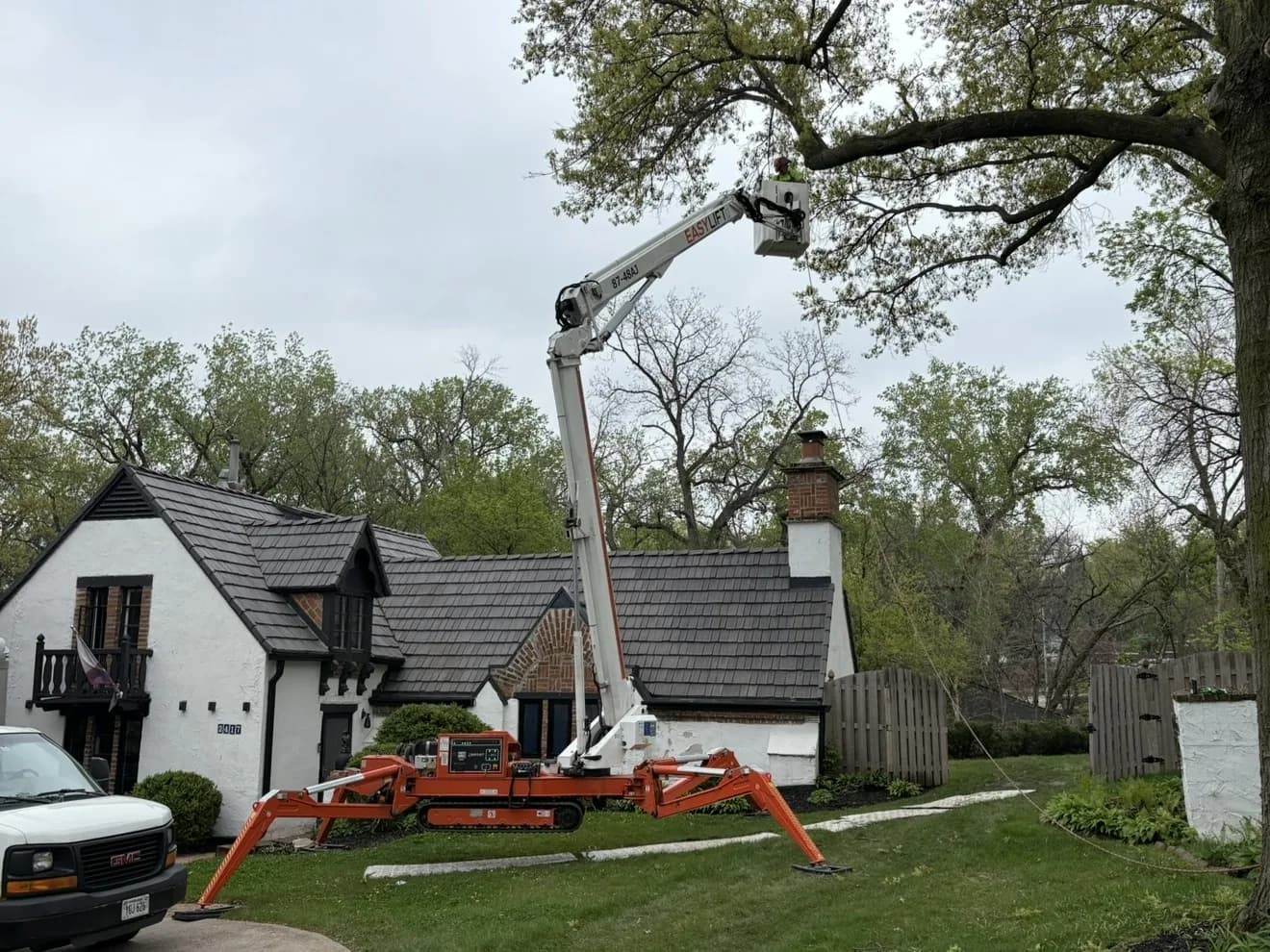
Chlorosis is one of the stresses that puts a birch on the borer's list in the first place.
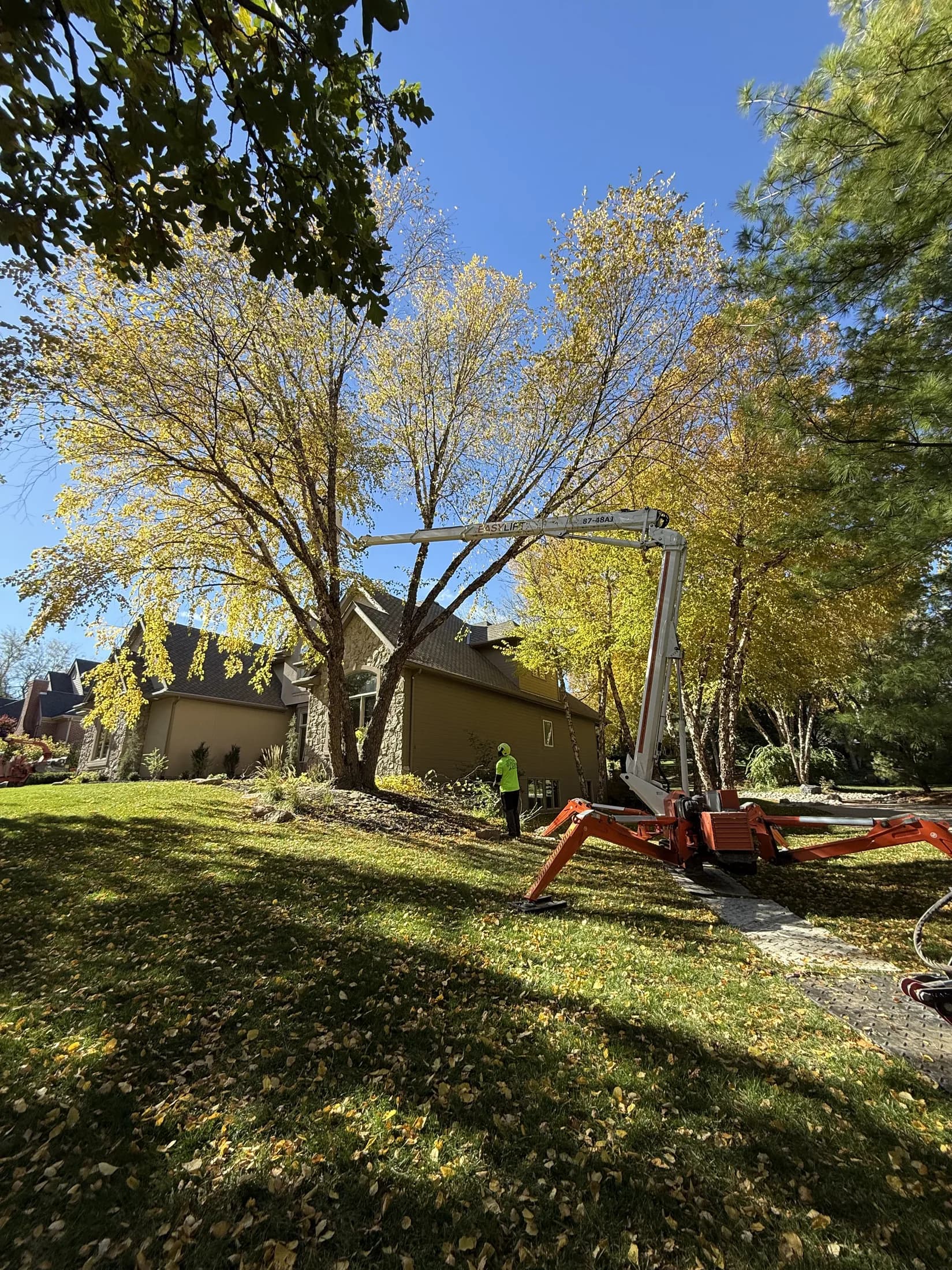
The permanent answer on a bad site is usually a species that belongs there.