

Pine Tips Dying Back From the Bottom Up
New candles that browned before they finished growing, dead shoots starting low in the tree and moving a little higher every season. On Austrian pine here that is nearly always Diplodia tip blight.
Free Estimate within 24 Hours
How to Tell Diplodia Tip Blight From Other Causes of Dying Pine Tips
Get it identified free
It is tip blight if
The damage is on this year's growth, low first
The candle died half-grown
New shoots that started to elongate, stopped, and turned straw brown with the needles still short and partly sheathed.
It started at the bottom
Lowest branches first, working upward year by year. Spores wash down from old cones, so gravity sets the direction.
There are black specks on the cones
Pinhead fruiting bodies on two-year-old cone scales and at the base of dead needles. A hand lens settles it.
Resin beads on the dead shoot
Small sticky droplets along a killed candle. The tree tried to wall the infection off and did not manage it.
It is something else if
The pattern is faster, higher, or on older needles
The whole tree browned in a few months
Pine wilt, usually on Scots pine. The tree dries from the inside, resin flow stops, and no spray reaches it. Removal is the only response.
Only the windward and south sides browned
Winter desiccation. Needle tips burn on the exposed side over a dry winter and the buds are usually alive.
Older needles have brown bands
Dothistroma needle blight. It works on needles behind the tip rather than the candle, on different timing.
The dead shoot is hollow
Tip moth. Split it lengthwise and look for a tunnel and frass. An insect, and no fungicide touches it.
Where to Look for Diplodia Tip Blight Before Spraying a Pine
Pest and disease treatments
The lowest branches
This is where it starts. Count how many whorls up the dead shoots reach and photograph it. Next year's comparison is the only real measure.
Old cones still hanging
Two-year-old cones on the branches and the ground are the reservoir. A tree loaded with them reinfects itself every spring.
The upper crown
Still clean means the tree has time. Dead shoots at the top mean years of infection, and a different conversation.
The trunk flare and root zone
Buried flare, mower wounds, compacted soil, a tree planted too deep. Diplodia takes stressed pines first, so this is half the diagnosis.
Send a photo of the tree and one of the damage. An arborist will name it before anybody drives out.
The same tree, left alone
Year one
A scatter of brown candles on the lowest branches after a wet May. Most people read it as frost and forget it.
Year two
The lower third has dead tips on most branches and the shoots behind are not filling the gap. The cheapest moment to start.
Year three
Whole lower branches dead rather than their tips, because the fungus moved back into the shoot and formed cankers. Those do not come back.
Year four
Dead wood to head height, a thin interior, infection working through the middle of the crown. Treatment helps the top, not the bottom.
Year five
A skeleton of dead branches under a shrinking green top. The tree is a liability over a driveway and the question is what replaces it.
A killed candle is gone permanently. Pine sets buds the year before, so a shoot lost this spring is a gap forever. A fungicide only protects growth that has not happened yet.
The Spring Spray Window for Treating Diplodia Tip Blight
Pest and disease treatmentsOne year, March through February
Dormant, nothing to protect
March into early April
Buds are tight, with no soft tissue for a protectant to sit on. Prune dead wood in dry weather instead.
First application, at bud break
Candles emerging from the sheath
The most important spray of the year, going on as the candle starts to move, not on a date.
Follow-up applications
Two weeks apart, twice more
Candles keep elongating and each spray protects only what is out. Wet Mays need all three, which is where one-application programs fail.
Needles hardened, infection settled
June through August
Whatever got in this spring is in. June browning came from April, and nothing sprayed now changes it.
Sanitation and assessment
September through February
Prune dead shoots and cankers in dry weather, clear old cones, fix the stress.
Timing is read off the candle, not the date. Crews watch for the shoot pushing out of the sheath, which moves two weeks either way.
What Waiting to Treat Diplodia Tip Blight Really Costs
See pricing
Spring program and cleanup, caught early
Routine
Three well-timed applications in a wet spring, cone and deadwood sanitation, attention to whatever is stressing the roots. The tree keeps its shape.
Starting after the lower third is dead
Same cost, less tree
The same spring program on a crown that already lost its bottom. Nothing brings dead branches back; you are paying to hold what is left.
Removal and replanting
$1,000 – $8,000
Plus the decades a replacement evergreen needs to screen what the old one screened. Every treatment is measured against this.
Removal figures are Eden's published range and vary with size and access. Treatment cost varies with tree size, how many pines there are, and how wet the spring is.
“Michael, Rico and Matt did a great job removing three trees. One tree was very large and towered over our neighbor's house. They removed the tree beautifully and also managed to save our old dilapidated garden shed!”

Common questions about pine tip blight
Ask us something elseWill the dead tips grow back?
No. A pine sets next year's buds during the current summer, so a dead candle leaves the branch no spare bud. The shoot behind may grow around the gap, but the dead tip is permanent. A fungicide buys next spring's candles.
Can you spray now, in the middle of summer?
Not usefully. The fungus infects candles while they are soft and elongating, in late April and May. Once needles harden, that tissue is neither infectable nor protectable. If you call in July we will tell you to book April, which is not the answer that gets a truck out.
Why does it start at the bottom of the tree?
Because the spores wash downward off old cones, dead needles and infected shoots in splashing rain, so branches below get the heaviest load. It is also why clearing cones and litter is part of the treatment, not tidiness.
Do I need to remove the old pine cones?
It helps more than people expect. Two-year-old cones are the biggest spore source, and a pine full of them reinfects itself every spring however well the spray is timed. We clear what we can reach during dormant pruning.
Is this the same thing as pine wilt?
No, and confusing the two costs money. Pine wilt is a nematode carried by a beetle, kills within a season, and hits Scots pine hardest here. No spray saves a wilted pine; it comes down and gets disposed of. Tip blight is slow and responds to spring fungicide.
Should I prune out the dead branches?
Yes, but only in dry weather, because pruning a wet pine moves spores onto fresh cuts and tools. Late fall through winter, with cuts back into live wood behind any canker.
When is a pine past treating?
Roughly when dead wood reaches the upper crown, or when more than half the branches have lost their tips rather than their candles. By then cankers have formed and a spring protectant cannot reverse it. We will say when a tree has crossed that line rather than sell three seasons of spraying.
Identification is free, including when the answer is that the tree needs nothing.
Related Evergreen Problems and Services for Tip Blight
All tree problems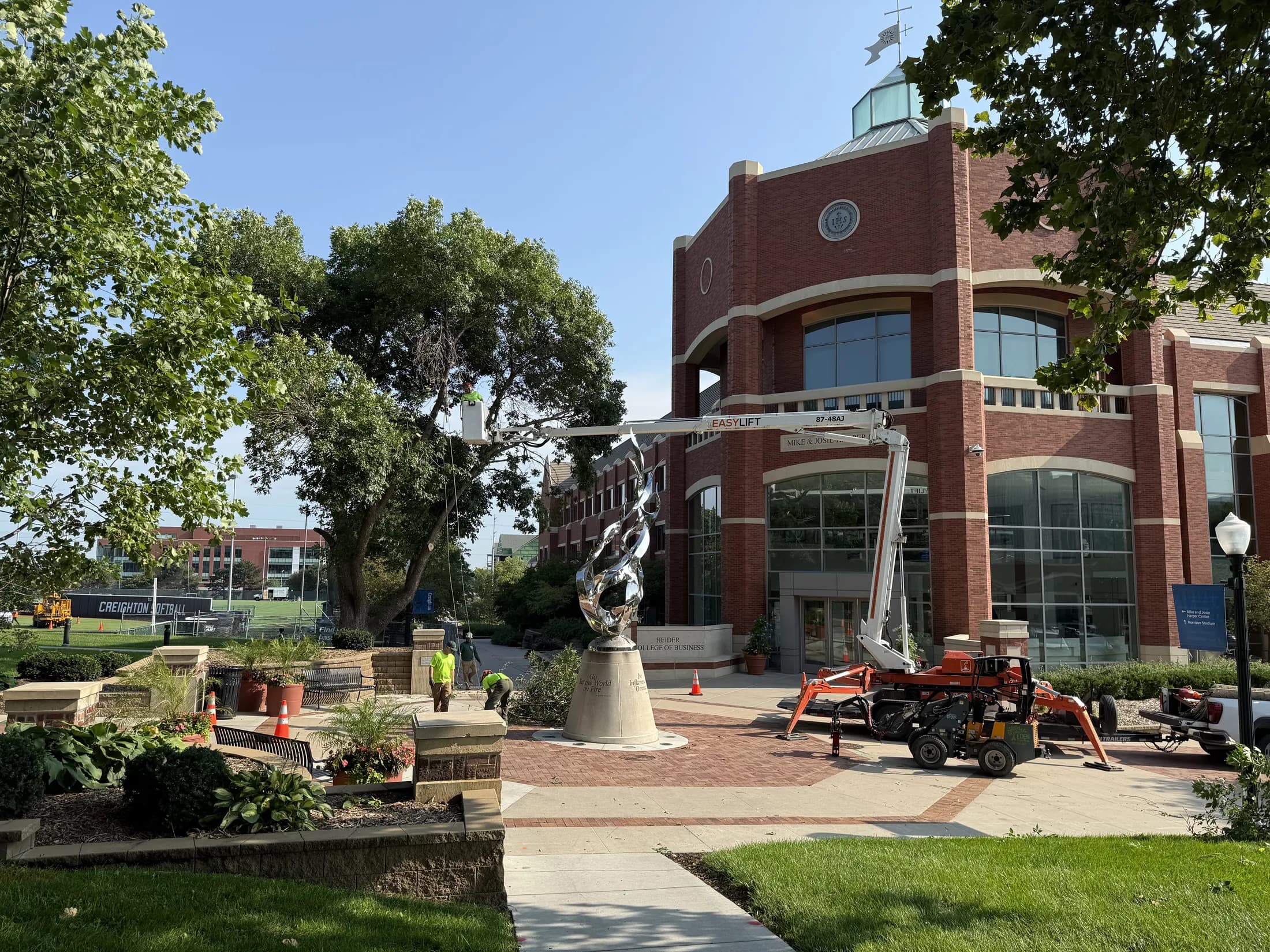
Spruce losing needles from the bottom
Needle cast, the other bottom-up evergreen fungus in this metro.
Pest & Disease Treatments
How diagnosis and timing work across everything we spray.
Needle Cast Treatment
The spruce program, sharing a crew and a spring calendar.
Deep Root Fertilization
Diplodia takes stressed pines first. Fixing the root zone is half the work.
Tree Removal
For pines past it, and for pine wilt, where removal is the only answer.
Why Stressed Pines Are Most Vulnerable to Diplodia Tip Blight
Pest and disease treatmentsThe fungus that causes tip blight lives quietly in the bark, needles and cones of many healthy pines. It does not arrive from somewhere. What changes is the tree, and what changes the tree is stress: a dry summer then a wet spring, a flare buried under mulch, roots under a new driveway, pines planted so close the interior never dries. On a well-sited pine it stays latent for decades. On a stressed one it takes the candles.
That is why treatment here is not just a spray. Three well-timed applications through candle elongation protect the new growth, and in a wet Nebraska May they earn their money. But if the tree is susceptible because of a compacted root zone or a buried flare, the fungicide holds back water while the leak stays open. We would rather spend the first visit on soil than sell a program that treats a symptom every April.
The hardest version is the row of Austrian pines planted as a screen along a property line. Planted tight, they crowd each other, the interior stays wet, and infection moves down the row. Sometimes the answer is to treat the whole row. Sometimes it is to remove two so the rest can dry out and live, a smaller job than the one we were called to quote.