How do I know if my tree is actually dead?
Dormant reads as dead to most people, especially in winter. The reliable signs: a full season with no leaves, bark falling away in sheets, brittle twigs that snap gray inside, fungus on the trunk. Send us a photo — telling dead from struggling is free.
Is a dead tree an emergency?
Honestly, sometimes not. Standing over a house, driveway or play area, it should not wait for the next windstorm. In an open corner of an acreage it threatens nothing and can be scheduled like any other job. Where it stands matters more than the fact that it died.
Why does removal cost more the longer I wait?
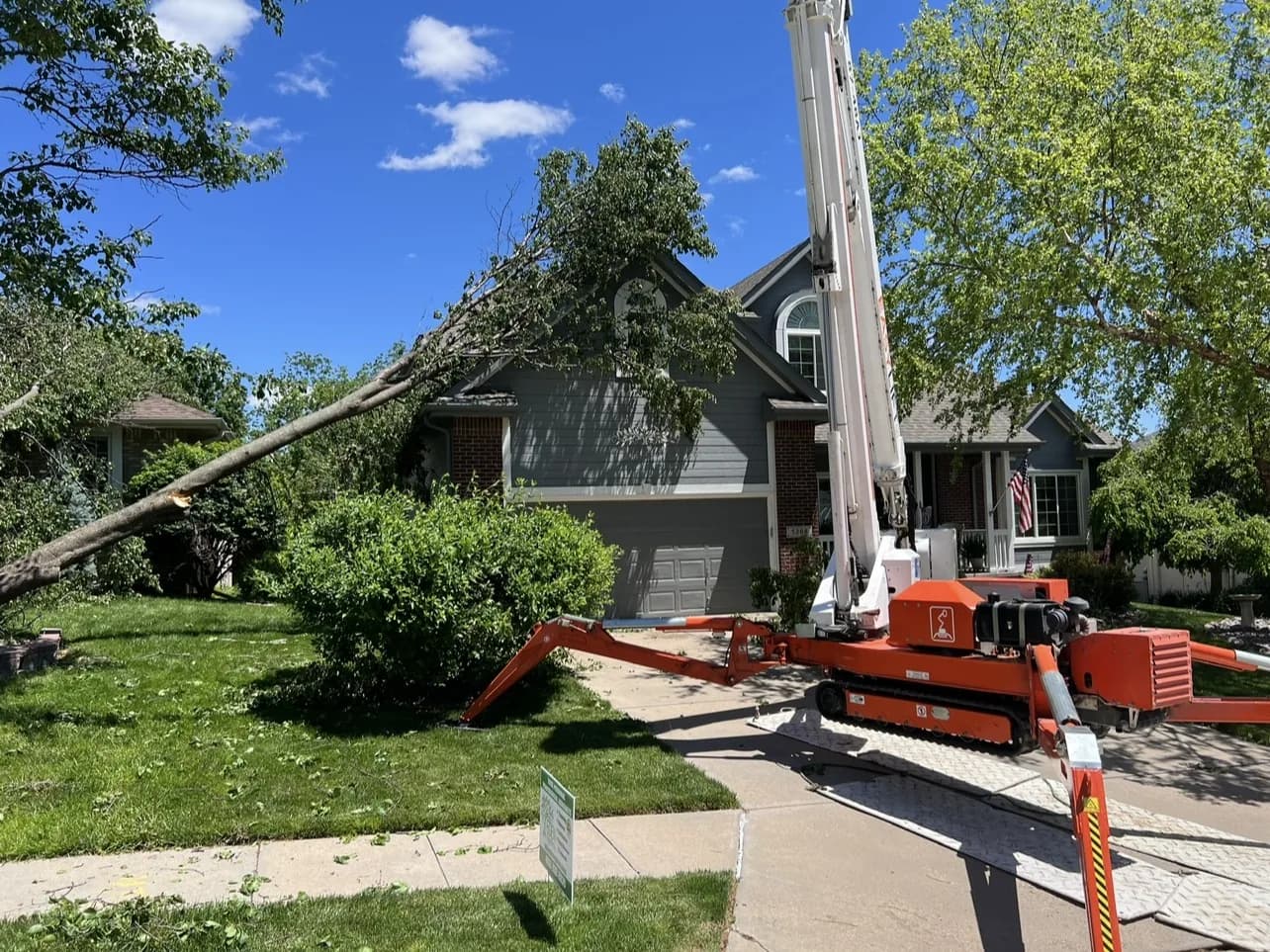
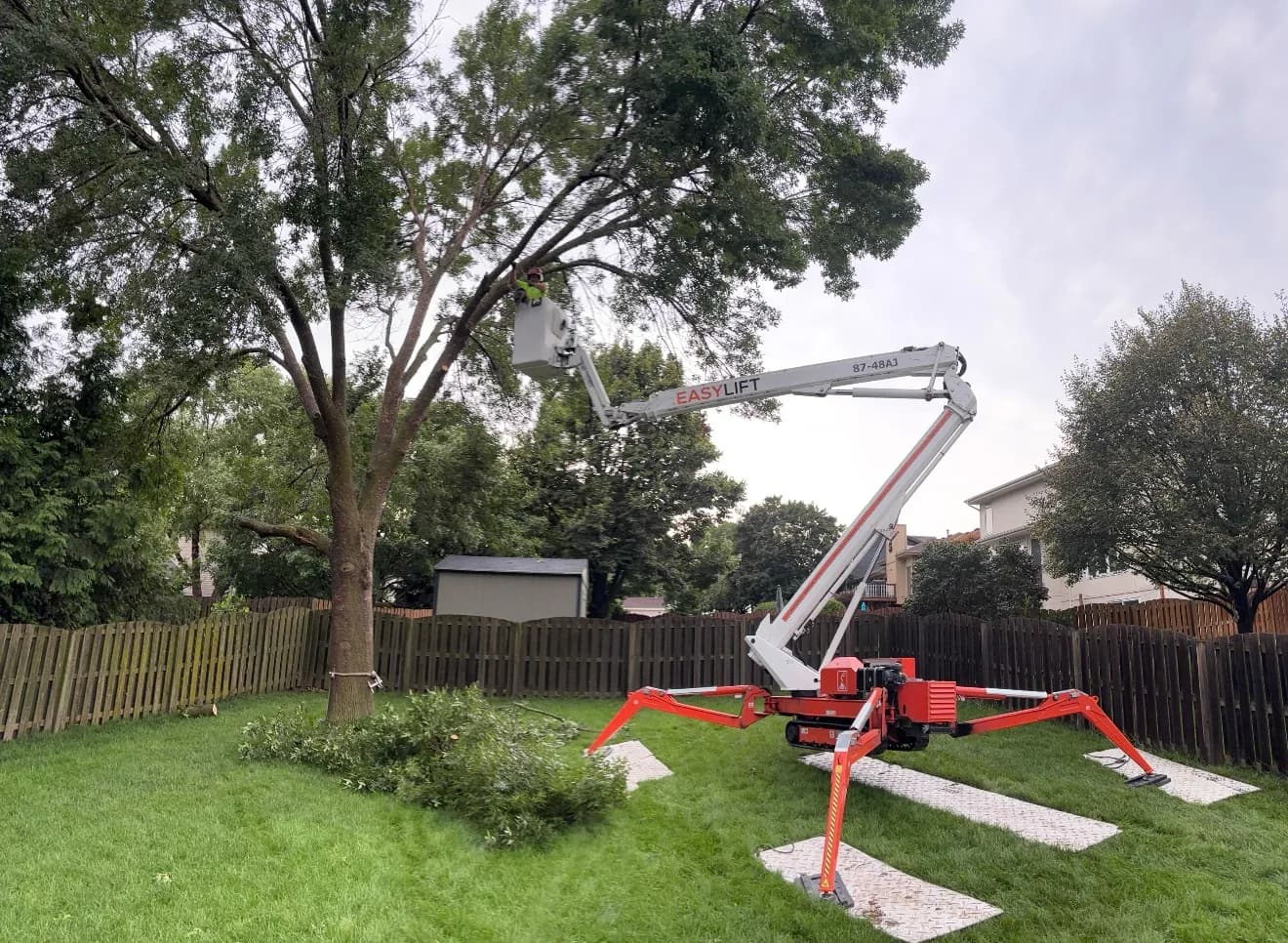
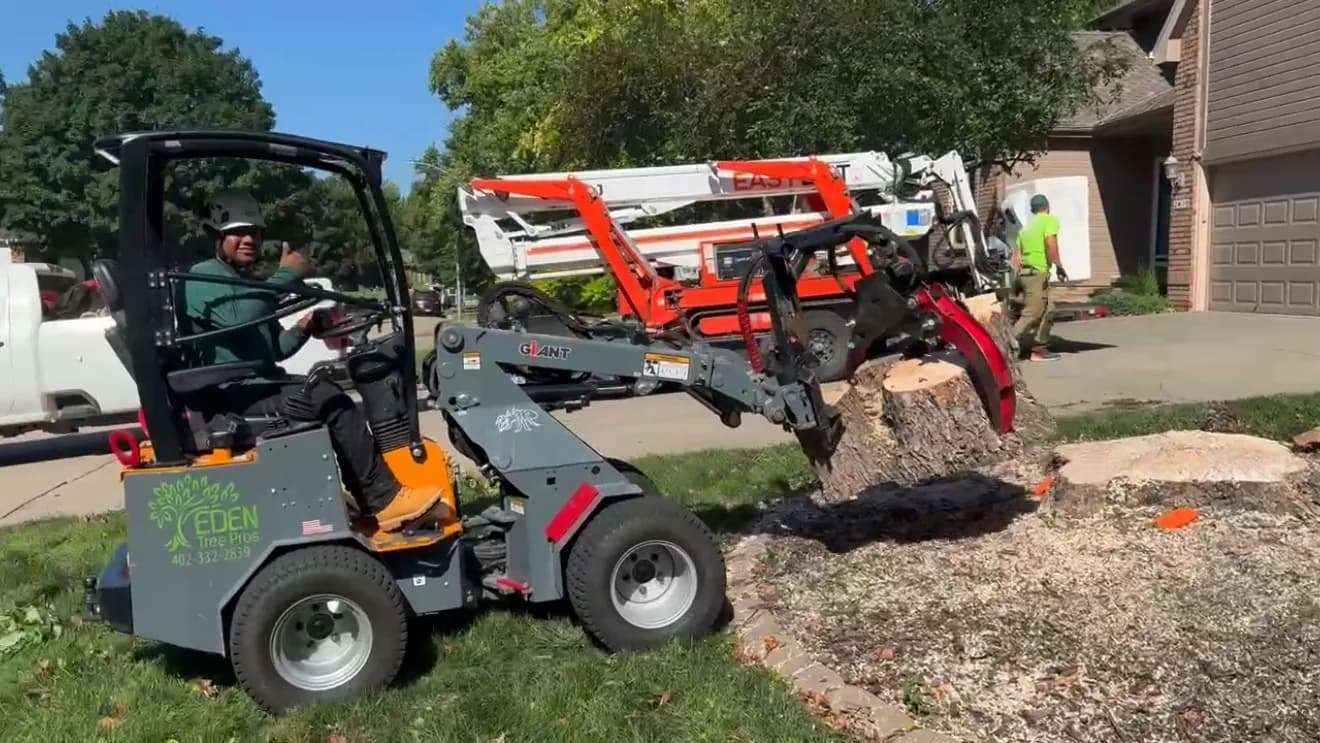
Because dead wood dries, and dry wood takes methods off the table. A recently dead tree can often be climbed and priced like a live one; later it may be bucket-only, eventually crane-only. Each step up is a bigger machine on the invoice.
What does dead tree removal cost in Omaha?
The same published ranges as any removal — $1,000 to $3,000 for smaller trees, $4,000 to $8,000 for large ones — with condition deciding where it lands. A brittle tree that needs a crane sits at the top.
My dead ash — should I have treated it?
If it is already dead, that decision has been made. But if your other ash are still alive, they can very likely be protected by injection for far less than a removal costs. We will run the treat-or-remove arithmetic with you for free.
Will you climb a dead tree?
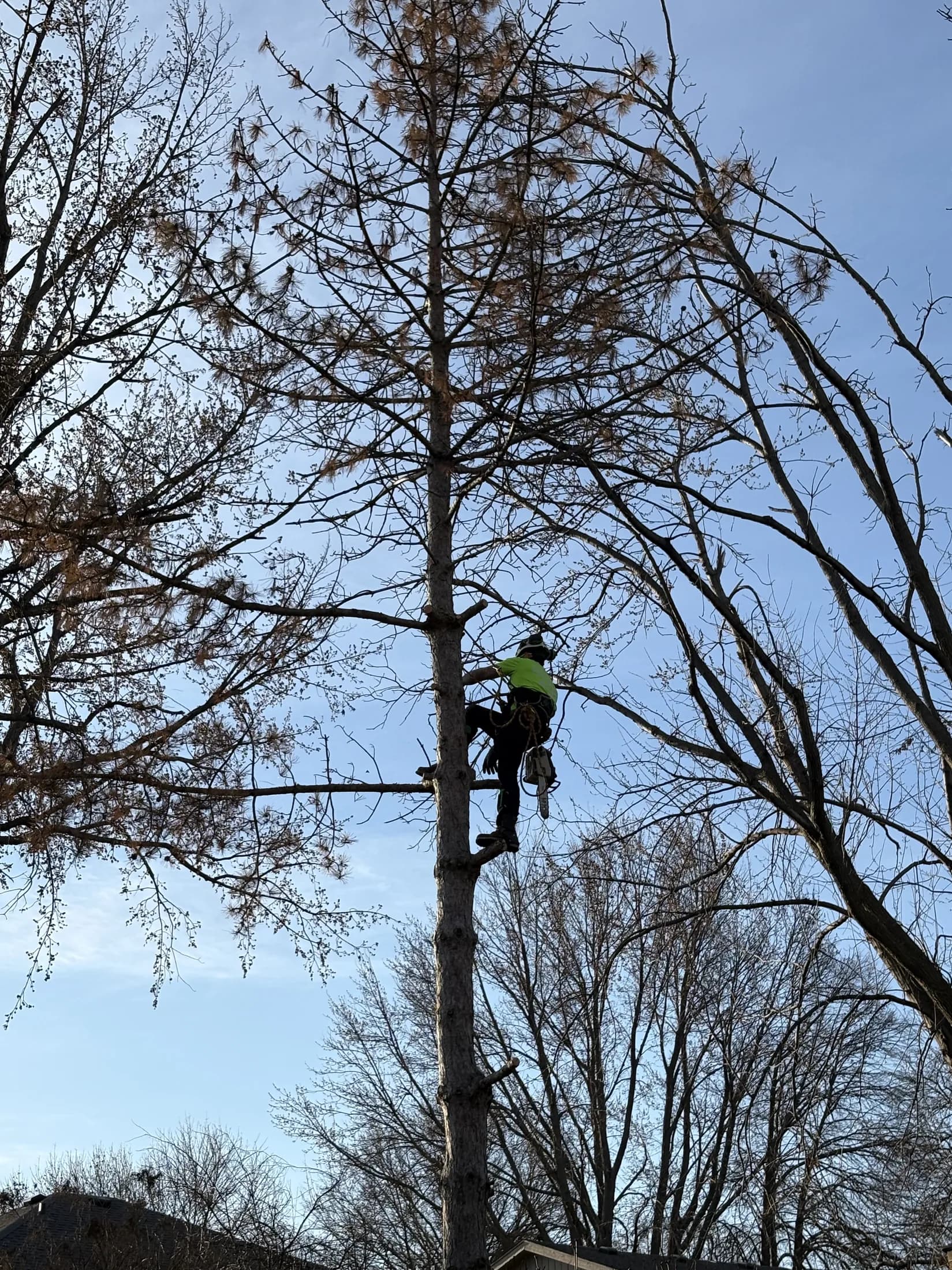
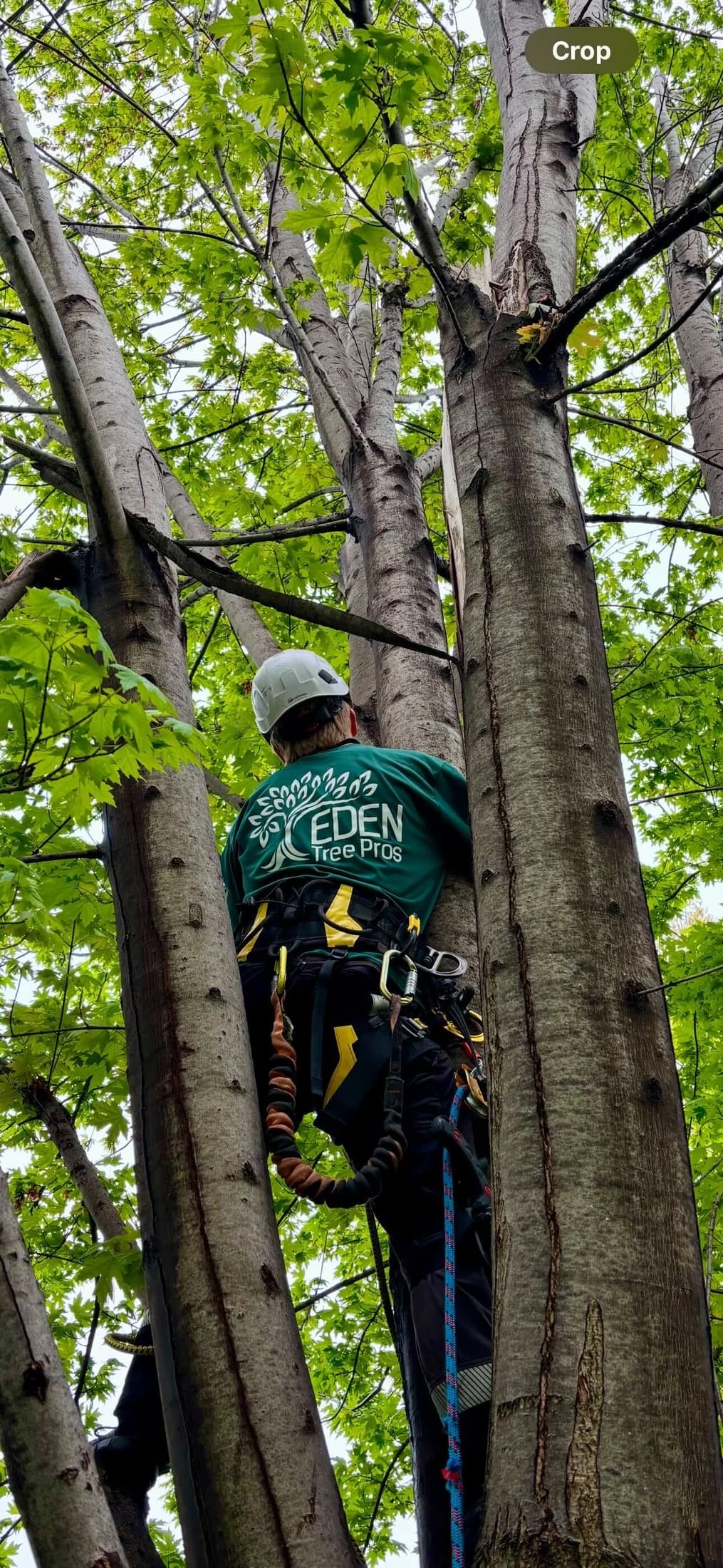
Only when the wood still earns it — the arborist's call, not the calendar's. Declining to climb is not upselling the bucket or the crane — it is the reason our climbers have made it home from every job since 1997.
Can I just leave it as a wildlife tree?
On acreage, away from anything it can hit, a standing dead tree is genuinely good habitat and leaving it is legitimate. Near structures, driveways or property lines it is a liability your insurer may eventually notice too.