Eden Tree Pros, tree service in Omaha, Nebraska
Overgrown acreage lot awaiting selective clearing in the Omaha metro

Lot & Land Clearing in Omaha, NE

Clearing land is not removal multiplied. Anyone can cut everything; the skill is deciding what stays. On a building lot or an overgrown acreage, the trees you keep are worth more than the clearing costs — and choosing them takes an arborist, not a saw.

Free Estimate within 24 Hours

4.9across 313+ reviews on

When Land Needs Clearing: The Three Jobs People Mean by Clearing

Root zone of a mature tree flagged for protection on a building lot in the Omaha metro

The build

A lot going under construction

The house footprint, the drive, the utility runs — cleared completely. Everything else evaluated tree by tree: a mature oak near the foundation is worth real money if it survives construction, worthless if the excavator trenches its roots first.

Overgrown tree line being cleared back along a rural fence in the Omaha metro

The lines

Fence lines and field edges

Volunteer trees swallow a fence line in a decade here — hackberry, mulberry and elm coming up through the wire. We cut and chip them so the fence crew has a clean run and you are not back in five years.

Aging evergreen windbreak with dead and failing rows on an acreage in the Omaha metro

The windbreaks

Shelterbelts past their prime

The cedar and pine windbreaks planted decades ago are aging out across the metro's acreages — dead rows, shattered tops, deadfall. Usually the answer is thinning the failures and keeping the wall, not flattening fifty years of shelter.

Walk it with an arborist before anything is cut — the trees worth keeping are the whole game.

How Lot and Land Clearing Works: Cut, Keep, Chip — in That Order of Thought

How every job runs
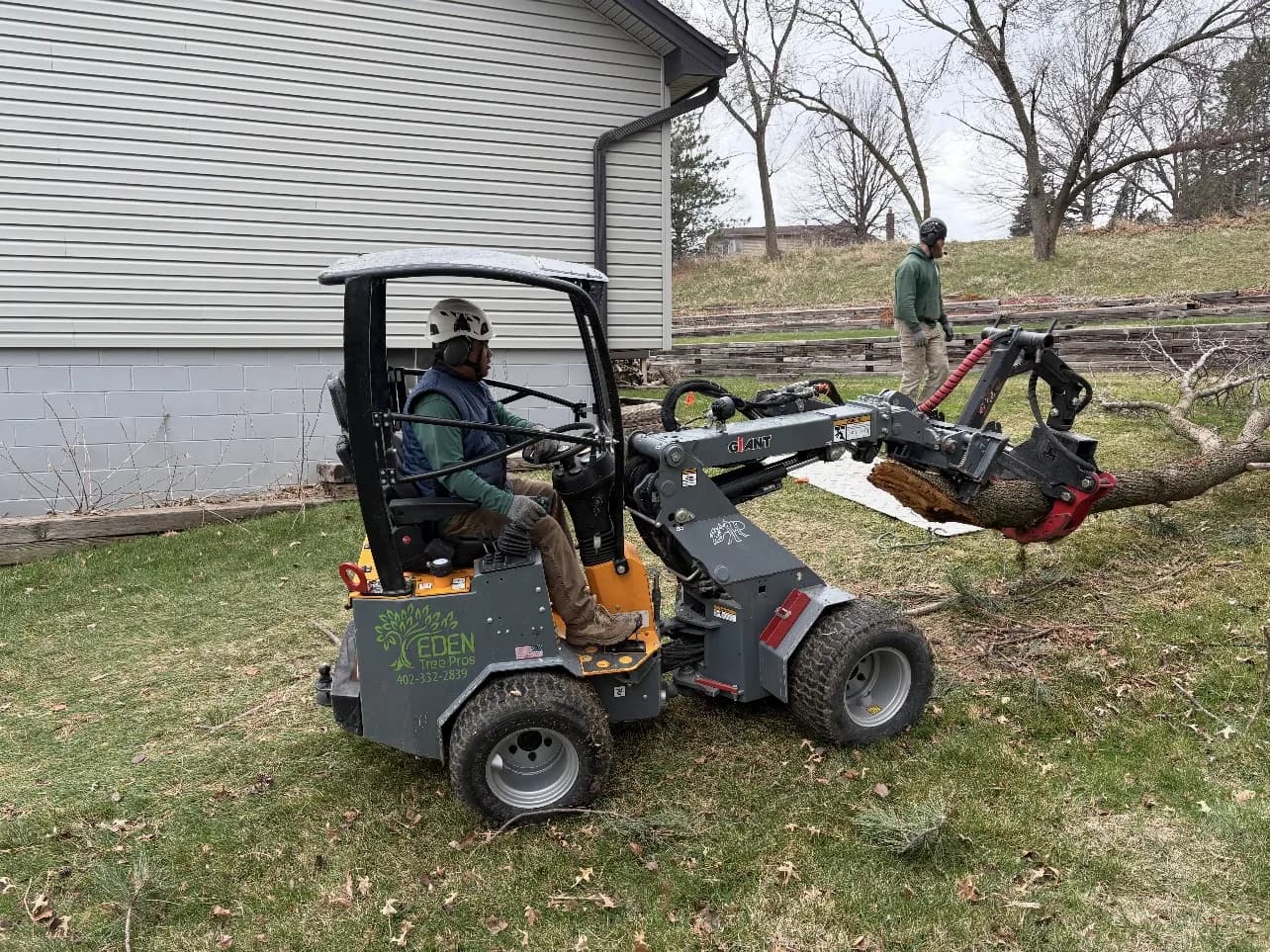
Brush being processed and hauled during a land clearing job in the Omaha metro

The sequence

How a clearing job runs

The walk decides everything

An arborist flags the property: what goes, what stays, and which keepers need protection before machines arrive. This hour shapes the price.

Keepers get protected first

Fencing around root zones, routes planned so equipment never crosses them. A kept tree with crushed roots is a removal you paid to postpone.

The clearing runs in passes

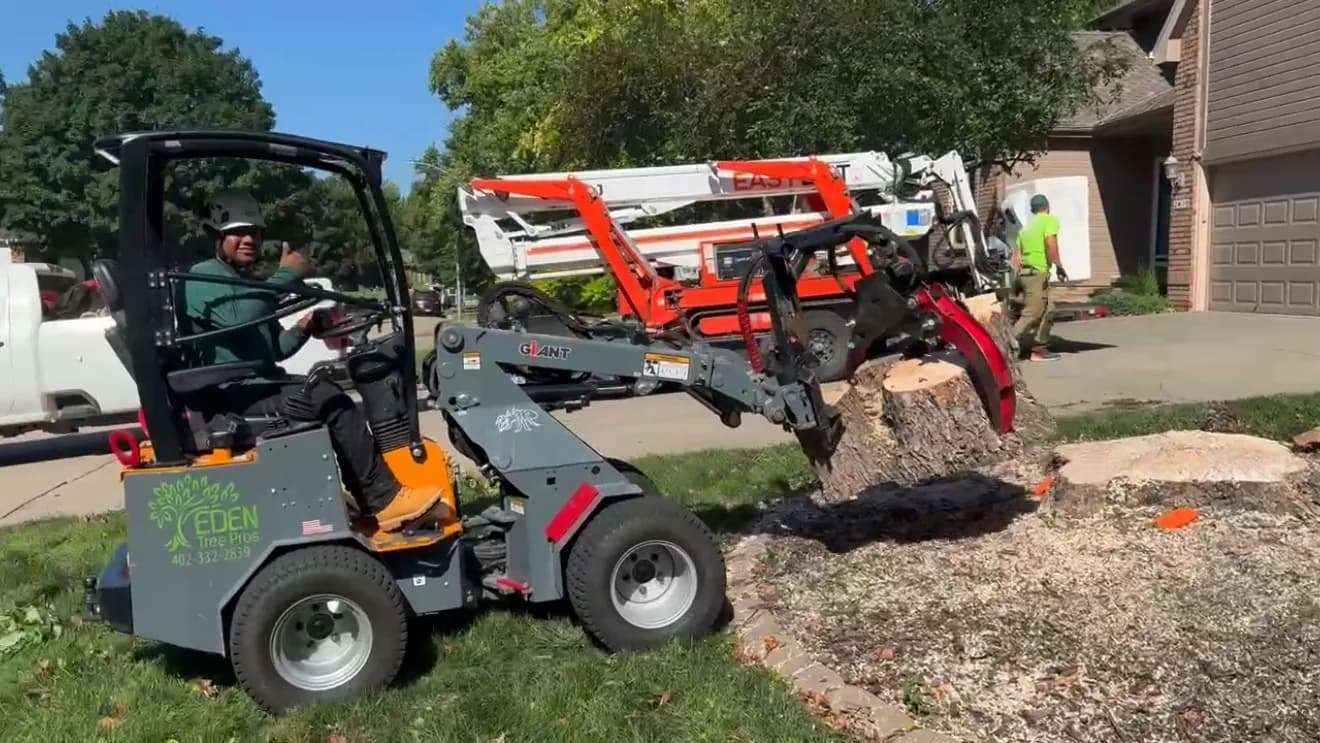
Brush and small stems first, then the removals, largest last. Working in order keeps the site navigable and the chipper fed instead of buried.

Chipping happens at scale

Acreage clearing produces brush by the ton, and hauling it whole would double the trucking. It leaves as chips — hauled, or left in a pile if you want the mulch.

Stumps are the fork in the road

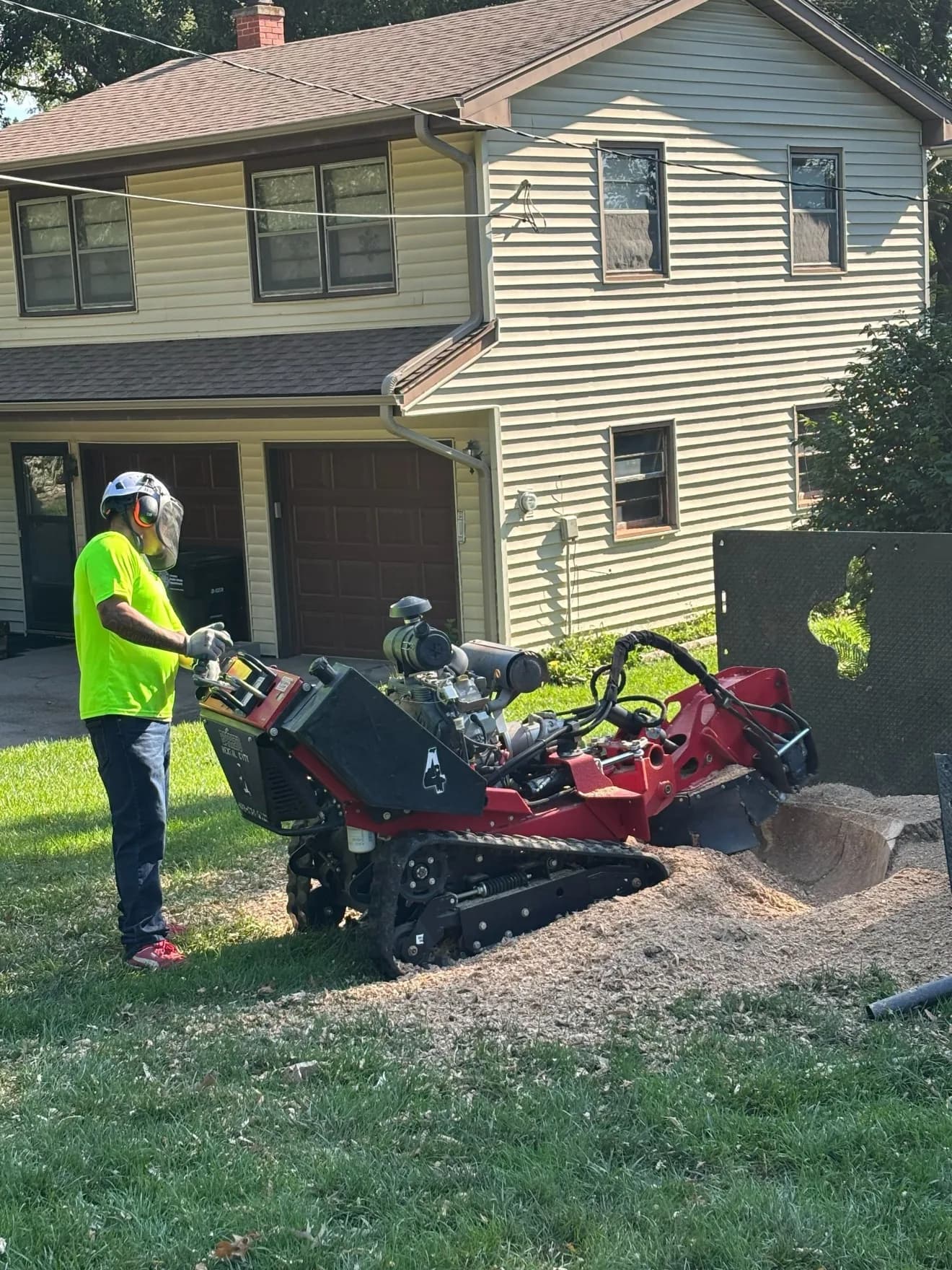
Grinding handles stumps where lawn or fence is going. Under a future foundation or drive, stumps must come out entirely — and that is excavation work, where our part of the job hands off.

Lot & Land Clearing Cost: Why Clearing Is Quoted by the Walk, Not the Acre

See pricing
Crew working through mixed tree cover on a clearing job in the Omaha metro

Fence lines and brush

Days, not weeks

Small stems, high volume, all chipper work. The cheapest clearing there is, and it pays for itself in fencing labor alone.

Selective lot clearing

Priced tree by tree

Removals at removal prices, keepers protected, brush chipped at scale. More thought than a clear-cut, less money than replacing a mature shade tree ever costs.

Clearing after construction starts

The same trees, twice the trouble

Once the site is staked, trenched and half-built, every removal happens around obstacles and other trades. The cheapest clearing finishes before the first concrete truck.

Full removals inside a clearing price from the same published ranges as any removal — $1,000 to $3,000 for smaller trees, $4,000 to $8,000 for large — with brush work quoted by crew time. It all lands in one written number after the walk.

Lot & Land Clearing Scope: Where Our Work Honestly Ends

In every clearing job

A property walk with an arborist to sort keepers from removals

Root-zone protection for every tree marked to stay

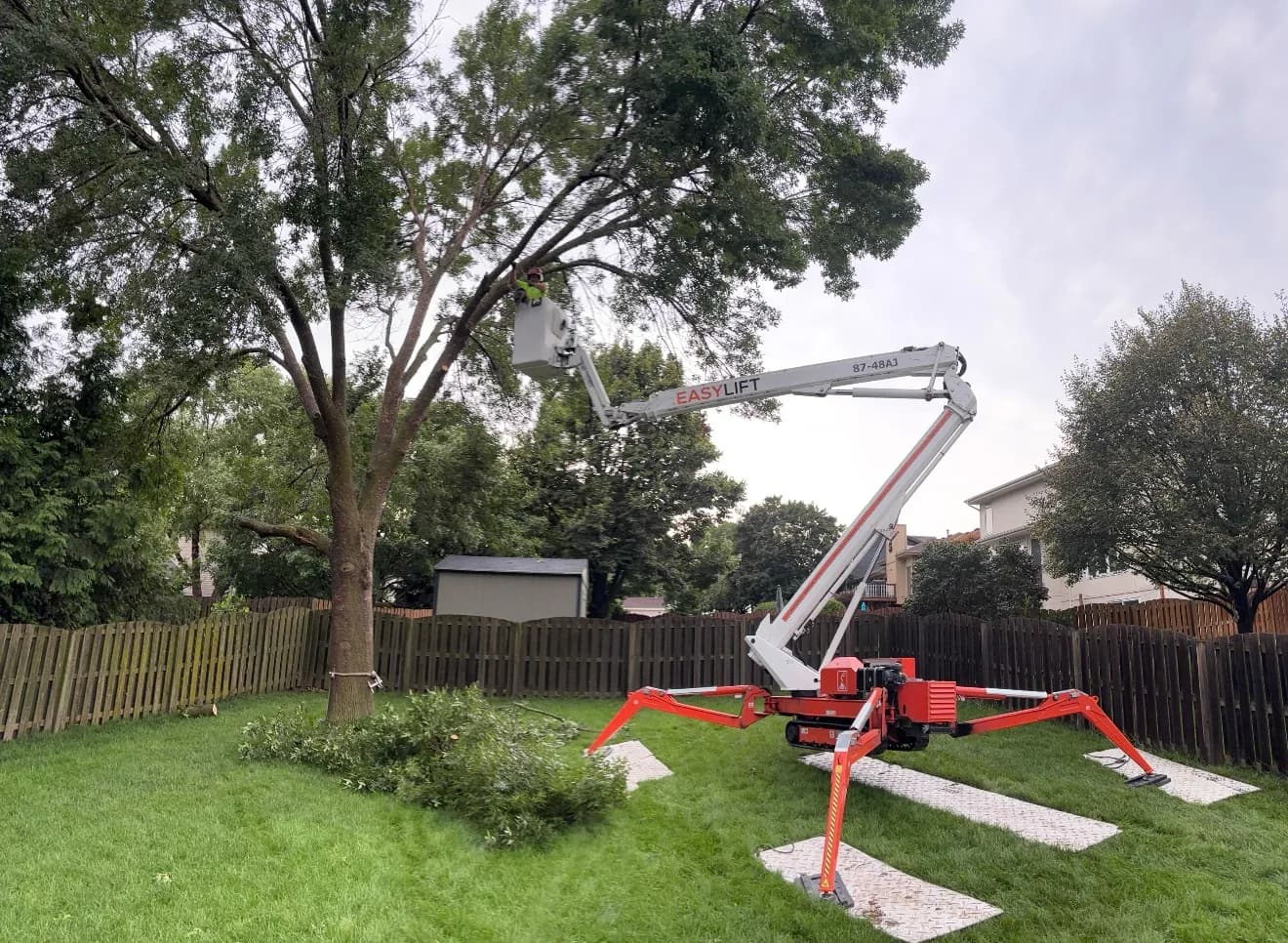
Tree and brush removal, from volunteer stems to full-size removals

Brush chipped on site at scale, hauled or left as mulch — your call

Wood hauled, or bucked and stacked if you want it

Stump grinding below grade where lawn or pasture is the plan

Not ours — and we will say so

Grading, earthmoving and site prep — an excavation contractor's trade; we sequence with yours

Full stump and root-ball excavation under future foundations or drives

Demolition of structures, old fencing or concrete

Erosion control and seeding after the ground is disturbed

One walk, one written scope — including the work that belongs to your excavator instead of us.

4.9
DJ and his crew came out for three back yard trees to be removed and our front tree to be trimmed. They worked non-stop in the cold and were right back at it the next morning. Beyond excellent service and very reasonable cost.
Troy McAteeOmaha Metro313+ reviews

Lot & Land Clearing FAQs: Price, Sequencing and Scope Questions

Ask us something else

What does land clearing cost in the Omaha area?

There is no honest per-acre number, because the price is the trees — a lot with forty volunteer cedars and a lot with six mature cottonwoods are different jobs on identical acreage. Full-size removals price from our published ranges, and the brush work is quoted by crew time.

Can you clear everything?

We can, and occasionally that is right — a small lot the building footprint takes entirely. But on most properties a clear-cut throws away the most valuable thing on the land: mature trees in the right places are an asset, not an obstacle.

How do you decide what stays?

Species, condition, position and what the land is becoming. A sound burr oak clear of the build gets flagged and fenced; a storm-cracked silver maple leaning at the future driveway does not make the cut. You walk it with the arborist and every flag gets explained.

Do you do the grading and dirt work too?

No, and be wary of a tree company that says yes. Earthmoving, grading and site prep are an excavation contractor's trade, with their own machines and insurance. We do the tree side, they do the dirt, and we sequence with them so nobody's work undoes the other's.

What happens to all the brush and wood?

Brush gets chipped on site — clearing produces far too much to haul whole. Chips leave with us or stay as a mulch pile. Trunk wood is hauled, or bucked and stacked if you would rather keep it.

When should clearing happen relative to the build?

Before the excavator, ideally before final staking. Clearing an open lot is straightforward; around trenches, forms and other trades it is slower and priced accordingly. Tree protection also only works before the ground is disturbed.

Can you thin an old windbreak without losing it?

Usually, and it is almost always better. Taking out the dead and failing rows lets the sound trees fill in, and the shelter keeps working while replacements grow. Flattening a fifty-year windbreak buys decades of open wind.

Free and no pressure

Every estimate is free and comes in writing before anything is booked.

Why We Clear Land the Slow Way: Anyone With a Saw Can Empty a Lot

All tree removal

Treating every tree the same is the fastest way to clear land and the most expensive mistake available on an acreage. A mature shade tree in the right spot does more for a property's value than almost anything you can build under it, and it cannot be bought back at any price. Since 1997 the most valuable hour on our clearing jobs has been the first one, walking the land and flagging the keepers.

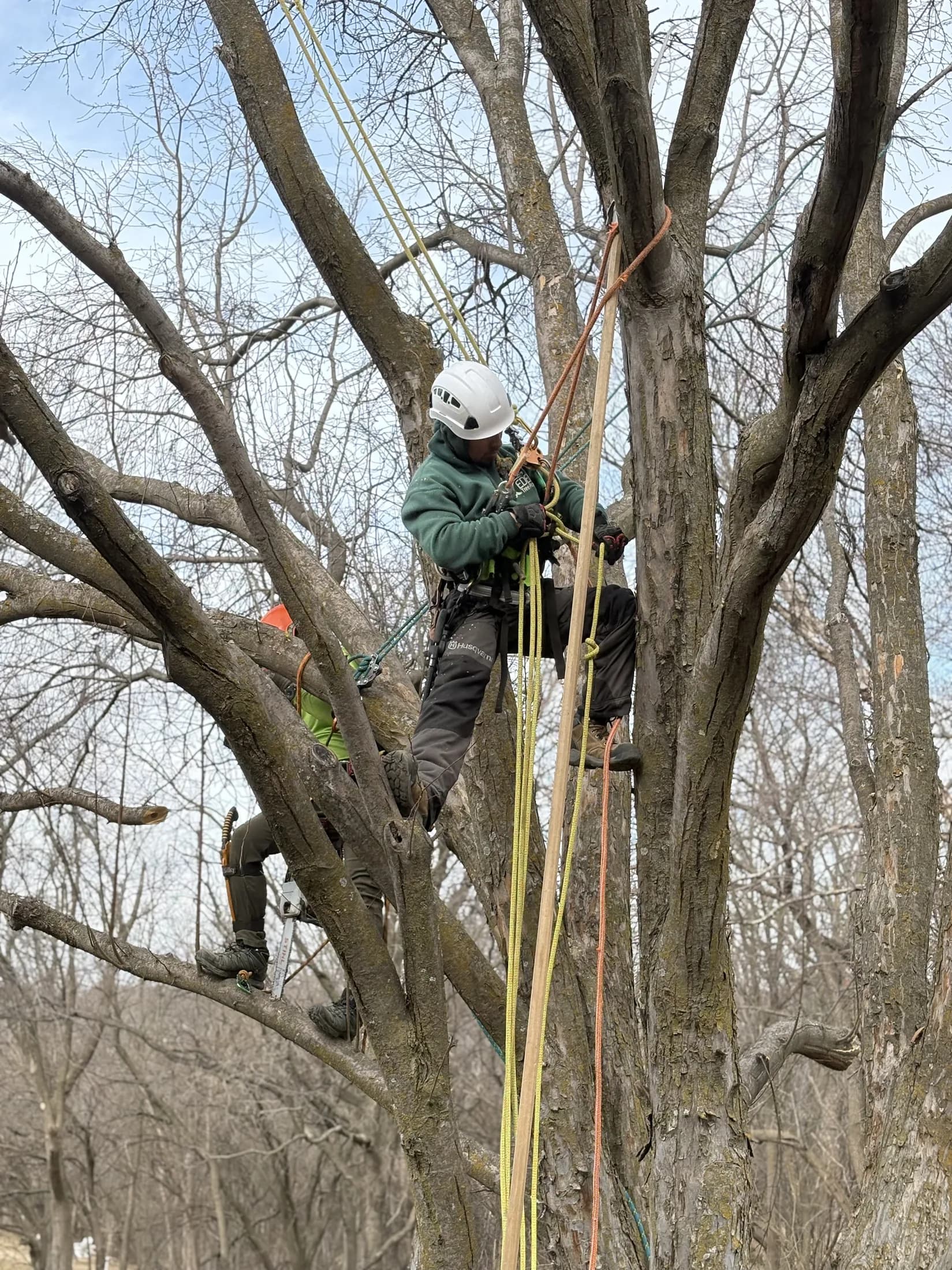
Clearing is a volume trade. Brush that would take weeks to haul whole leaves as chips in days, removals inside the job run to the same rigging standard as in a finished yard, and the keepers get their root zones fenced before any machine moves. A keeper with crushed roots was not kept — it was scheduled for a second, sadder removal.

A boundary we will state plainly: we are not excavators. Grading, earthmoving, digging out root balls under a future foundation — that is a different trade with different machines, and pretending otherwise is how site work goes wrong. We do the tree side completely and sequence with your dirt contractor. If the job you actually need is mostly dirt, we will tell you that on the walk, for free.

Walk your land with an arborist first

Call nowFree estimate