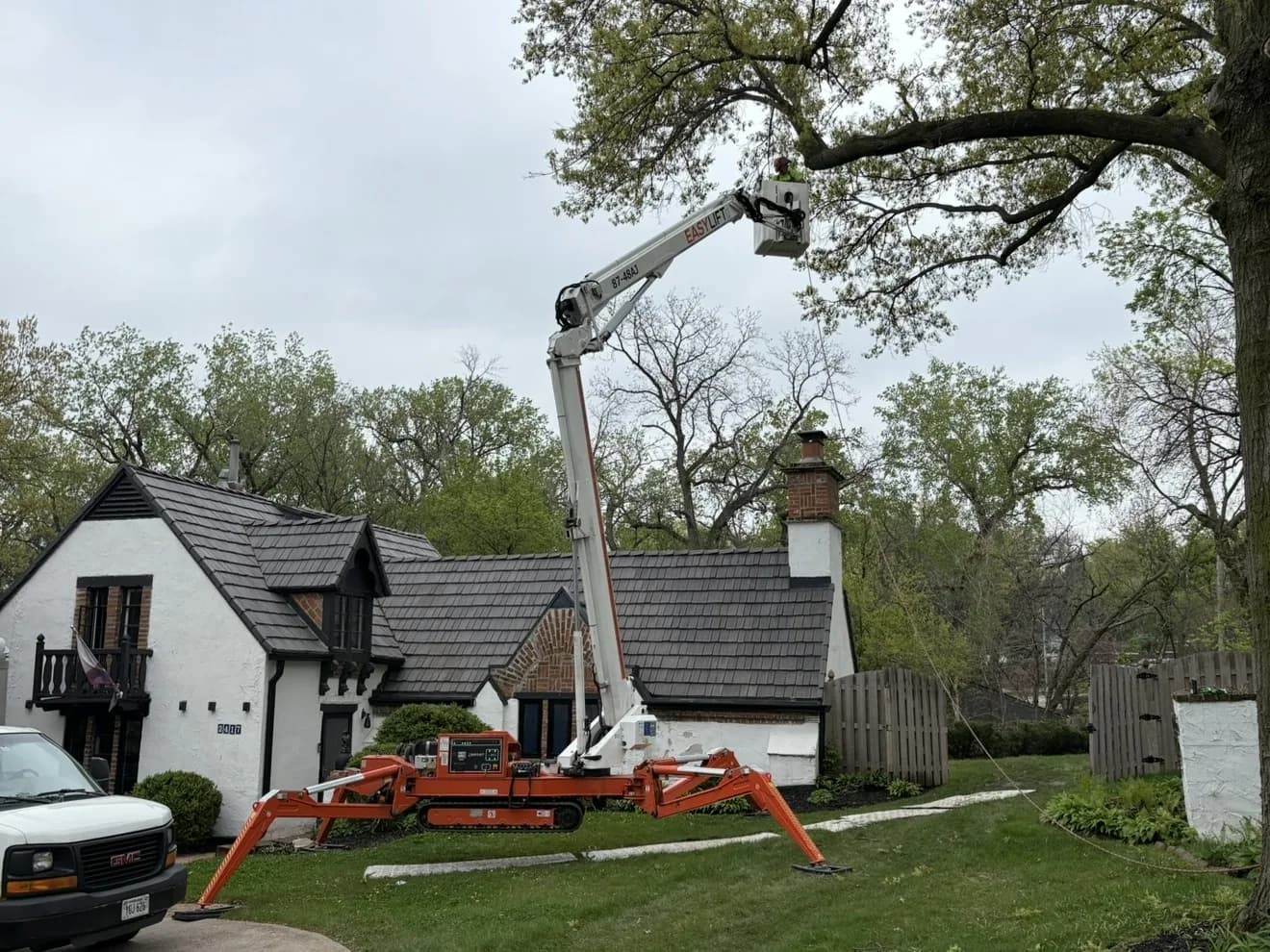
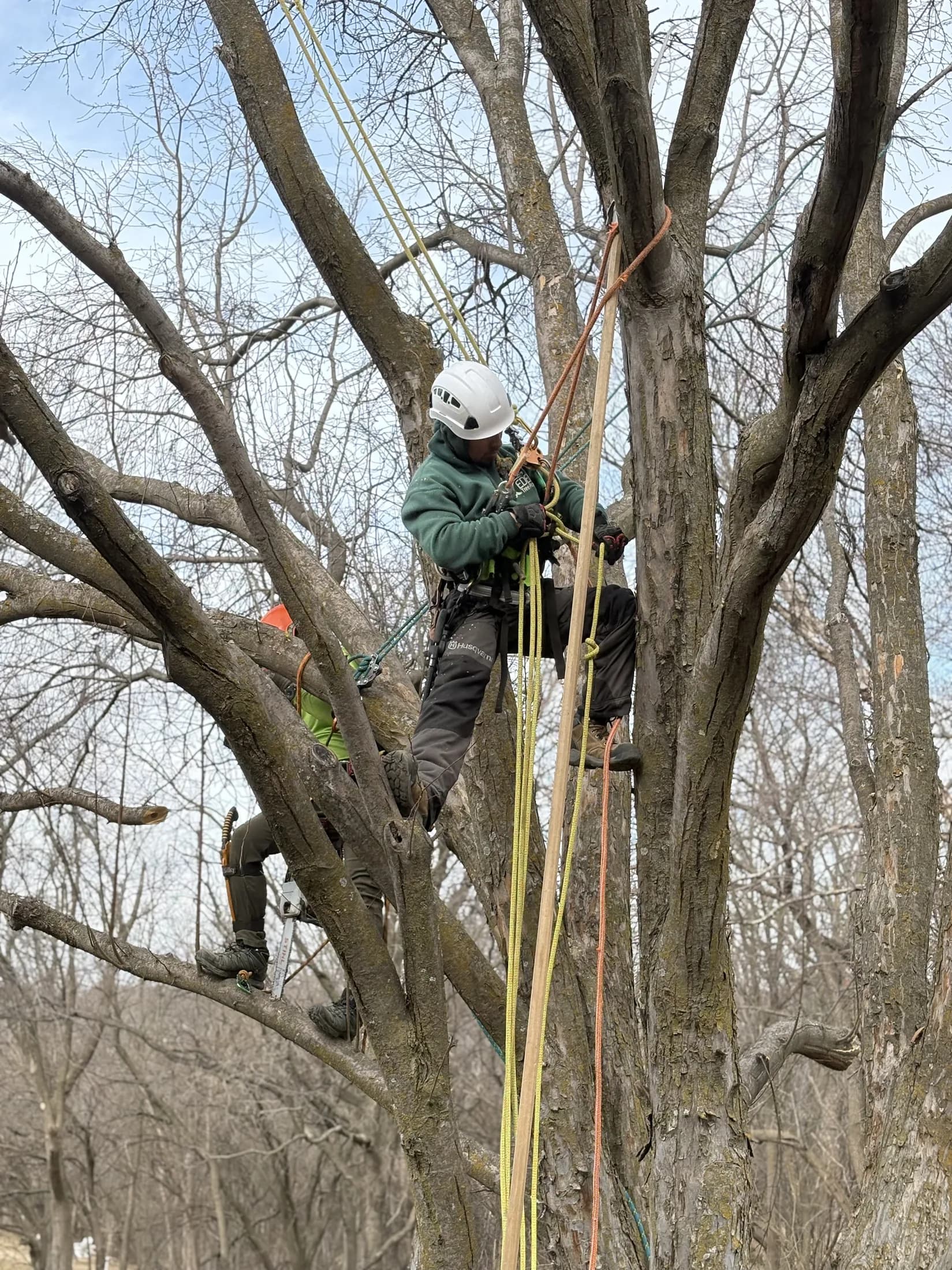
Every arborist knows this and few companies say it, because there is no money in saying it: the highest-return pruning a tree ever receives happens before it is fifteen. A defect that costs a few small cuts at year five becomes, left alone, steel in a mature crown — or a removal at our published four-to-eight-thousand range. Same defect, same tree. The only variable is the year somebody dealt with it.
This metro compounds the problem street by street. Every growing edge of Omaha is filling with subdivisions whose trees went in the week before closing and have not been touched by trained hands since — fast growers, planted in rows, building codominant stems by default. Their permanent structure is being decided right now, mostly by nobody.
The part that costs us something to admit: structural pruning is our smallest ticket, and a company that only chased revenue would not promote it. We push it anyway — a family business that has worked the same towns since 1997 expects to be climbing these trees in thirty years, and we would rather they be sound. If that means you never buy a cabling job or a crane day from us, that is a trade we made on purpose.