Apple Scab & Rust Treatment in Omaha
The reason a crabapple looks beautiful in May and half bare by July. Both diseases are decided at bud break, weeks before the first spot appears.
Free Crabapple Check


Olive blotches, orange spots, and a bare tree by August
Rust needs two different plants, and one of them is probably yours
All 36 problems we treatHalf the problem
The juniper or red cedar
Rust overwinters here as a hard brown gall on the branches. Nobody notices it until spring rain, when it swells into an orange jelly that is impossible to miss.
Galls sit on the twigs all winter, looking like small brown fruit
Warm spring rain turns them into bright orange tendrils
Spores blow to crabapple and hawthorn, up to a mile
Spring rain
Juniper galls release spores onto emerging crabapple leaves.
Late summer
Crabapple sends spores back and new galls form on the juniper.
The other half
The crabapple or hawthorn
Spores land on new leaves and produce the orange-yellow spots people call rust. Later in the season it sends its own spores back the other way.
Bright orange spots on the leaves through early summer
Heavy years cause early leaf drop and thin fruit set
Late-summer spores return to the junipers and start new galls
Apple scab does not need a second host. It overwinters in the fallen leaves under the tree, which is why raking them up in fall genuinely helps.
If there is a red cedar within sight of your crabapple, you have both halves of this on the property.
What a spring program does, and what it cannot
How pricing worksWhat treatment does
Protective applications timed from bud break through leaf expansion
Repeat coverage on the new growth as it emerges through spring
Both diseases handled on the same visits where both are present
Species and cultivar identified, so treatment matches what the tree actually gets
An honest read on whether the tree is worth a program at all
What it does not do
Clearing spots that are already on the leaves this year
Preventing this summer's leaf drop once infection has happened
Removing rust galls from every juniper in the neighborhood
Any useful effect from a first application made in June
Turning a highly susceptible cultivar into a resistant one
If you are calling in July, the useful conversation is about next spring rather than this one.
Worth knowing before you plant
Prairifire crabapple
Strong scab resistance, holds its leaves, and the spring color is the reason it gets planted.
Adirondack crabapple
Narrow and upright for tight spots, with good resistance to both scab and rust.
Sargent crabapple
Low and wide. Useful where a small tree is wanted under wires.
Serviceberry
Not a crabapple at all, and a good substitute where rust pressure is heavy.
Radiant and Hopa
Named here because they are the opposite: both defoliate most years in this metro.
An arborist can identify what you already have, which decides whether a program is worth starting.
“Our crabapple had been dropping its leaves in July for six years. Treated at bud break and it held them all the way to fall.”
Ugly, and not the emergency it looks like
Plant health care
A crabapple standing half bare in August looks like a tree in serious trouble, and it usually is not. Neither apple scab nor cedar-apple rust kills established trees. What they do is disfigure them and cost them energy, year after year, and the cumulative effect is a tree that grows less, flowers less and has less in reserve when a drought or a borer arrives.
That is what makes the decision a judgment rather than an emergency. On a mature specimen crabapple in the front yard, a spring program is worth having and it works reliably. On a small, highly susceptible tree nobody is attached to, replacing it with a resistant cultivar is cheaper than treating it forever and it ends the problem instead of managing it.
There is also a free version of this that helps more than people expect. Raking and removing the fallen leaves in fall takes a large share of next spring's scab spores out of the yard, because that is where the fungus spends the winter. It will not carry a susceptible tree on its own, and alongside treatment it makes a measurable difference.
Common questions about scab and rust in Omaha
Ask us something elseWhy does my crabapple lose its leaves every July?
Almost always apple scab. The fungus infects new leaves during the wet weeks around bud break, olive-brown blotches appear a few weeks later, and the tree sheds the affected leaves through midsummer. By the time the leaves are on the ground the infection is months old, which is why a treatment in July changes nothing.
What is cedar-apple rust?
A fungus that needs two different plants to complete its life: a juniper or red cedar, and a crabapple, hawthorn or apple. It spends the winter as a gall on the juniper, releases spores onto the crabapple in spring rain, then sends spores back to the juniper in late summer. Neither host can be cured of it, because the other one reinfects every year.
Should I remove the junipers?
Usually not, and it rarely works anyway. Spores travel a long way, so unless you can clear every juniper and red cedar for a considerable distance, taking out your own leaves the pressure largely unchanged. Where it is worth doing is when an infected juniper is directly beside a susceptible crabapple, and even then the practical answer is normally to treat the crabapple instead.
When does treatment have to happen?
At bud break, and then through leaf expansion, which in this metro is generally April into May. Both diseases infect new tissue as it emerges, so the applications are protecting leaves that have not been infected yet. That is the whole game, and it is entirely decided before any symptom is visible.
Will scab or rust kill the tree?
Very rarely. Both are disfiguring rather than fatal, and a mature crabapple defoliated every summer usually keeps going for years. What it does cost is energy, so a tree that loses its leaves in July year after year grows less, flowers less, and becomes more vulnerable to the things that do kill trees. On a young tree that matters more.
Is there a permanent fix?
The cultivar. Resistant crabapples exist, they are widely available, and they simply do not get this to any degree worth treating. If a tree is highly susceptible, small, and something you are lukewarm about, replacing it with a resistant variety costs less than a decade of spring programs and ends the problem outright.
We will tell you when replacing the tree is cheaper than treating it for a decade.
What goes with a spring disease program
All services
Annual Tree & Shrub Program
Bud break moves every year. Being on the schedule is how the applications land on it.
Tree Planting
The permanent answer on a susceptible crabapple is a resistant one.
Tree Trimming
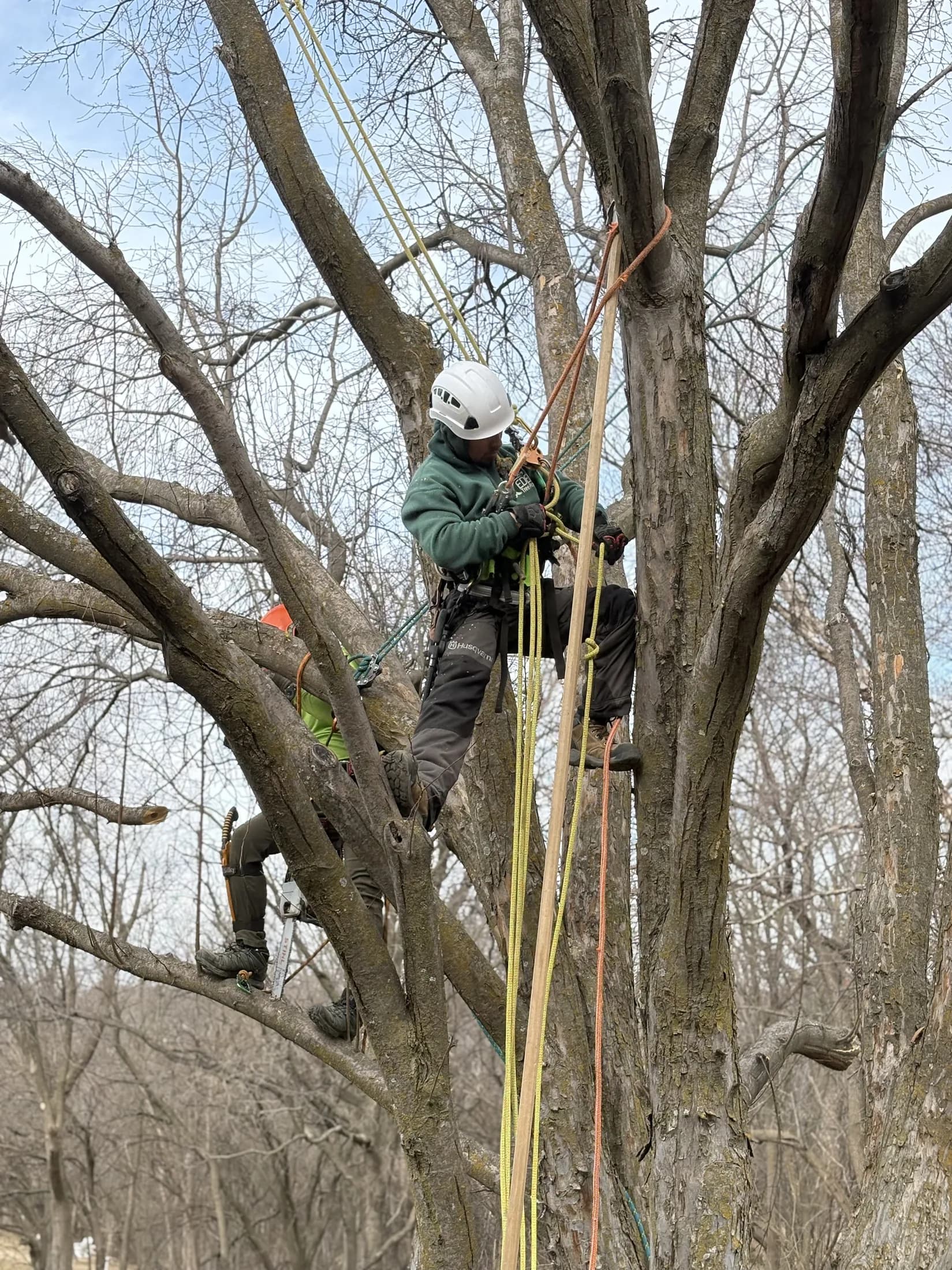
Opening a dense crown lets it dry faster, which lowers pressure from both diseases.