Eden Tree Pros, tree service in Omaha, Nebraska
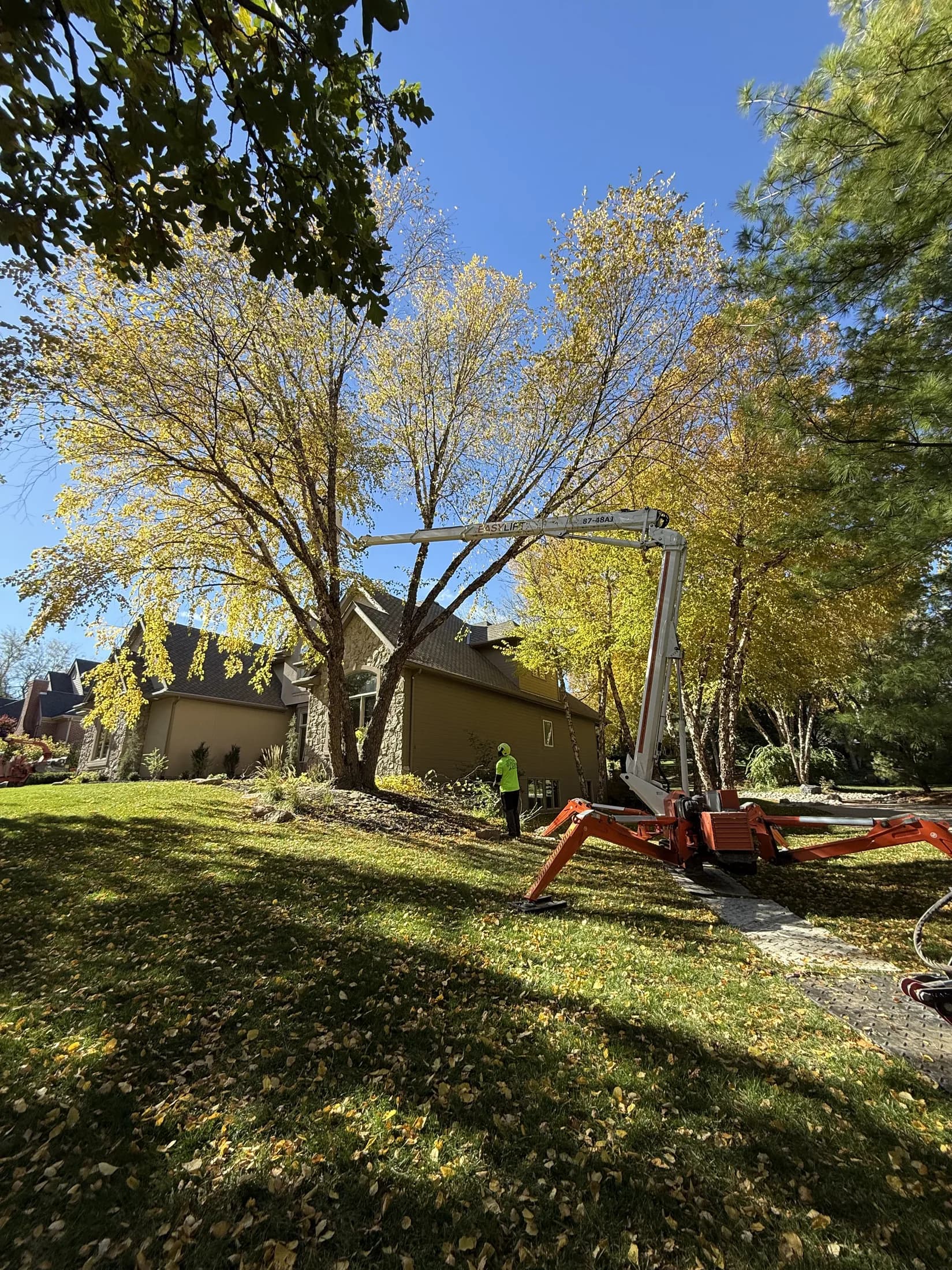
Mixed mature tree species over a neighborhood in the Omaha metro

The Right Trees for Omaha Yards

What thrives in eastern Nebraska clay, what merely survives it, and what each of the metro's common species needs — from the arborists who treat the consequences.

Free Estimate within 24 Hours

4.9across 313+ reviews on

Best Trees to Plant in Omaha: Bur Oak, Coffeetree, Hackberry and Native Evergreens

Mature bur oak canopy over an Omaha yard

The native anchor

Bur oak

The tree this ground actually grew before there were yards. Deep-rooted, wind-firm, tolerant of our alkaline clay, and good for two centuries. The best large tree you can plant in this metro, and the slowest — which is why so few people do.

Established shade trees on a residential street in the Omaha metro

The adaptable middle

Kentucky coffeetree and hackberry

Unglamorous, nearly indestructible, and quietly everywhere the metro's tree people plant for themselves. Both shrug off clay, drought, wind and street salt, and neither has a headline pest here.

Healthy evergreen windbreak on an acreage near Omaha

The right evergreens

Eastern red cedar and concolor fir

The native cedar is the windbreak that actually survives, and concolor fir is the blue-toned evergreen to plant where everyone else planted the spruce that is now losing its needles.

An arborist consultation before planting costs less than any treatment program after.

Tree Planting Guide: What to Plant and What to Avoid in Omaha Clay

Tree planting

Large shade

Large shade / Plant it

Bur oak, coffeetree, hackberry, linden

Deep roots, clay tolerance, no fatal pest currently in the metro.

Plant these and your grandchildren argue about who rakes. Linden accepts one caveat: Japanese beetles eat it and it is treatable.

Large shade / Think twice

Ash, silver maple, cottonwood, willow

The borer took ash off the list entirely. The other three grow fast, break fast, and spend their last decades as removal quotes.

Existing ones can be managed — cabling, reduction, honest assessment. New ones are a decision your future self pays for.

Small and ornamental

Small and ornamental / Plant it

Serviceberry, disease-resistant crabapple, redbud

Prairifire and Adirondack crabapples hold their leaves; serviceberry feeds everything; redbud takes the shade.

The ornamentals that work here without a spray program. Resistant cultivars are the whole trick with crabapples.

Small and ornamental / Think twice

Older crabapples, Austrian pine, Colorado blue spruce

Scab defoliates the old crabapples by July; tip blight and needle cast run through the two conifers.

All three are treatable, on spring windows measured in weeks. Just do not plant new ones next to the ones being treated.

Think twice never means panic — existing trees in that column are managed and treated every day. It means do not plant the next one.

Correct planting depth being checked on a new tree in the Omaha metro

Before You Plant: Five Tree-Planting Truths for Omaha Yards

The hole matters more than the tree

Most new-tree failures in this metro were planted too deep on day one. The root flare belongs at grade, visible, always.

Fall beats spring here

Warm soil below, cool air above, and a winter of root growth before the first hot July. September and October are the planting window.

Diversity is the whole lesson of the ash

Omaha lost over nine thousand trees to one insect because one species lined whole streets. Plant what your block does not already have.

Fast-growing means fast-breaking

Silver maple, cottonwood and willow trade decades of strength for a quick canopy. The trade looks better at planting than at removal.

4.9
“We had Eden Tree Pros come out to trim our trees. DJ and his crew did a great job not only doing the work required but taking the time to explain what they were doing and why.”
Kim ApkerOmaha Metro313+ reviews

Tree Planting Lessons From Forty Years of Omaha Removals

Tree planting
Young tree establishing on a residential lot in the Omaha metro

Five truths, learned the expensive way

The hole matters more than the tree

Most new-tree failures in this metro were planted too deep on day one. The root flare belongs at grade, visible, always.

Fall beats spring here

Warm soil below, cool air above, and a winter of root growth before the first hot July. September and October are the planting window.

Diversity is the whole lesson of the ash

Omaha lost over nine thousand trees to one insect because one species lined whole streets. Plant what your block does not already have.

Fast-growing means fast-breaking

Silver maple, cottonwood and willow trade decades of strength for a quick canopy. The trade looks better at planting than at removal.

Small trees become large trees

The most expensive removals we do were planted six feet from a foundation by somebody picturing the sapling forever.

The ash lesson is the big one: over nine thousand Omaha trees lost to a single insect because whole streets shared a single species.

Tree Species Questions: What to Plant, What to Avoid and When to Plant It

Ask us something else

What is the best tree to plant in Omaha?

For a large yard, bur oak — it is what this ground grew naturally, it handles clay and wind, and it outlives everyone involved. For a faster, tougher middle ground: Kentucky coffeetree or hackberry. For evergreens, eastern red cedar for windbreaks and concolor fir where a blue spruce look is wanted.

Should I plant an ash?

No. Emerald ash borer is established throughout the metro and an untreated ash here is on a countdown. Existing mature ash can be worth protecting by injection — that decision has its own page — but planting a new one is signing up for a treatment subscription or a removal.

Why does everyone say not to plant blue spruce?

Because eastern Nebraska is more humid than the Colorado slopes it evolved on, and needle cast fungi exploit that gap in nearly every planting older than fifteen years. Existing spruce can be treated on a spring window. New plantings just restart the problem — concolor fir gives the same color without it.

What grows fastest?

Silver maple, cottonwood and willow — and each buys its speed with weak wood, shallow roots and a middle age full of dropped limbs. Hackberry and coffeetree are the honest compromise: respectable speed, real strength.

What survives our clay soil?

The natives, mostly: bur oak, hackberry, coffeetree, redbud. The clay's high pH is the real filter — it locks up iron and turns pin oak, river birch and some maples yellow. That is treatable, but choosing a tolerant species beats treating an intolerant one forever.

When should I plant?

Fall, by preference — the soil is still warm, the air is cooling, and the tree banks a winter of root growth before its first Nebraska summer. Spring is second best. Summer planting is fighting the calendar.

Can you help me choose for my specific yard?

Yes, and it is the cheapest hour we sell: an arborist consultation looks at your soil, drainage, exposure and the street's existing species mix before anything is bought. Or send photos of the site to 402-332-2839 and start there.

My tree isn't on this list. What is it?

Send a photo of the whole tree and a close one of a leaf — identification takes an arborist about a minute and it is free. The species determines everything else: what it needs, what threatens it, and what its old age looks like.

Identification is free. Send a photo of the whole tree and one of a leaf.

The Real Cause of Omaha Tree Problems: Planting Decisions Made Decades Ago

Book a consultation

Nearly every tree problem in this metro is a planting decision arriving on schedule. The pin oaks turning yellow across west Omaha were planted into alkaline clay that was never going to give them iron. The blue spruce going bare in every windbreak were planted a humidity zone east of where they belong. The ash crisis was ten thousand copies of one decision, lined up on the same streets, waiting for one insect.

None of this was foolish at the time — the trees were cheap, fast and green, and the bill was decades away. But the bill is what our crews collect now, one removal and one injection at a time, and it makes the lesson unusually concrete: the most important tree care decision on any property is made at the nursery, before we are ever involved.

Which is why we would rather sell you one consultation before you plant than a treatment program after. An hour with an arborist who knows what your street's soil does — 402-332-2839 — costs less than any spray program on this site and can make every one of them unnecessary for the next forty years. That math is bad for us and good for you, and it is the math we would use on our own yards.

Choose the tree once. Enjoy it for forty years.

Call nowFree estimate