Eden Tree Pros, tree service in Omaha, Nebraska
Ornamental planting in an Omaha yard during Japanese beetle season

Japanese Beetle Control in Omaha

Six weeks in high summer when a linden or a rose bed can be stripped to lace. We protect the plants they actually go for, and we are straight about what treatment cannot do.

Free Property Check

4.9across 313+ reviews on

What a bad July does to a linden

All 36 problems we treat
Skeletonized foliage on an ornamental tree in the Omaha metro

The damage

Leaves reduced to lace

They eat the tissue between the veins and leave the skeleton, so a canopy turns brown and see-through from the top down.

The season

Late June into August

Adults emerge, feed heavily for about six weeks, then they are gone. The tree does not releaf until the following spring.

The approach

Protect what they target

Cover the plants they actually go for, on a schedule that holds through the flight, and leave the rest of the yard alone.

If the top of your linden is going brown in July, this is almost certainly what it is.

Four things people do that make it worse

Talk to an arborist

Hang a trap and it will pull them off the trees.

Traps bring more beetles than they catch

The lure is a pheromone and a floral scent, and it works from a long way off. Research on this is not ambiguous: a trap draws far more beetles onto a property than it captures, and the ones that miss the bag land on whatever is nearest. If a neighbor is running one, your linden is part of their trap.

Treat the lawn for grubs and the beetles will stop.

Grub control does not protect your trees

It is worth doing for the turf, and it will not change what lands in your canopy. Adults fly, routinely from several properties away, so killing the grubs under your own grass reduces your lawn damage and leaves the beetle pressure on your roses exactly where it was.

Spray everything in the yard and be done with it.

Blanket spraying costs you the pollinators

The products that kill beetles kill bees, and a beetle year is also a linden-in-flower year. Treatment is targeted at the plants they actually strip, timed around bloom, rather than run over the whole property because it is quicker.

Knock them into soapy water every morning.

Hand-picking works, on a rose bush

It genuinely helps on something small enough to reach, and early morning is the right time because they are sluggish. It does nothing for a forty-foot linden, which is where most of the damage in this metro actually is.

The trap research is the one worth acting on today. Taking one down costs nothing and helps immediately.

Take the trap down, then let somebody look at what is actually being eaten.

Targets

What they go for, and what they ignore

Tree species guide
Eden Tree Pros crew at work in the Omaha metro

Preference, most to least

Linden

The one they destroy here. A mature linden can go brown across the whole upper canopy in a bad July.

Roses

Flowers and foliage both. The most visible damage in a garden and the easiest to treat.

Birch

Already stressed in our soil, so a heavy defoliation year matters more than it would elsewhere.

Crabapple and cherry

Ornamental fruit trees get worked over, often alongside apple scab in the same season.

Grape, raspberry and Virginia creeper

Anything with thin, soft leaves. Vines take a hammering.

Oak, maple, spruce

Largely left alone. If the yard is mostly these, there may be nothing worth treating.

Treatment is scoped to the plants on the list, not run across the property.

4.9
They took our trap down, told us why, and treated the linden and the roses instead. First July in years the tree stayed green.
Sample reviewDundee313+ reviews

Management, not elimination

Plant health care
Tree care work on a property in the Omaha metro

Japanese beetle is established across eastern Nebraska. The adults fly, easily and routinely from several properties away, which means nothing you do inside your own fence line changes how many of them exist. Any company promising to get rid of them is describing something that is not available.

What is available is keeping the plants you care about presentable through the six weeks the adults are flying. That means covering the linden, the roses and the ornamental fruit trees on a schedule that holds through the flight, working around anything in bloom, and leaving the species they ignore out of it entirely.

It also means being realistic about what a defoliated shade tree needs. A healthy mature linden survives a bad year and leafs out normally the following spring. A young tree, or one already fighting drought or chlorosis, is where repeated defoliation actually costs you something, and those are the trees worth protecting first.

Common questions about Japanese beetles in Omaha

Ask us something else

What does Japanese beetle damage look like?

Leaves eaten down to a lace of veins, which is called skeletonizing, usually starting at the top of a tree and in full sun. The beetles feed in groups and they are attracted to plants already being fed on, so damage concentrates rather than spreading evenly. A linden or a rose can look fine in mid June and shocking by mid July.

Do Japanese beetle traps work?

They catch beetles, and they make your property worse. The lure pulls beetles in from a wide area and a large share of them never reach the bag, landing on nearby plants instead. If you have one hanging, taking it down is the single most useful thing you can do. If a neighbor has one, treatment on your side of the fence matters more than it otherwise would.

Will the tree survive being defoliated?

An established shade tree almost always survives a bad beetle year. It is ugly, it costs the tree energy, and the leaves do not come back until the following spring, but a healthy linden or birch handles it. Where it matters is on a young tree, a tree already stressed by drought or chlorosis, or a plant that gets hit hard several years running.

When should treatment go on?

As the adults arrive, usually late June, and then maintained through the flight period into early August. Treating in May does nothing because there is nothing flying, and treating in September does nothing because they have gone. On a program property this is scheduled off what is actually emerging rather than off a date.

Is treatment safe for bees?

It is if the timing and the target are handled properly, which is most of the skill in this job. Linden flowers are extremely attractive to bees, so a linden in bloom is not sprayed. Treatment is placed on the plants being stripped, at times of day when pollinators are not working, and anything in flower is worked around rather than through.

Can they be eliminated?

No, and anybody promising it is selling something. Japanese beetle is established across eastern Nebraska and the adults fly in from wherever they emerged. What treatment does is keep the plants you care about presentable through the six weeks that matter, and that is the honest offer.

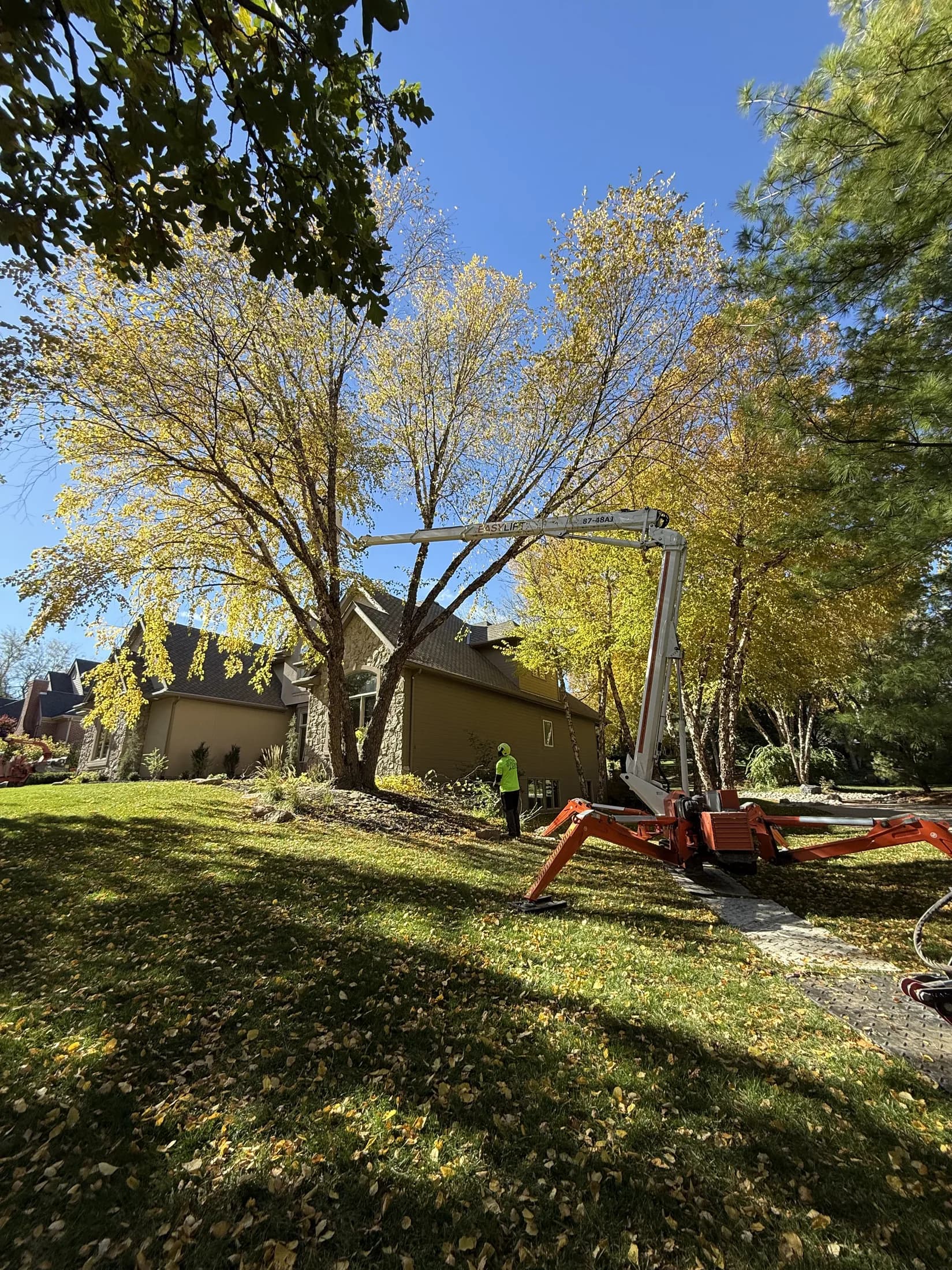
If your yard is mostly oak and maple, we will tell you there is nothing here worth treating.

Get ahead of the July flight

Call nowFree estimate