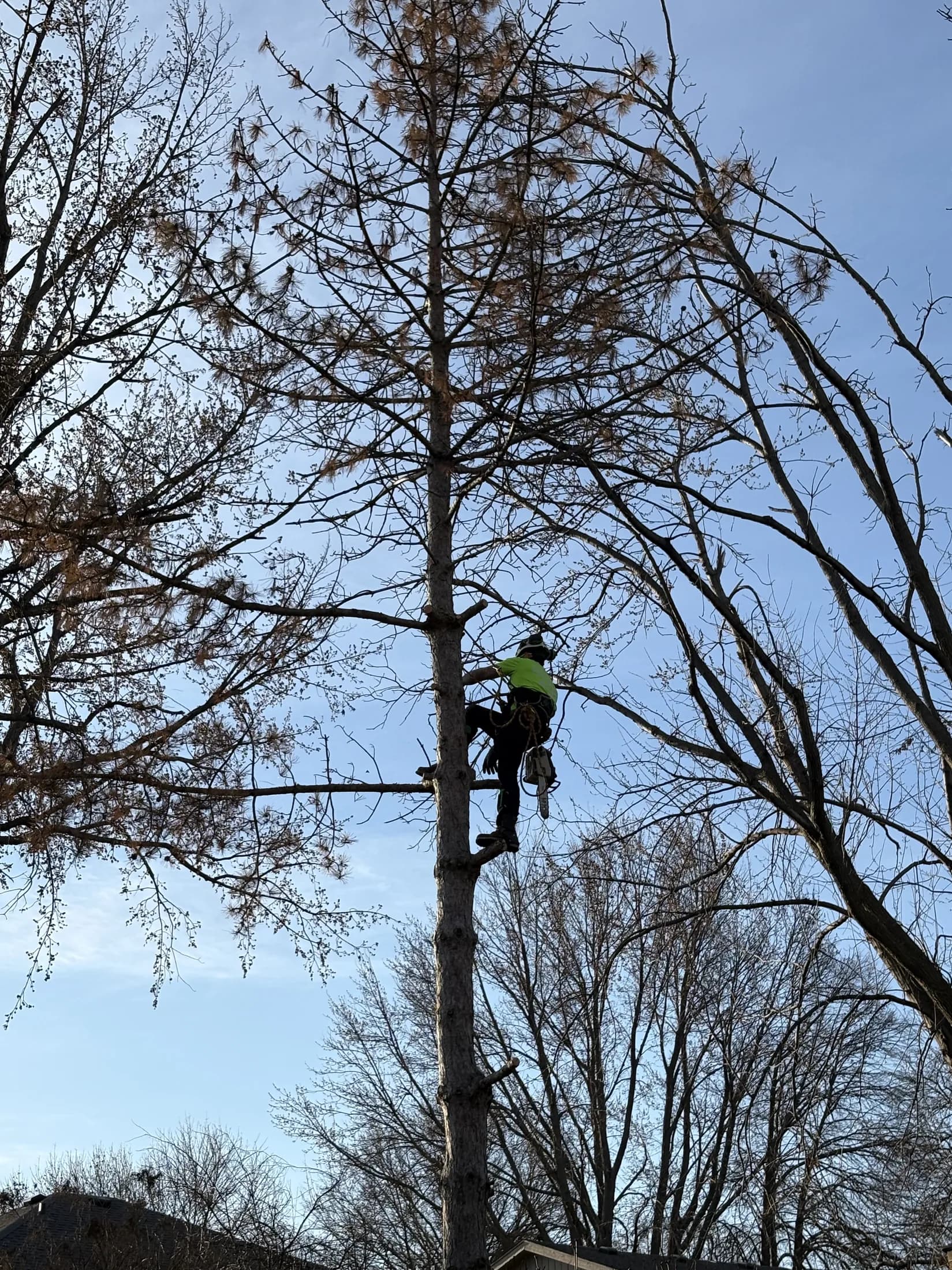
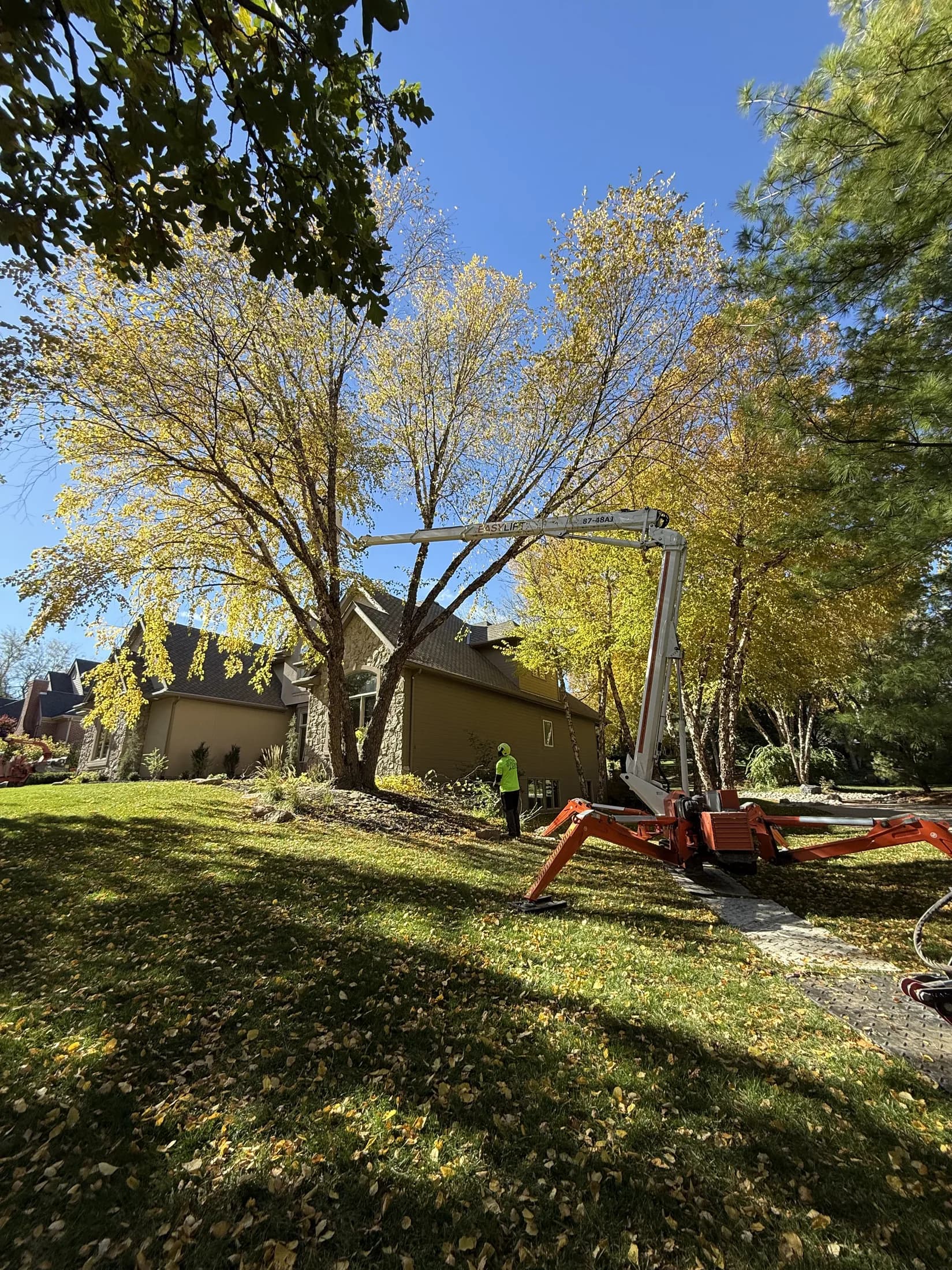
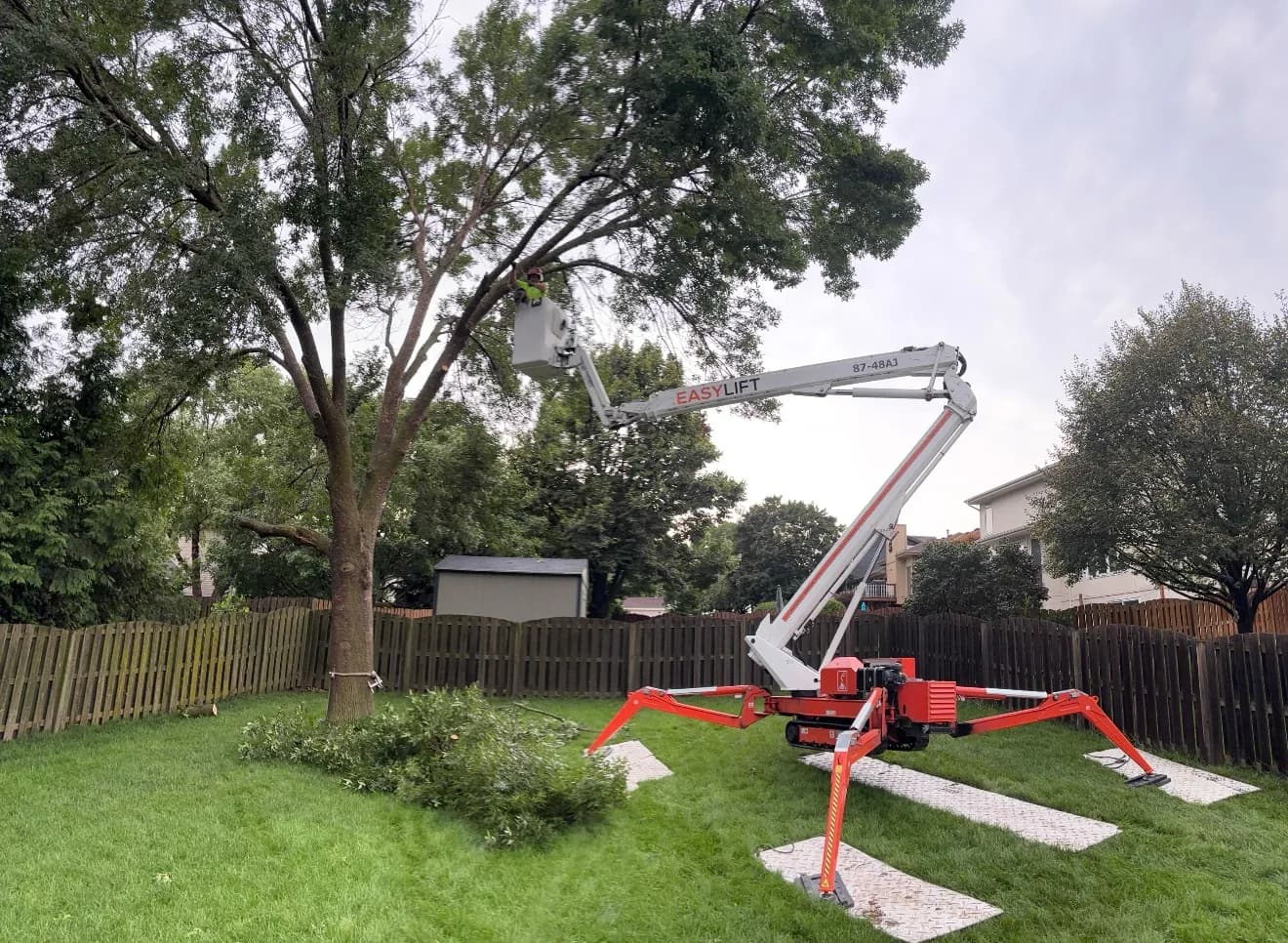
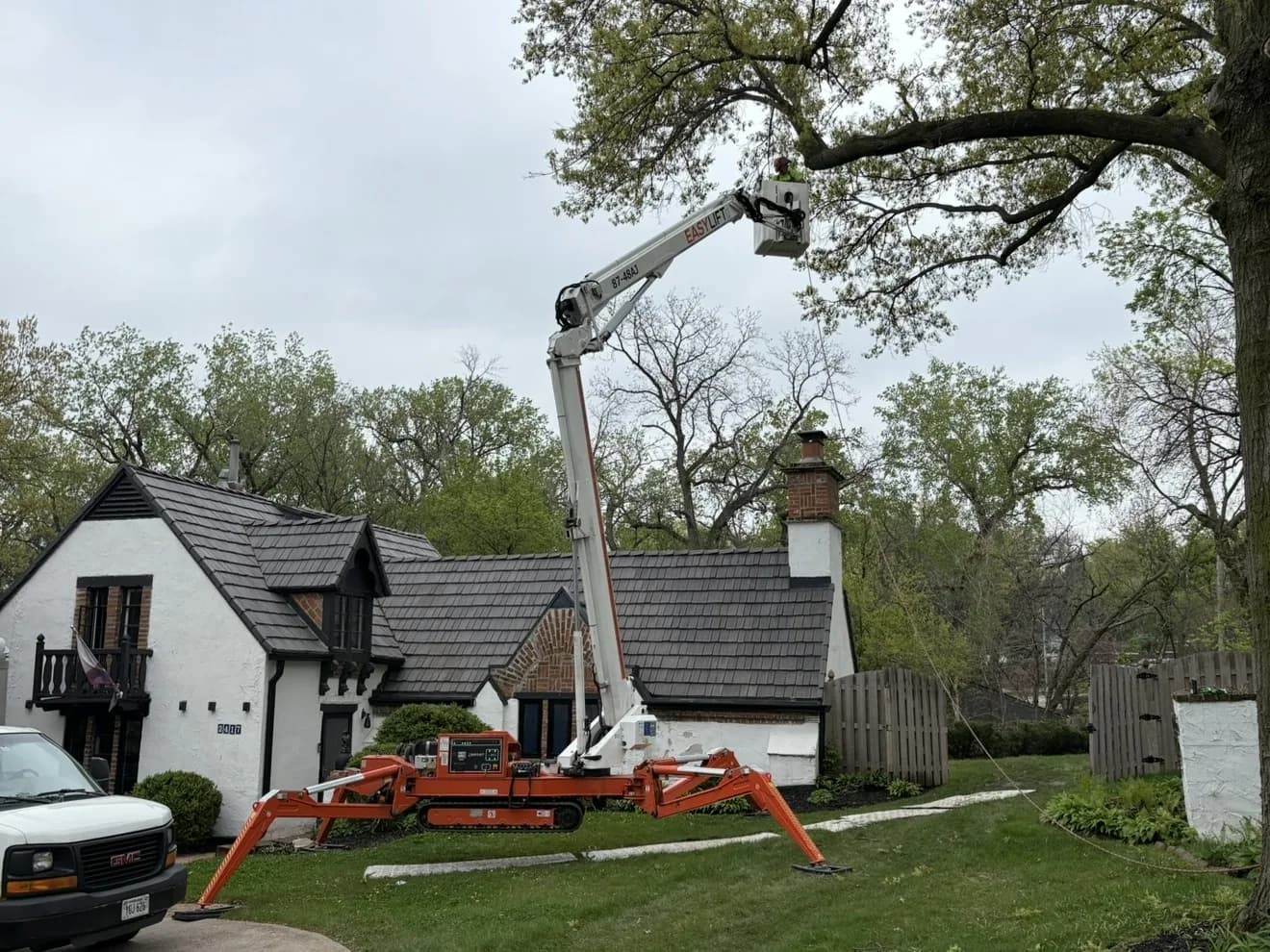
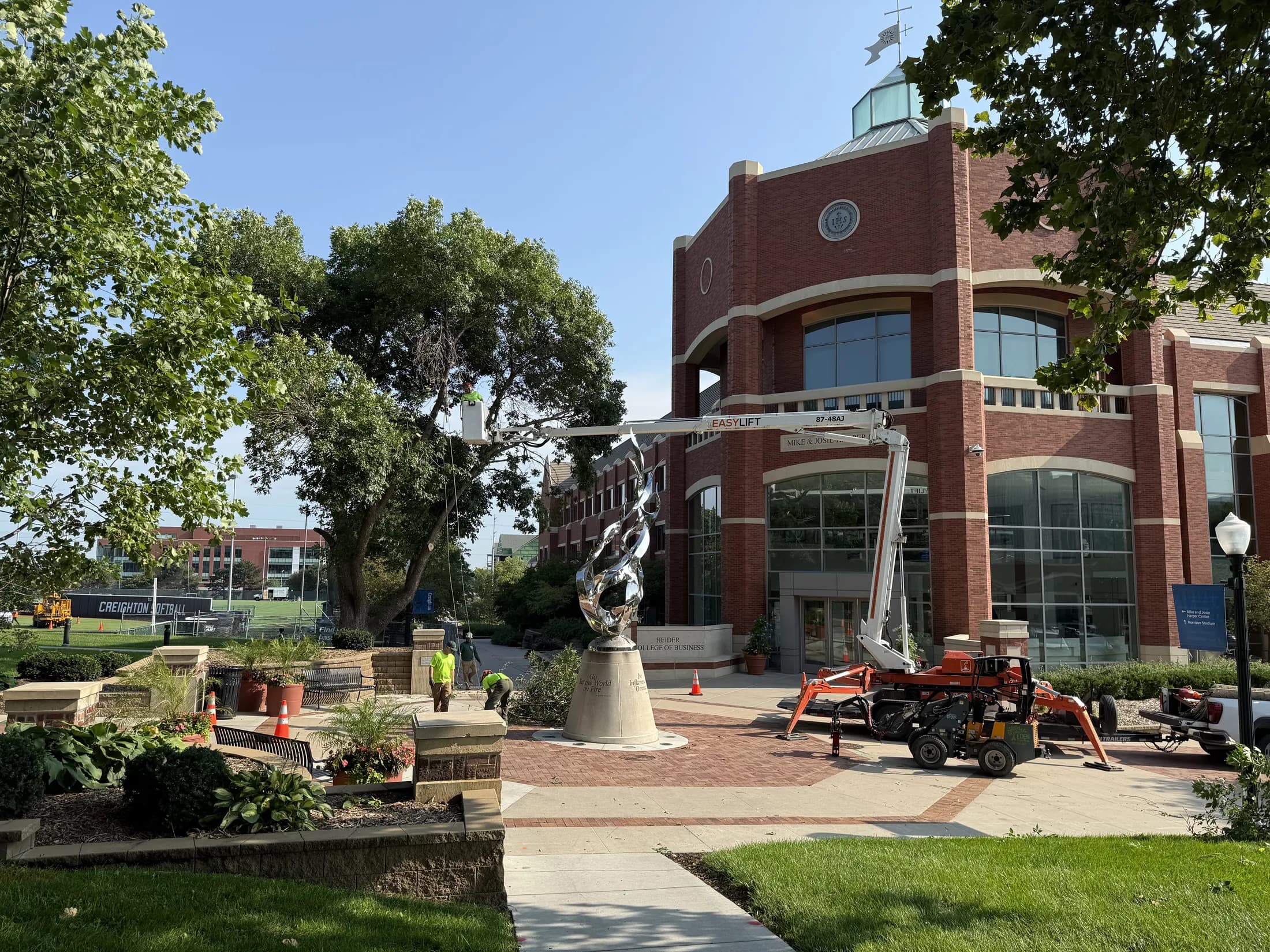
Nobody planted most of Crescent's trees; the hills did. Bur oak and hackberry on the slopes, cedar in every gap, timber pressing right up against back decks — it is the closest thing this metro has to working in the woods, and it rewards a crew that treats the slope as part of the job rather than an inconvenience under it.
The loess sets the rules: it drains fast, stands in cliffs, and washes the moment it is bared, so a careless removal can cost a hillside more than the tree was worth. Our slope work is rigged and lowered, the ground gets protected on the way out, and more than once the written recommendation has been to leave a tree standing because its roots are the cheapest erosion control the property will ever own.
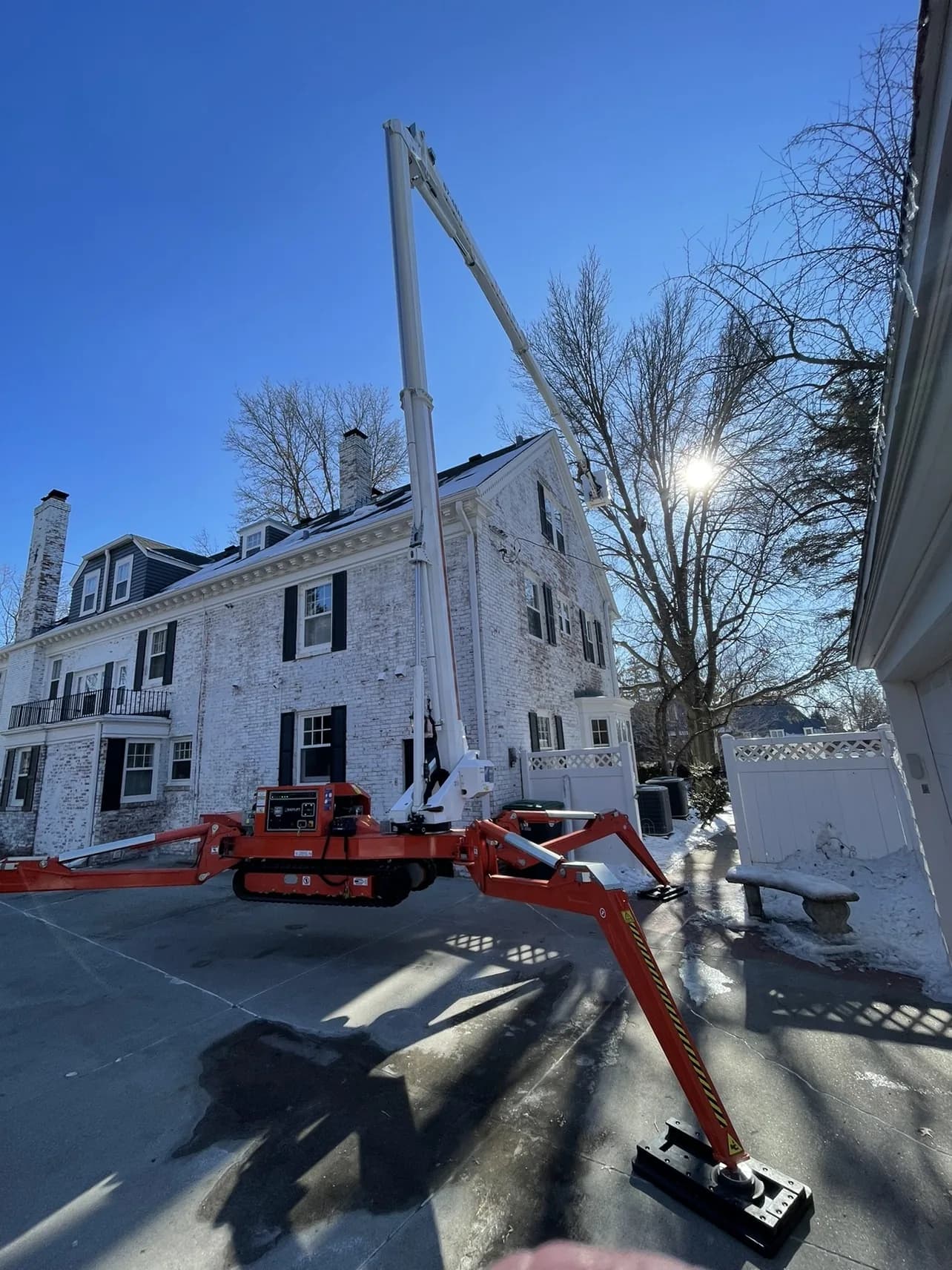
We are honest about the distance — about forty minutes from the Gretna shop, scheduled on route days, with storm response that starts farther away than Sarpy County's. In exchange, Crescent gets a crew equipped for its terrain and licensed for its state, at the same written prices as everywhere else. The hills are worth the drive.