How much does it cost to remove a big cottonwood?
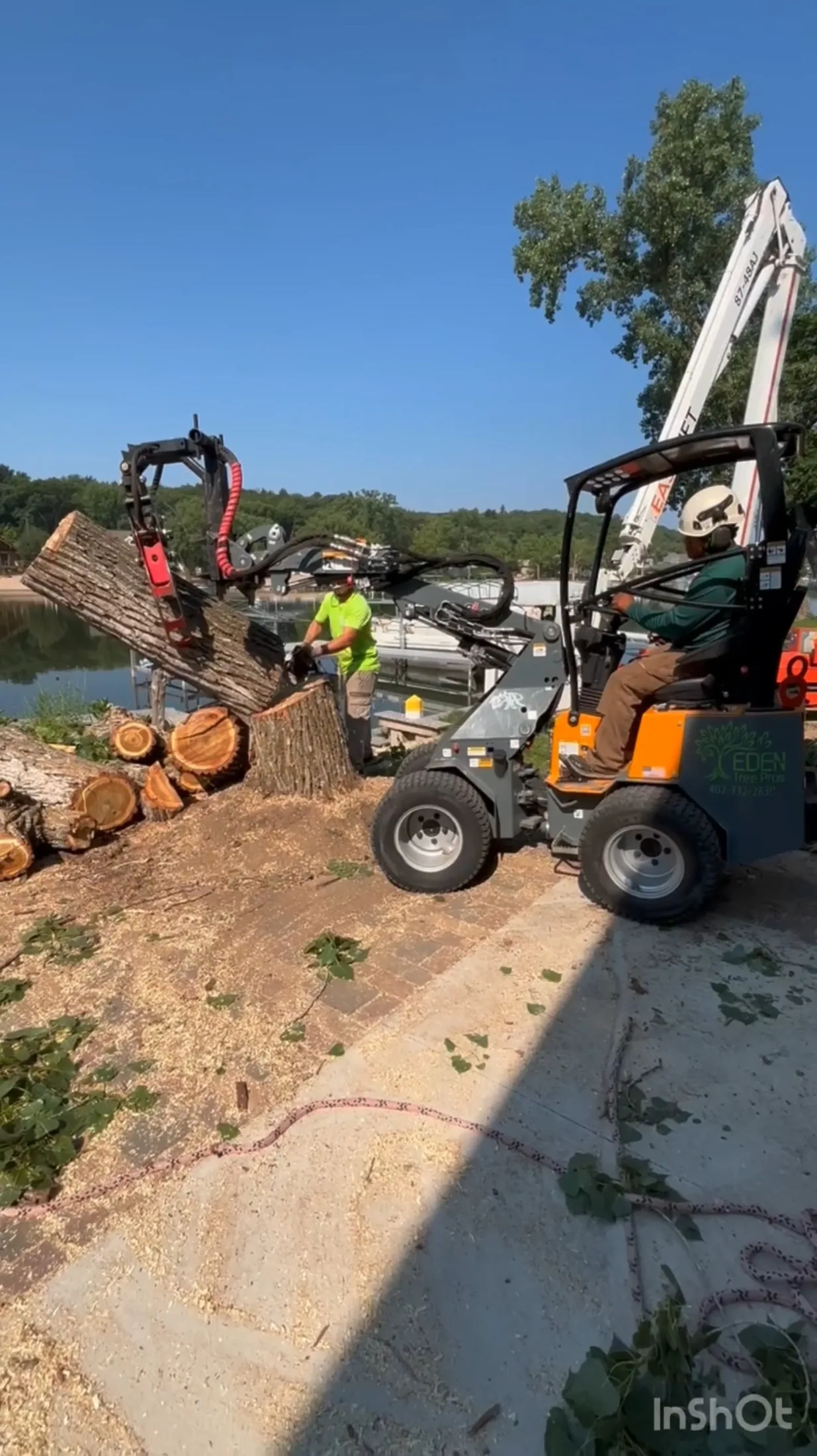
Metro removals run $1,000 to $8,000, and mature Waterloo cottonwoods sit at the upper end — they are simply more tree than almost anything else we take down. The estimate is free, written, and includes whether the tree actually needs to come down.
My tree survived the 2019 flood but looks worse every year. Why?
Standing water kills roots slowly, and the damage shows up over seasons, not weeks — thinning crown, dead limbs, fungal growth at the base. Some flood-stressed trees stabilize and some are failing structurally while still leafing out. A risk assessment sorts one from the other.
Is a leaning tree an emergency?
A lean the tree has always had, with no soil movement, can be fine. A lean that is new or increasing — especially in Waterloo's wet ground, where root plates can rotate — is the one thing we ask people not to sit on. Call, describe it, and we will tell you honestly how fast it needs eyes on it.
Can you even get equipment to trees near the river?
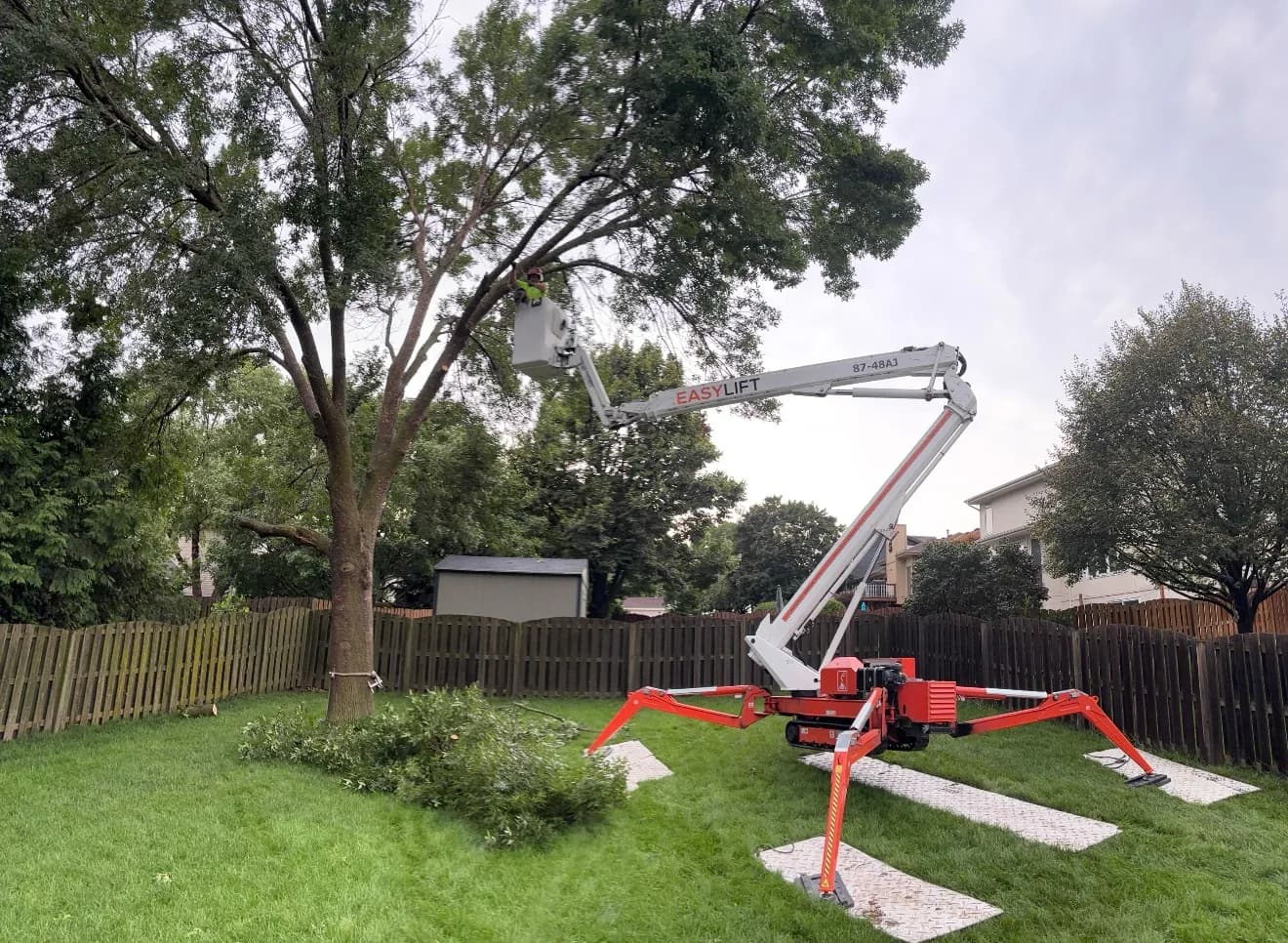
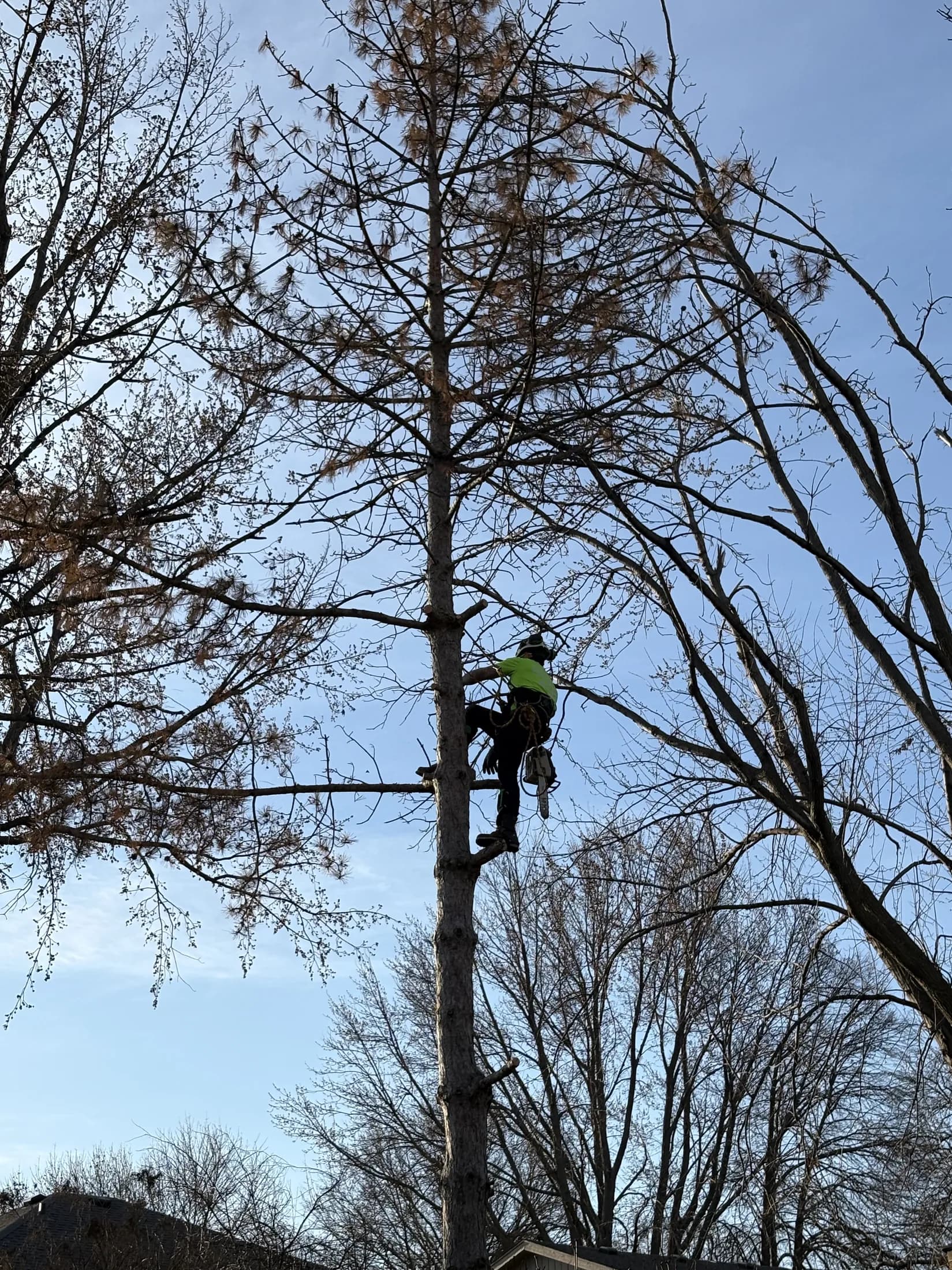
Usually, with planning — and where we cannot, the tree is climbed and rigged down. Soft river-bottom ground sometimes dictates timing; there are Waterloo jobs we deliberately schedule for frozen ground or a dry spell to avoid tearing up the property.
Should I replace a removed cottonwood with another one?
Honestly, usually not — not over a house. There are faster-than-oak, stronger-than-cottonwood choices suited to wet ground, and we plant those instead. Keeping the giant species out at the property edge is how river towns get shade without roof risk.
Do you treat for mosquitoes out here?
Yes, and Waterloo is exactly where it earns its keep — river bottom, standing water, big canopy. Published season pricing at $650, $780 and $1,200 by lot size.