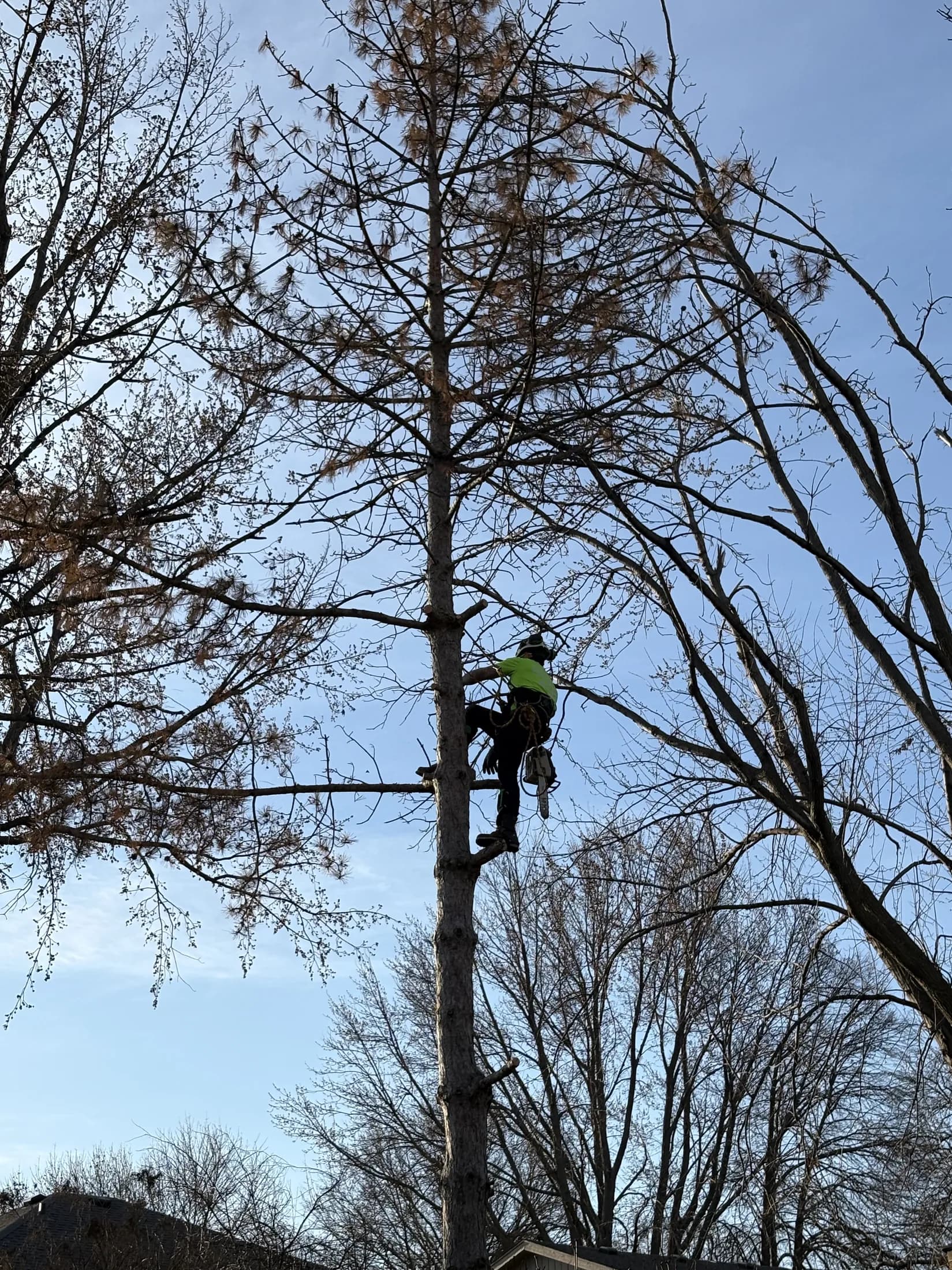
Yutan's trees were planted with jobs to do — stop the wind, shade the yard, hold the lane — and the right way to care for them is to judge them by whether they still do those jobs. A windbreak is not a decoration; it is infrastructure, and when needle cast starts working down a row the correct response is a diagnosis and a plan, not a guess and a sprayer. That practical frame runs through everything we do out here.
The metro is coming west, and Yutan can see it from the porch. The new acreages arriving on old corn ground will spend their first decade learning what the farmsteads already know: this is windy, open country, and trees survive it by being the right species, planted at the right depth, in the right arrangement. Getting those decisions right at planting costs a fraction of redoing them at year five, and we say so on every new-acreage visit.
We schedule Yutan honestly — planned work rides the Saunders County route days with Wahoo, storm work gets a truck the day it happens, and every estimate is free and written. Twenty minutes from the shop, one county over, the same kind of ground we started on.