The stretched ones
Limbs that outgrew their own strength
A silver maple or willow that grew fast carries weight past the wood's strength. Reducing those limbs to sound laterals moves the load toward the trunk before a storm does.
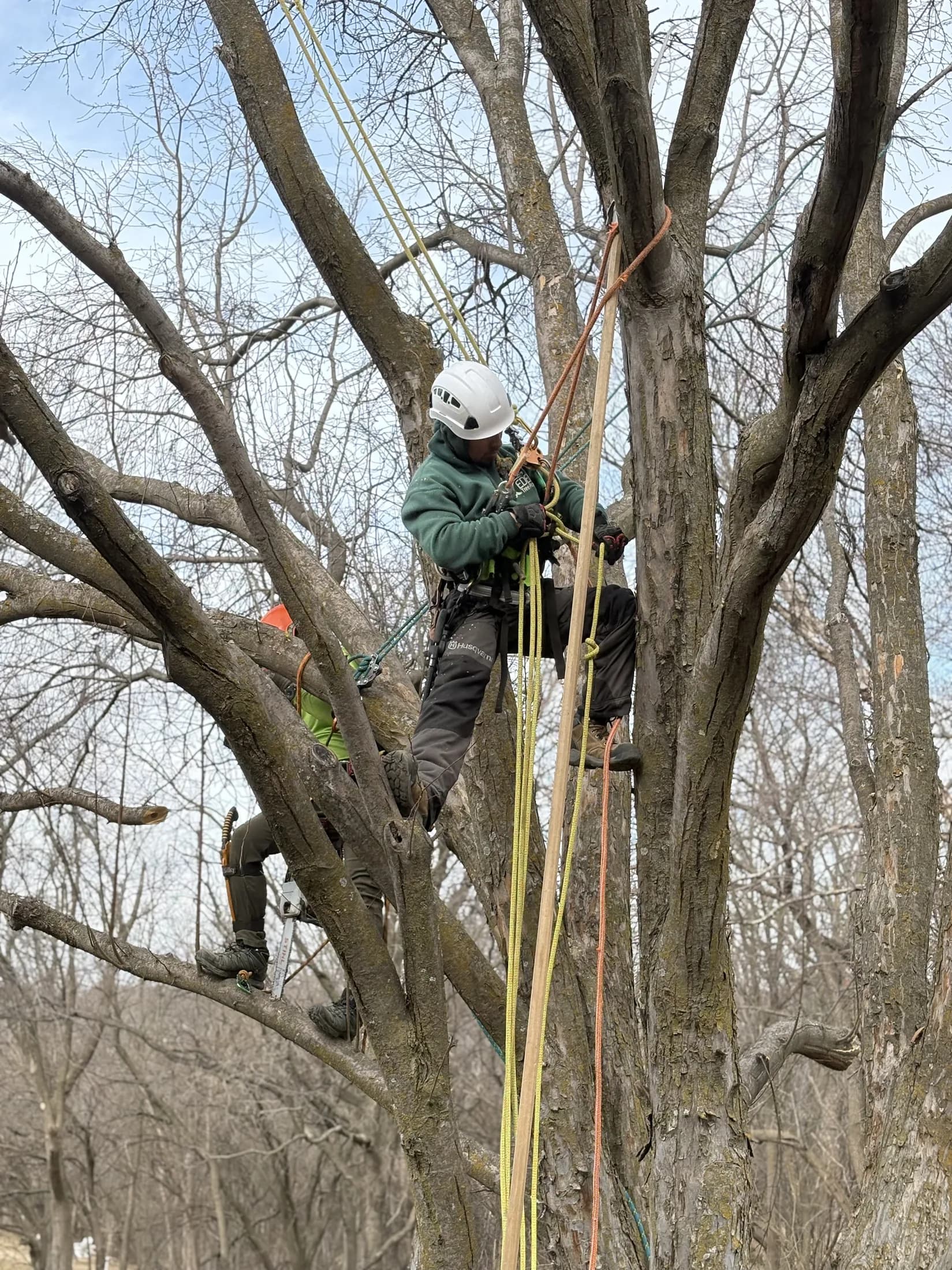
The right way to make a tree smaller cuts each stem back to a living lateral that can take over. The wrong way is topping, and we will not do it — not even if you ask twice.
The stretched ones
A silver maple or willow that grew fast carries weight past the wood's strength. Reducing those limbs to sound laterals moves the load toward the trunk before a storm does.
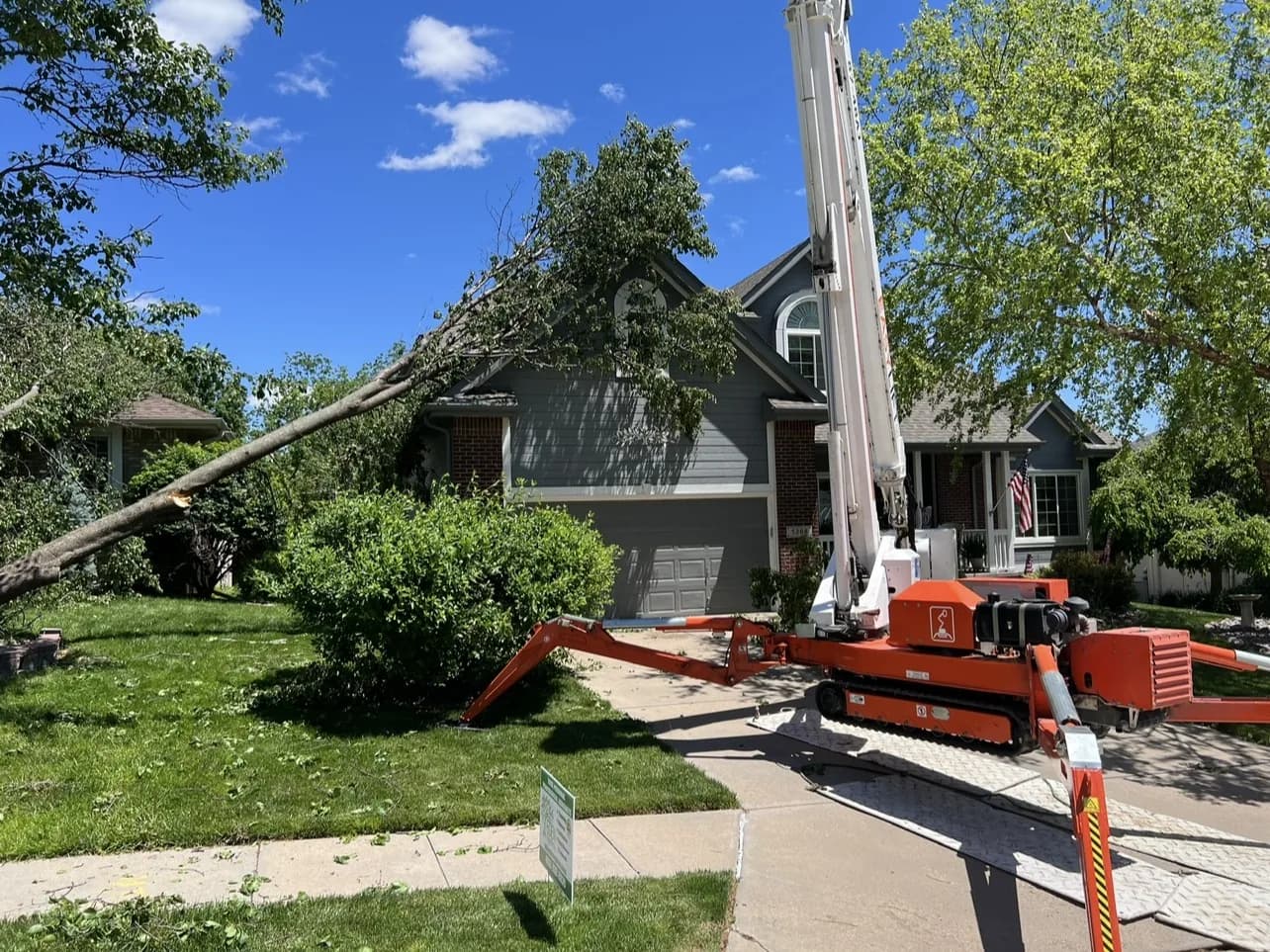
The storm math
Eastern Nebraska storms load a tall crown like a sail. Reduction shortens the levers the wind pulls on — not storm-proofing, nothing is, but often the difference between flexing and failing.
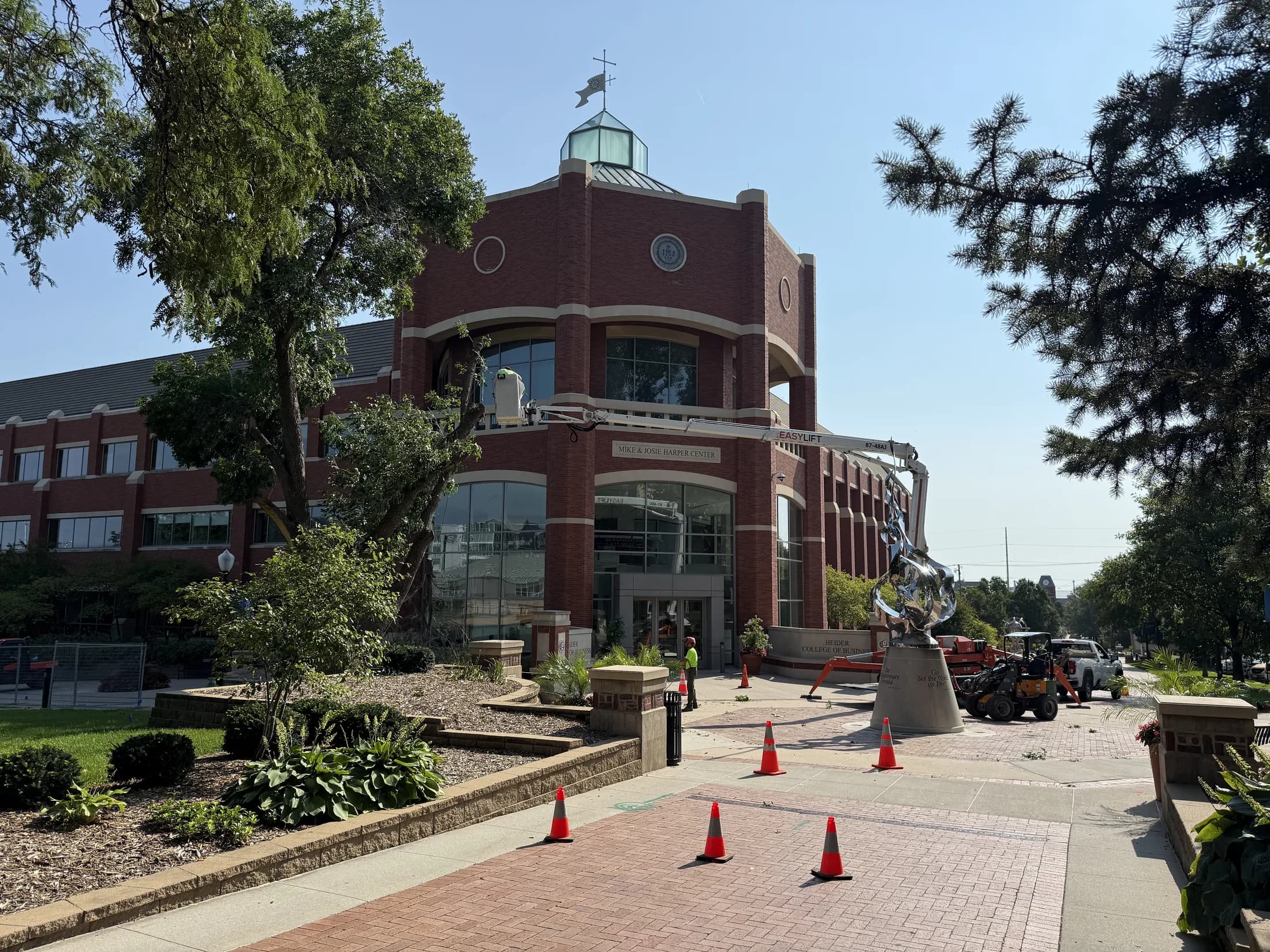
The close quarters
When a canopy grows over the shingles or above a service drop, reduction pulls it back with cuts the tree can close — not stubs that rot and grow back worse.
Not sure whether your tree can be reduced enough to matter? The free estimate answers exactly that.
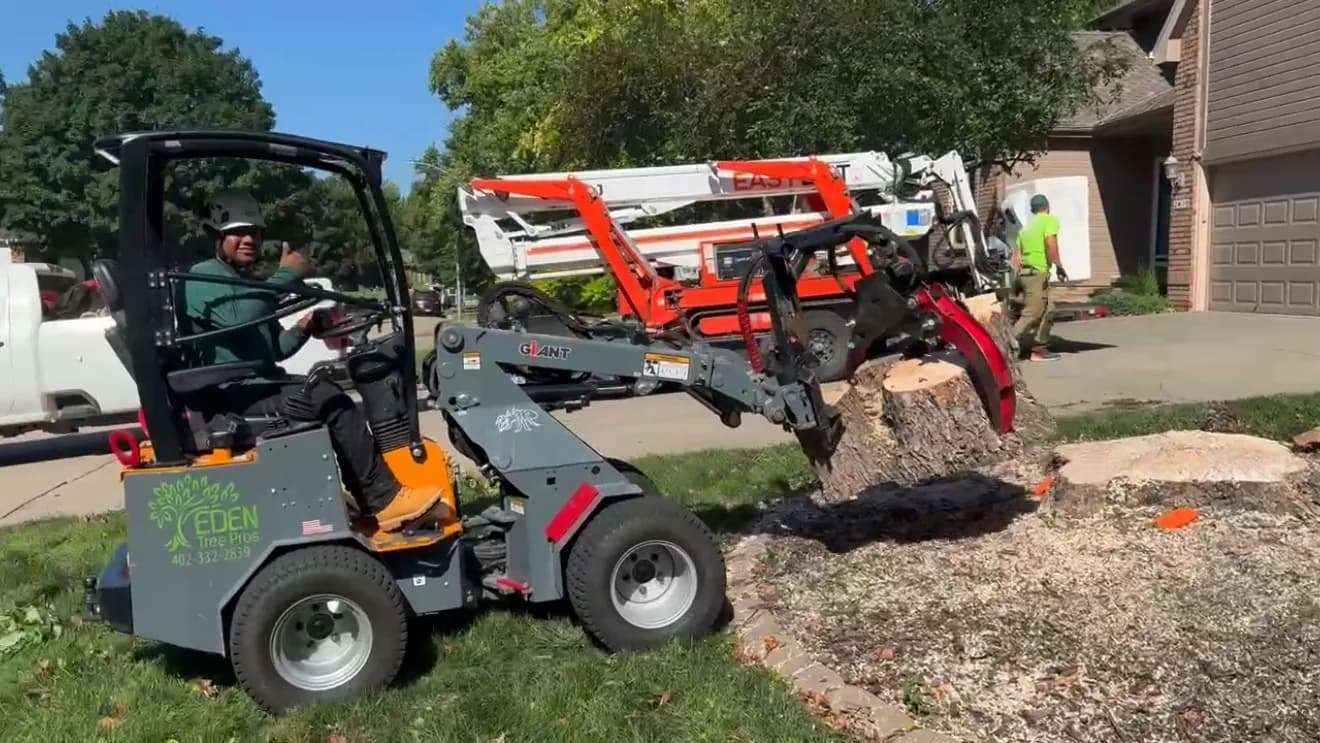
Cut by cut
The target size is set on the ground
Before anyone climbs, arborist and homeowner agree what smaller means — feet off the top, feet off the house side — and it goes in the written scope.
Each stem is traced to a lateral
The cut lands just beyond a living side branch at least a third the diameter of what leaves. That lateral becomes the new leader, and the wound closes.
Topping cuts never happen
A cut to nothing — a stub with no lateral — is topping. It forces weakly attached shoots and starts decay. Not on the menu here, per ANSI A300 and per our own rule.
The shape is kept, only smaller
A reduction done right is hard to notice from the street. The tree keeps its form in less air. If the work is obvious and ugly, it was not a reduction.
The dose stays inside the limit
Live canopy removed stays within the standard ceiling of about a quarter in a season. A tree that needs more is having a different conversation — see below.
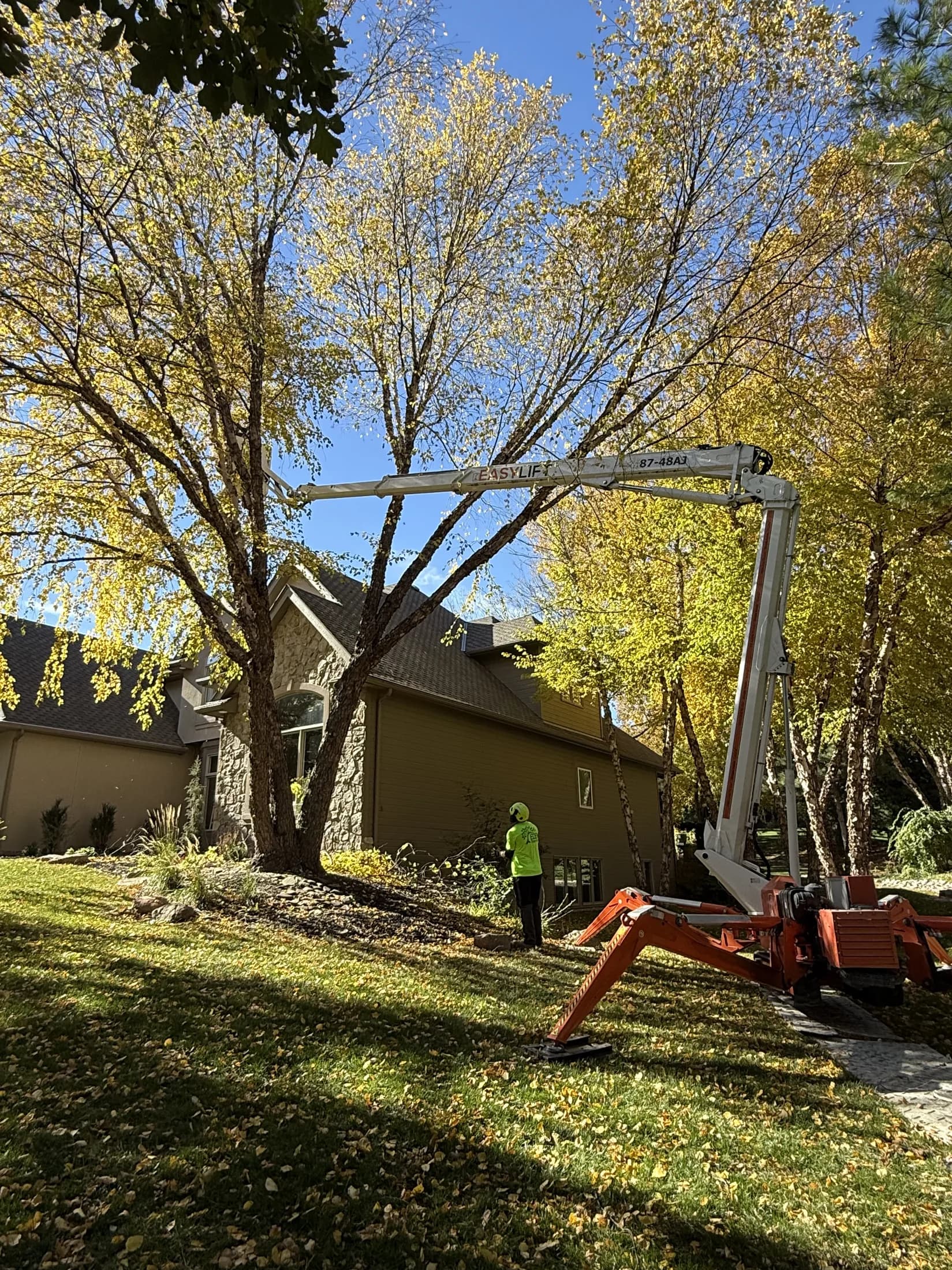
Crown reduction, done once, done right
A climbing crew for part of a day
Quoted per tree after an arborist looks. The cuts hold for years because each healed over a living lateral instead of rotting on a stub.
Topping, from whoever offers it
Cheaper on the first invoice
The regrowth comes back taller, denser and weakly attached, so the tree needs cutting again in a few seasons. The cheap version is a subscription.
Leaving the overextended crown alone
$4,000 – $8,000 when it fails
A big limb that splits out in a July storm turns a trimming conversation into a large-removal invoice at our published range — plus whatever it hit.
No honest company can price a canopy unseen. The estimate is free, in writing, and states exactly how much comes off.
An arborist setting the target and checking the finished shape
Reduction cuts to living laterals sized to take over — ANSI A300 throughout
Deadwood in the worked portion of the crown removed while we are up there
A written scope stating how many feet come off and from where
Brush chipped, wood hauled, the yard raked
A straight answer if the tree cannot be reduced enough to solve your problem
Topping — not at any price, not on any species, no exceptions
Removing more than about a quarter of the live canopy in one season, even if asked
Utility line clearance on the pole side of the service drop — the utility's work
Cabling or bracing hardware — sometimes the right companion, always a separate quoted line
How many feet come off, and from where, is on paper before the climb.
“Michael, Rico and Waldo trimmed four trees in our yard today. They did an A+ job, showing a high level of professionalism, expertise, respect and customer care.”
Reduction cuts each stem to a living lateral at least a third its diameter, so the lateral takes over and the wound closes. Topping cuts to a bare stub, forcing weak regrowth and decay. They look similar in a bid; they are opposites in the tree.
Because topping creates the failure we get called back for a decade later: weak regrowth on decaying stubs, taller than where you started. Refusing it is a site-wide promise. We would rather lose the job than do that to a tree and put our name on it.
About a quarter of the live canopy in one season, and on older or stressed trees less. Within that, a good reduction takes real feet off. Beyond it, you are not shrinking the tree — you are wounding it.
It will keep growing — reduction manages a tree, it does not freeze one. But cuts made to proper laterals regrow slowly with sound attachment, so a good reduction holds for years. Topped trees regrow fast and weak, which is why topping repeats.
No, and nobody honest can. That would remove far more than a quarter of the live canopy and leave wounds the tree cannot close. The real conversation then is removal and replanting a species that fits — and we will have it plainly rather than sell you three rounds of butchery.
Dormant season for most species — structure is visible, and the tree closes wounds in spring. Oaks are only pruned in the cold months because of oak wilt. But a limb over the house does not wait for winter. Neither do we.
Both, depending on access. Reduction rewards a climber — the right lateral is easier to find inside the canopy than from a bucket thirty feet away. Either way the cuts and the standard are the same.
Free and no pressure
Every estimate is free and comes in writing before anything is booked.

The full picture on pruning, standards and timing.
When the problem is density and wind, not size.
Hardware support for limbs a reduction alone cannot secure.
The written call on whether reduction is enough.
For the trees that have outgrown every other option.
Crown reduction is real arboriculture and topping is its counterfeit, and the difference is what the cut lands on. Land it on a living lateral a third the stem's diameter, and the tree redirects into it, closes the wound and holds the new size. Land it on nothing, and the tree throws weak shoots around a decaying stub. Half the storm-split trees we remove here carry old topping cuts at the break.
Topping survives because it is cheaper to sell — no judgment about laterals, no climber, no restraint. A bucket crew can top a tree in an hour, and the customer sees a smaller tree and a smaller invoice. What they do not see is the regrowth arriving taller and weaker within a few seasons. Since 1997 we have been the company that says no to that job. It has cost us jobs, and we are comfortable with the trade.
The other thing that costs us something to say: reduction has a ceiling, and some trees are past it. When the size you need means losing more than a quarter of the live canopy, no honest pruning gets you there — the kind conversation is removal and the right tree in its place. If that is your situation, we will say so at the estimate, removal priced and replanting suggested, instead of selling a reduction that cannot deliver.