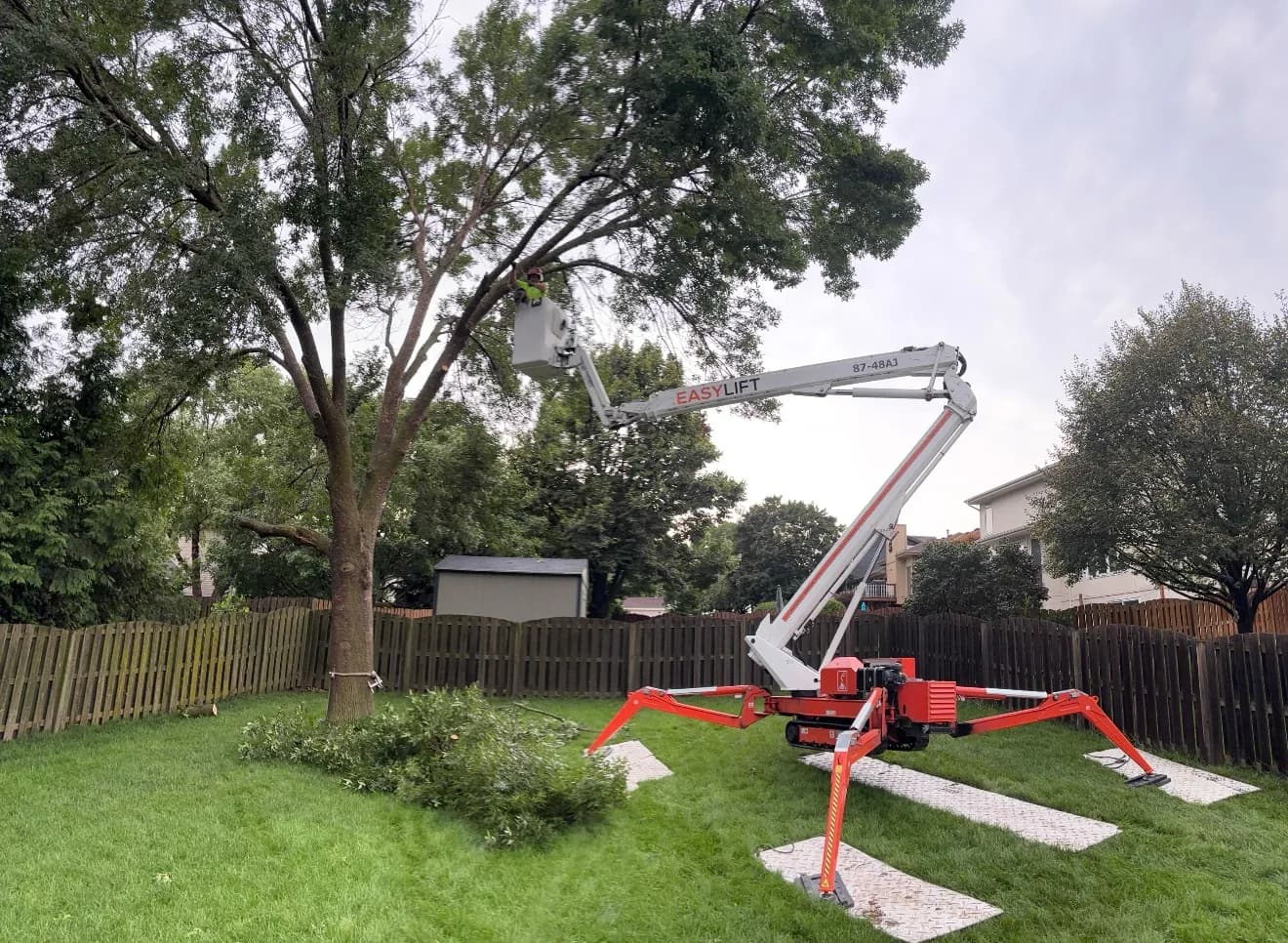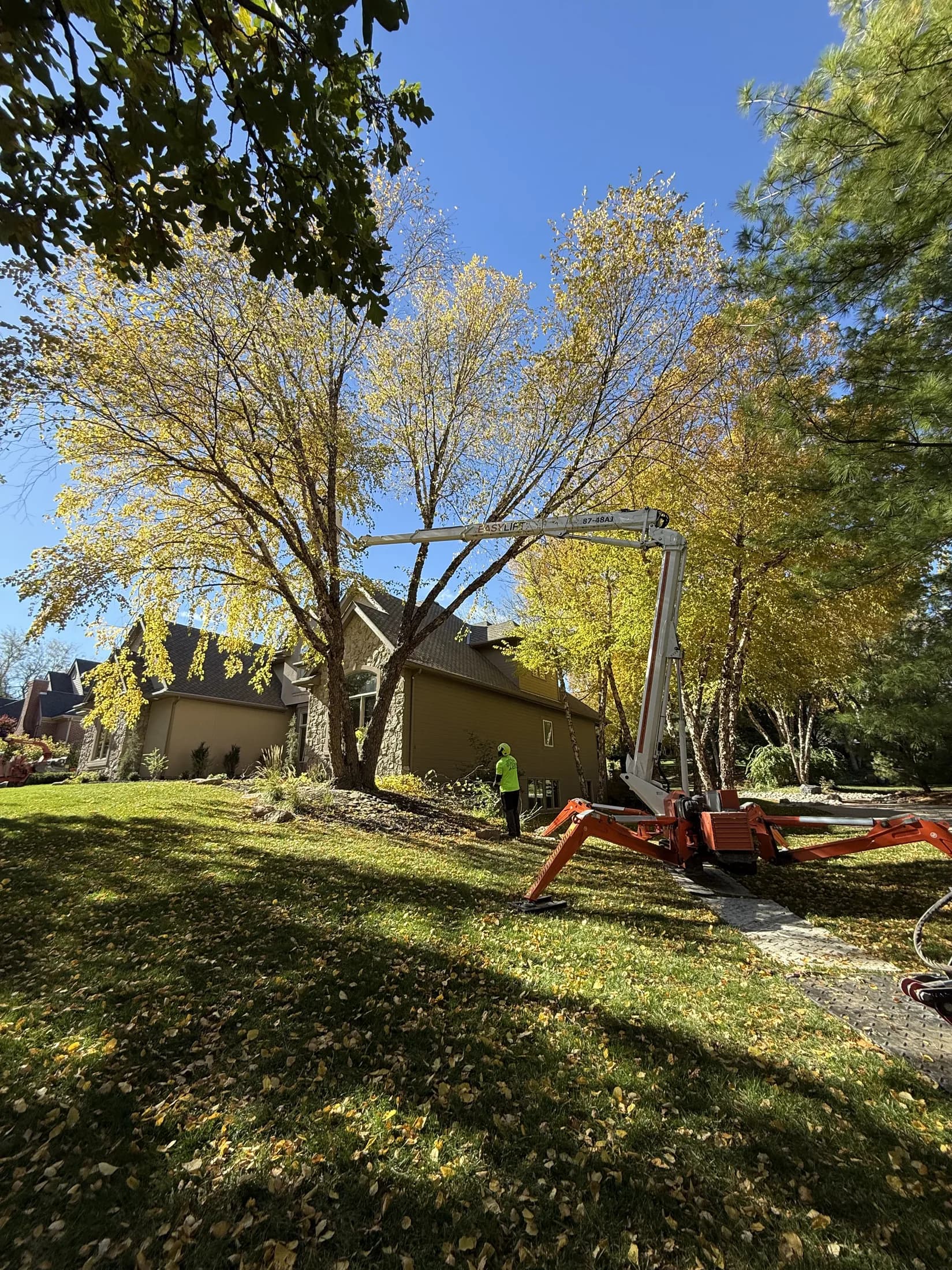
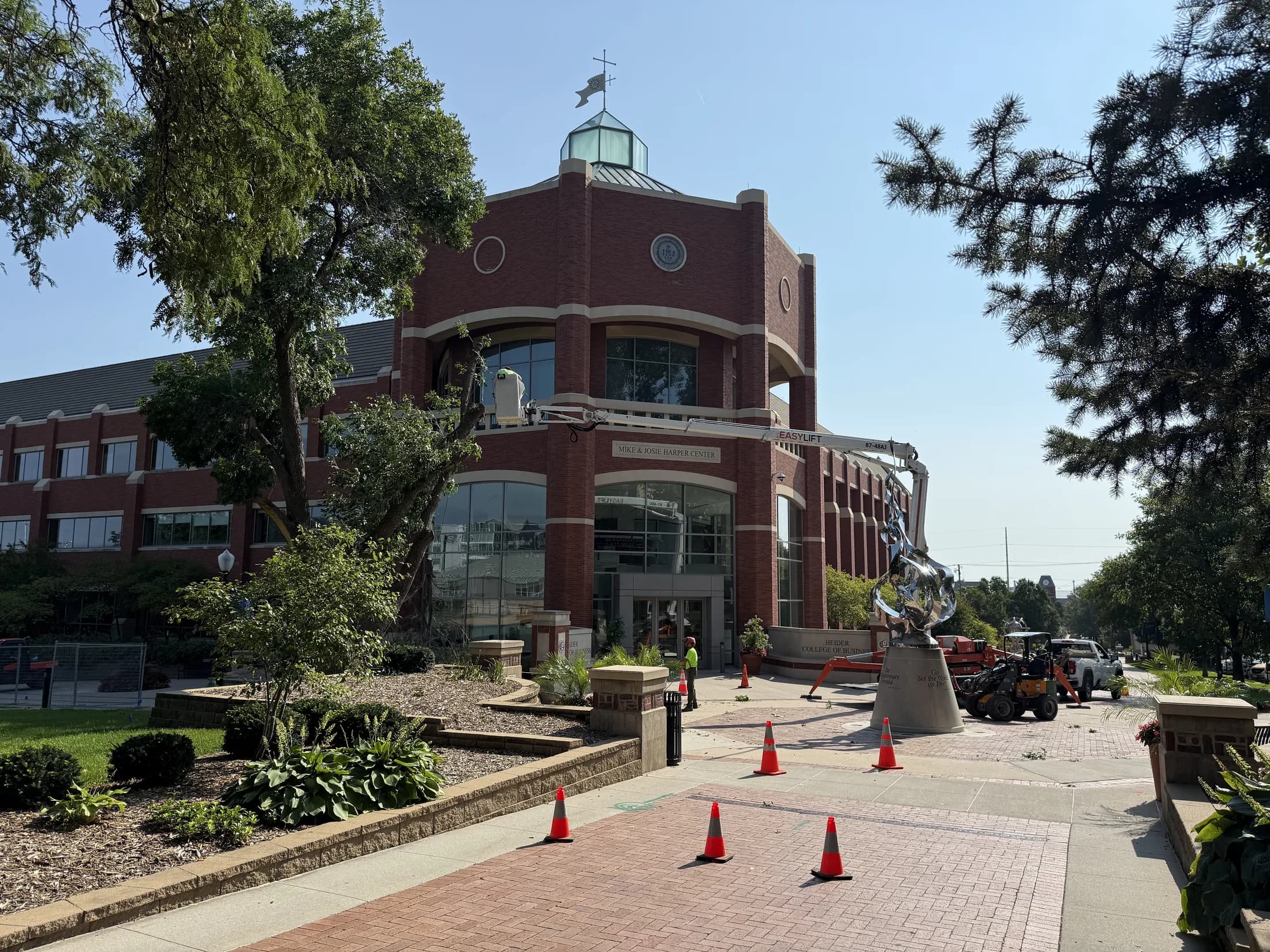
The one over the house
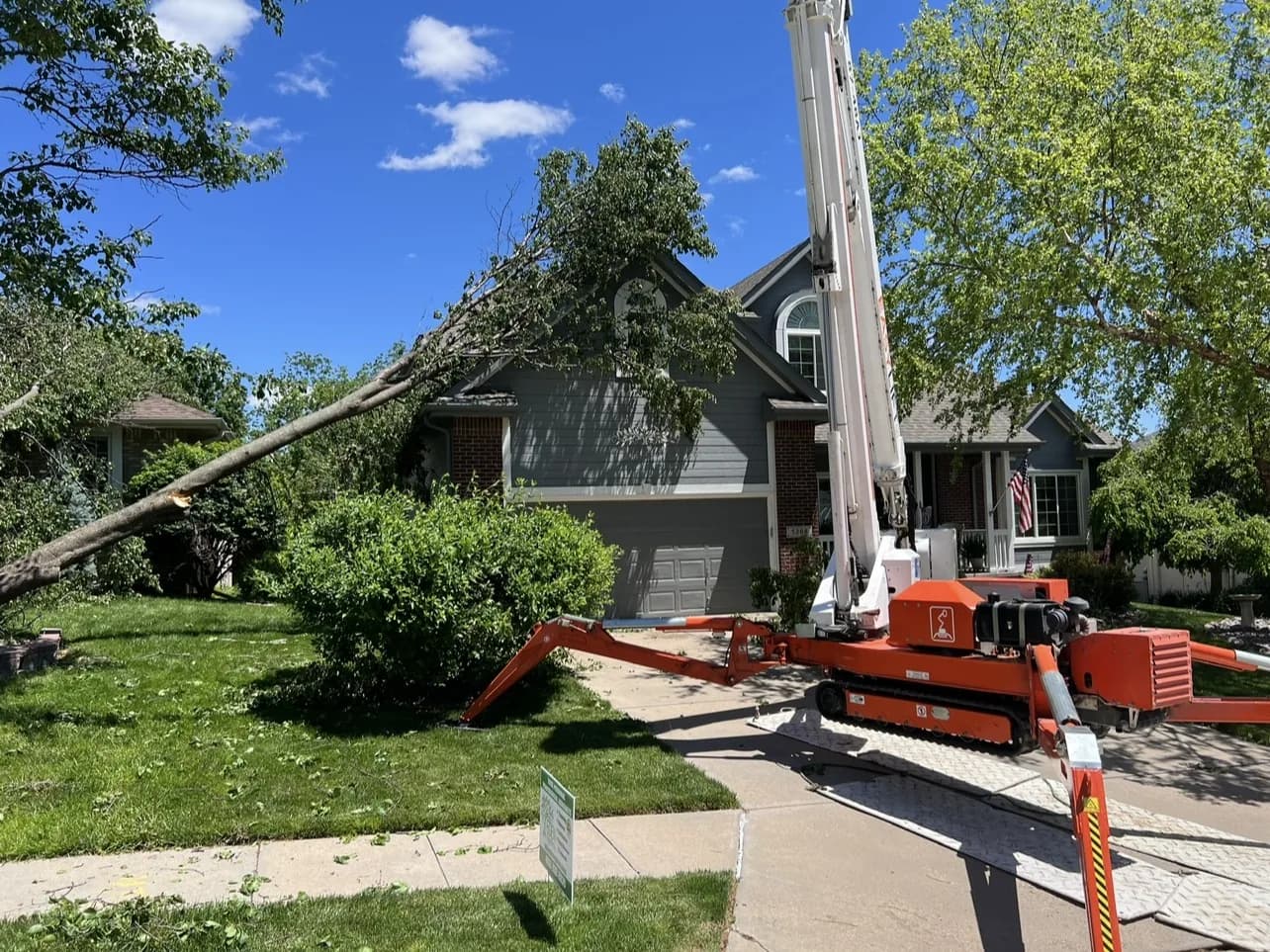
A limb reaching across the roof
Scraping in the wind, loading with ice in January. Getting it off the house is rigging in miniature: controlled pieces on a rope, not one swing onto the ridge cap.
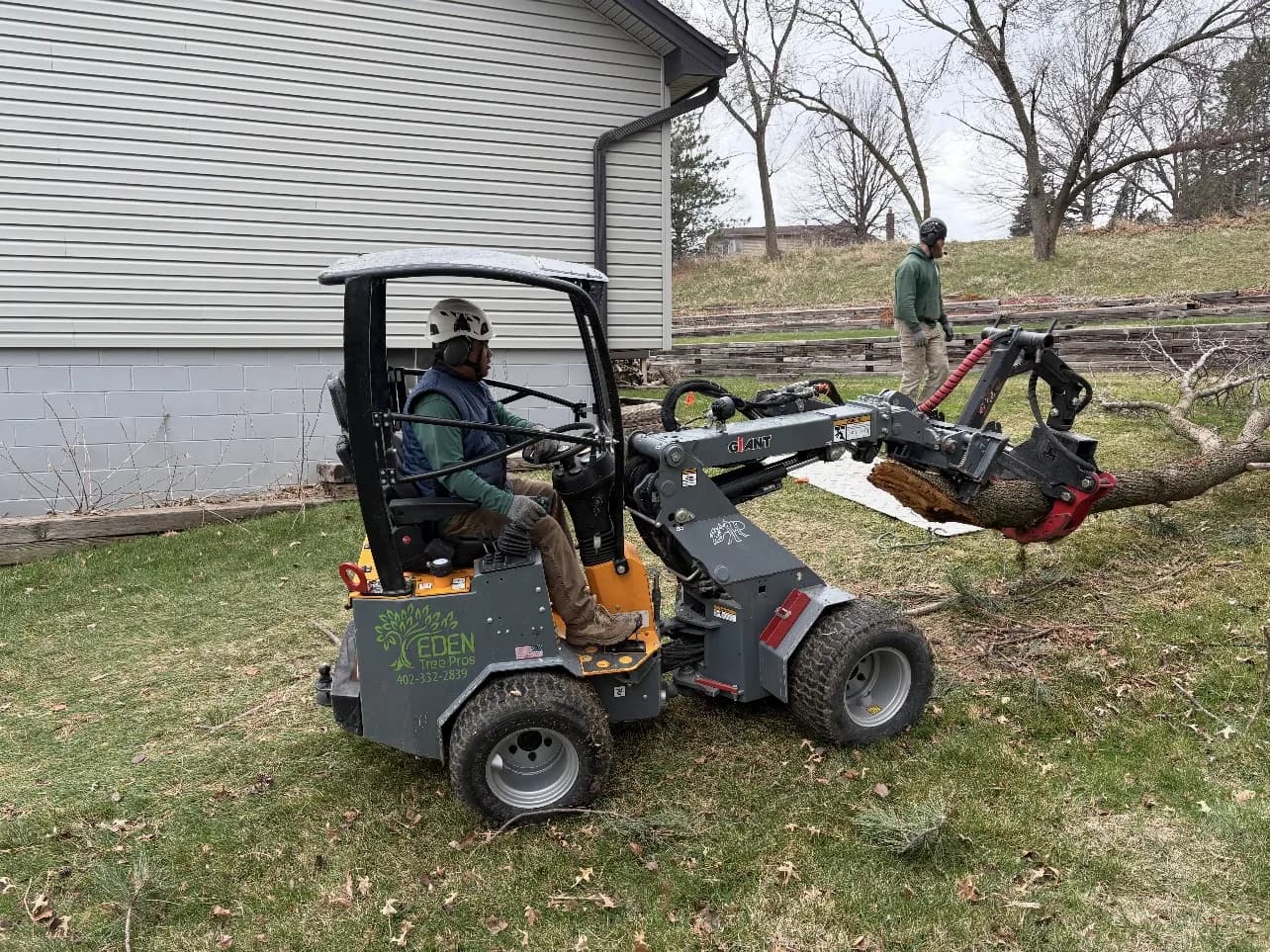
“It's just one limb” is how most of our repair stories start — a ladder, a chainsaw, gravity. A limb does not fall where you hope. It falls where it is pointed, unless somebody ropes it.
The one over the house
Scraping in the wind, loading with ice in January. Getting it off the house is rigging in miniature: controlled pieces on a rope, not one swing onto the ridge cap.
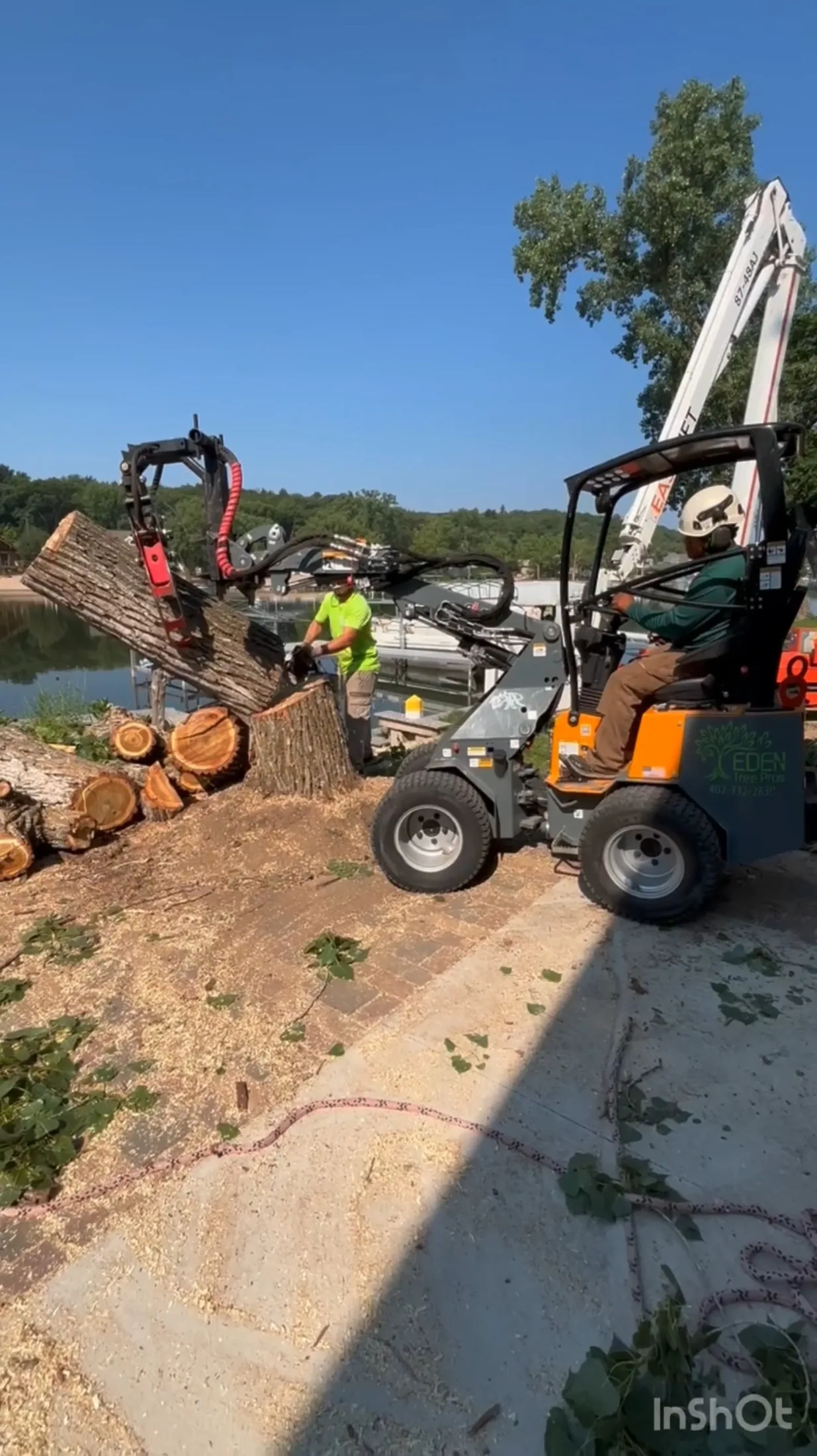
The one that already broke
A limb that split but has not finished falling is the most dangerous wood on the property. Nobody should stand under it with a pole saw. It gets roped and brought down on purpose.
The one on the line
Nebraska lets you trim a neighbor's branches back to the property line at your own expense. Legal is not the same as good: a flat cut at an imaginary line can wound the tree and sour the fence. The better way starts with a conversation.
One limb, one photo, one straight answer — most limb quotes start from a text.
Step by step
The landing gets decided first
Over open lawn, a limb may simply be dropped in sections. Over a roof or fence, it gets rigged — roped and lowered under control.
Big limbs come down in pieces
A limb heavy enough to matter is never taken in one cut. Weight comes off from the tip inward, so no piece outruns the rigging.
The last cut lands at the collar
The branch collar — the swollen ring where limb meets trunk — is the tree's built-in wound closure. Cut just outside it and the tree seals. Cut flush or leave a stub, and decay has an open door.
The weight comes off in the right order
An undercut before the top cut, every time, so the falling section cannot peel bark down the trunk — the tearing wound that turns a clean job into permanent damage.
The evidence gets erased
Wood hauled or bucked to firewood, brush chipped, sawdust raked. A one-limb job should leave one absence, not a mess.
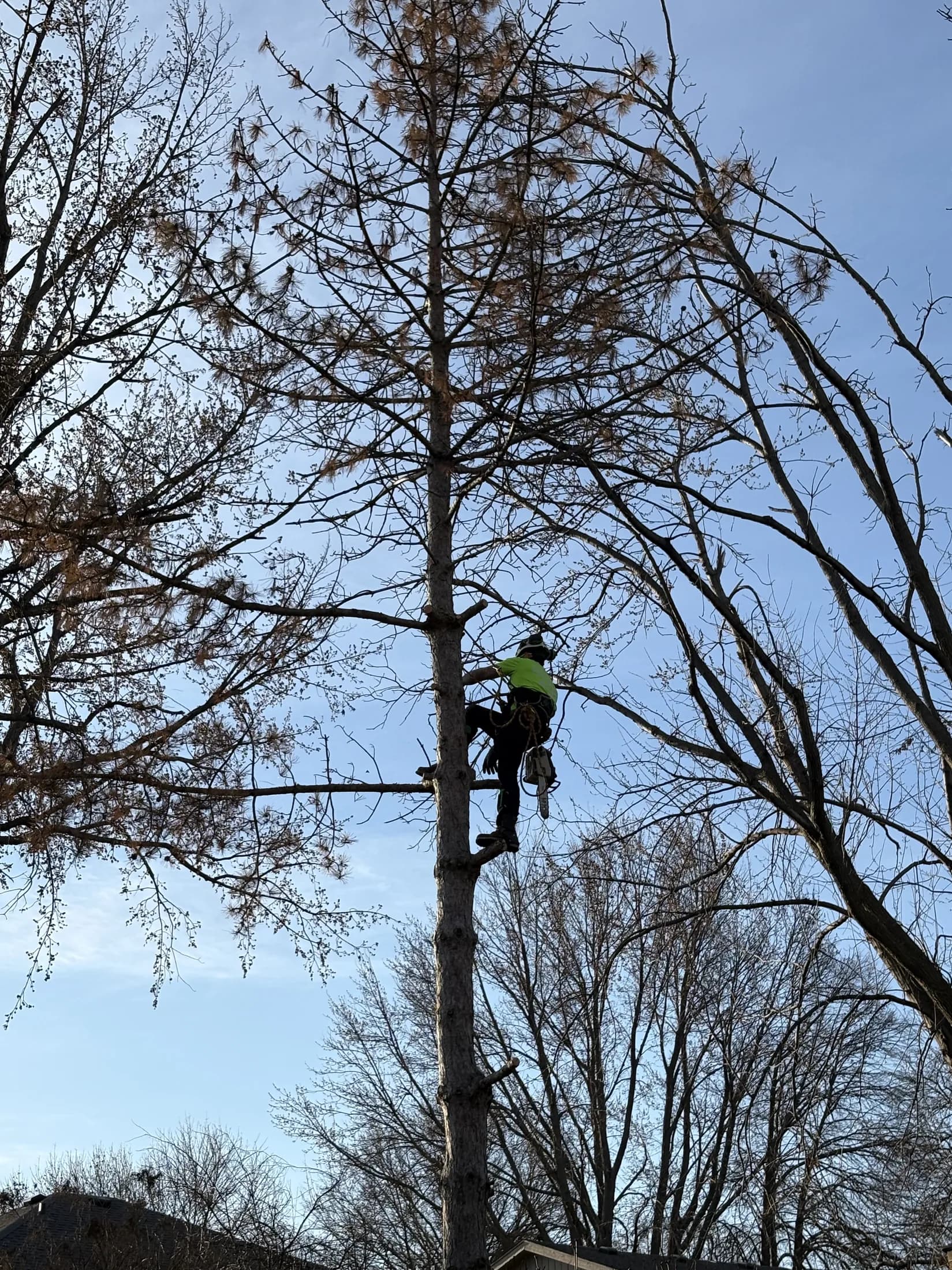
One limb, roped down properly
The small end of tree work
A climber or bucket, rigging where anything is underneath, a collar cut, cleanup. Small invoice, finished in hours.
The ladder-and-chainsaw Saturday
Free until it very much is not
A limb under load moves when cut — physics, not skill. Chainsaws, ladders and moving wood fill emergency rooms, and the limb still lands where it was pointed.
Waiting for the limb to choose its moment
$1,000 – $8,000 if the tree follows
A cracked hanger takes the gutter or windshield on its way down — and the tear-out wound can doom the tree, turning one limb into a removal at our published range.
We quote limb work flat, in writing, usually from a photo plus a look on arrival. Storm hangers over structures move to the front of the line.
An honest read on whether the limb needs to come off — some need shortening
Rigging and controlled lowering wherever anything sits underneath
Final cut at the branch collar to ANSI A300, so the tree can close the wound
Undercuts on every section, so nothing peels bark down the trunk
Wood hauled, or bucked and stacked as firewood
Chipping, raking and a clean site before the truck leaves
Limbs in contact with electrical lines — the utility handles those; we never freelance around live wire
Roof and gutter repair from damage that predates us — we photograph what we find on arrival
Settling property-line disputes; we work to a surveyed line — the legal question is yours
Full-crown pruning discovered mid-job — quoted as its own work, not smuggled onto the invoice
One limb gets one written price before anyone climbs.
“We had Eden Tree Pros come out to trim our trees. DJ and his crew did a great job not only doing the work required but taking the time to explain what they were doing and why.”
Nebraska law lets you trim branches back to the property line at your own expense, so yes. But the legal minimum is often bad arboriculture: a cut at an imaginary line leaves a decaying stub on a tree your neighbor owns. We place cuts where the tree can close them and, whenever possible, knock on the neighbor's door first. Conversation beats a tape measure.
Treat it as urgent — a hanger has already failed and is waiting on wind or gravity, and the people most often hurt by them tried to pull them down by hand. Keep everyone out from under it and call. Hangers over patios and driveways jump the schedule.
A small limb reachable from the ground, with nothing underneath, is within a careful homeowner's reach — undercut first, cut just outside the collar. The line: anything requiring a ladder, over a structure, or under tension. A loaded limb moves the moment the saw frees it.
You are paying for a climber or bucket to reach it safely, rigging so it lands on a rope instead of your roof, insurance, a cut the tree can close, and the hauling. Small by tree-work standards — but it cannot be trivial and be done right.
A proper collar cut is a wound the tree is built to seal, and one limb is well within a healthy tree's tolerance. What hurts trees is bad placement: flush cuts, stubs and bark tears that open the trunk to decay. Cut placement, not sawing, is the skill you are hiring.
Whichever the access allows. A bucket is faster where a truck can park under the work; a climber reaches what a bucket cannot, including backyard trees behind fences. The rigging and the cut are the same either way.
Not if it is in contact with or close to energized line — that is the utility's work. We will tell you which side of that line your limb falls on, and handle the safe side once the utility is done.
Free and no pressure
Every estimate is free and comes in writing before anything is booked.
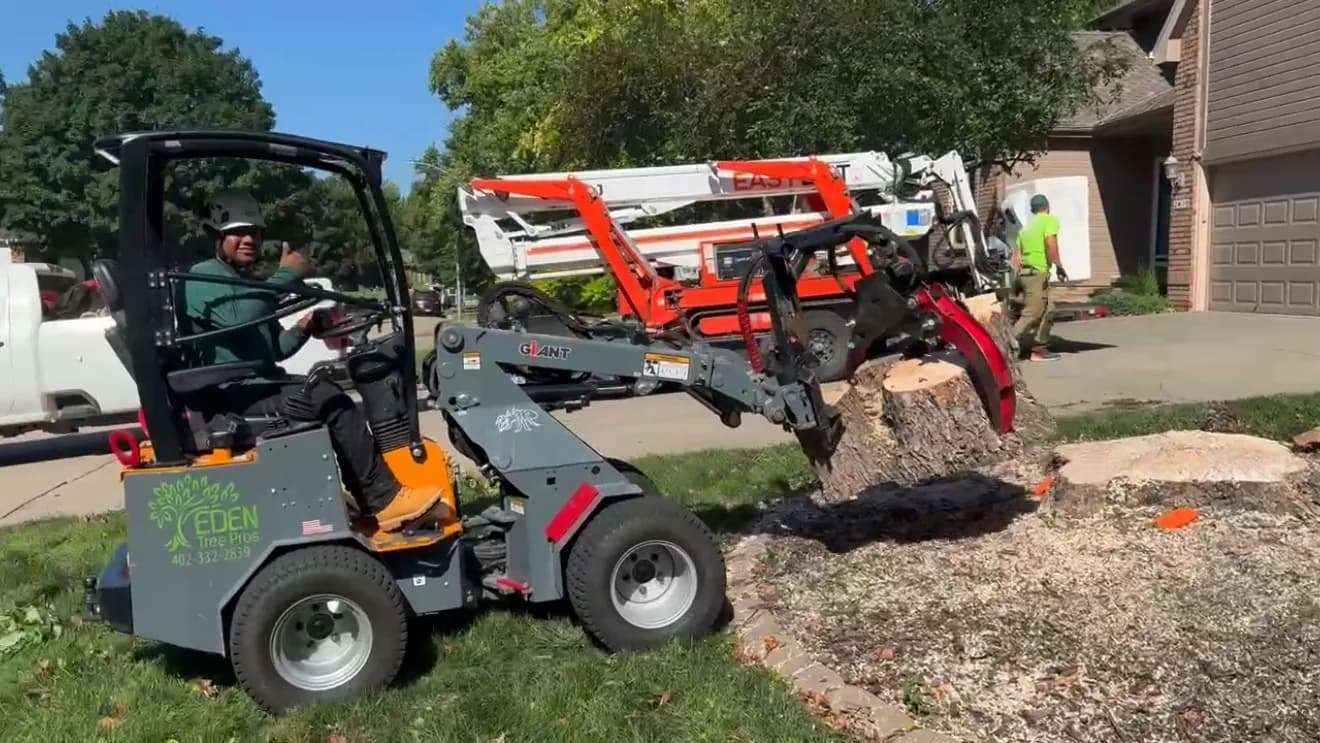
The physics of a limb do not scale down politely. A branch eight inches thick outweighs the people under it, carries tension you cannot see, and the moment a saw frees it goes where it was pointed — through the fence, down the ladder. The rope, the undercut and the collar cut are not ceremony. They are the difference.
The fence-line limb deserves its own honesty. Nebraska law lets you trim a neighbor's branches to your line at your own cost, and we will do that work when you ask. But we place the cuts where the tree can close them — at a lateral or the collar, not a surveyor's abstraction — because a legal cut that starts decay in someone else's tree is a poor trade. We usually suggest knocking on the neighbor's door first; conversation has solved more fence lines than the statute.
Here is the part that costs us something to say: we like small jobs, and not every company does. A one-limb call is how most of our longest customer relationships started. If your job is one limb, we quote one limb, do it properly, and go home. If the limb is telling a bigger story — decay at the union, a crown of the same weakness — we say that too, separately, not as a surprise on the invoice.