

An Elm Going Down Fast in Early Summer
A branch high in the crown yellows and wilts in June while the rest of the elm is green. Two weeks later there are three more. That speed, in that species, at that time of year, is Dutch elm disease.
Free Estimate within 24 Hours
How to Tell Dutch Elm Disease From Other Causes of a Wilting Elm
Get it identified free
It is Dutch elm disease if
It starts high, it starts early, and it moves in weeks
The flag is in the upper crown
Beetles feed in twig crotches near the top of a healthy elm, so the first symptoms appear high.
It showed up in late spring or early summer
Infections carried by beetles that spring produce flagging in May and June, and those move fastest.
The sapwood is streaked brown
Peel the bark off a wilted branch an inch through. Brown streaks or a broken brown ring in the outer wood confirms it.
More branches follow within weeks
This is the difference that matters. A drought flag sits still. This one adds branches while you watch.
It is something else if
It is slow, low, or the wood is clean
The whole canopy yellowed evenly
Elm yellows, drought or root damage. Even decline across a crown is a different mechanism from sectored flagging.
Leaves are chewed to lace
Elm leaf beetle. Ugly, defoliating, survivable. It does not streak the sapwood or kill a healthy elm outright.
The sapwood under a wilted branch is clean
Look at a borer, a canker or storm damage before assuming the worst about the whole tree.
The dieback has been creeping for years
Slow decline from construction damage, girdling roots or a buried collar. Dutch elm disease does not creep.
Where to Look for Dutch Elm Disease the Week You Notice It
Tree removal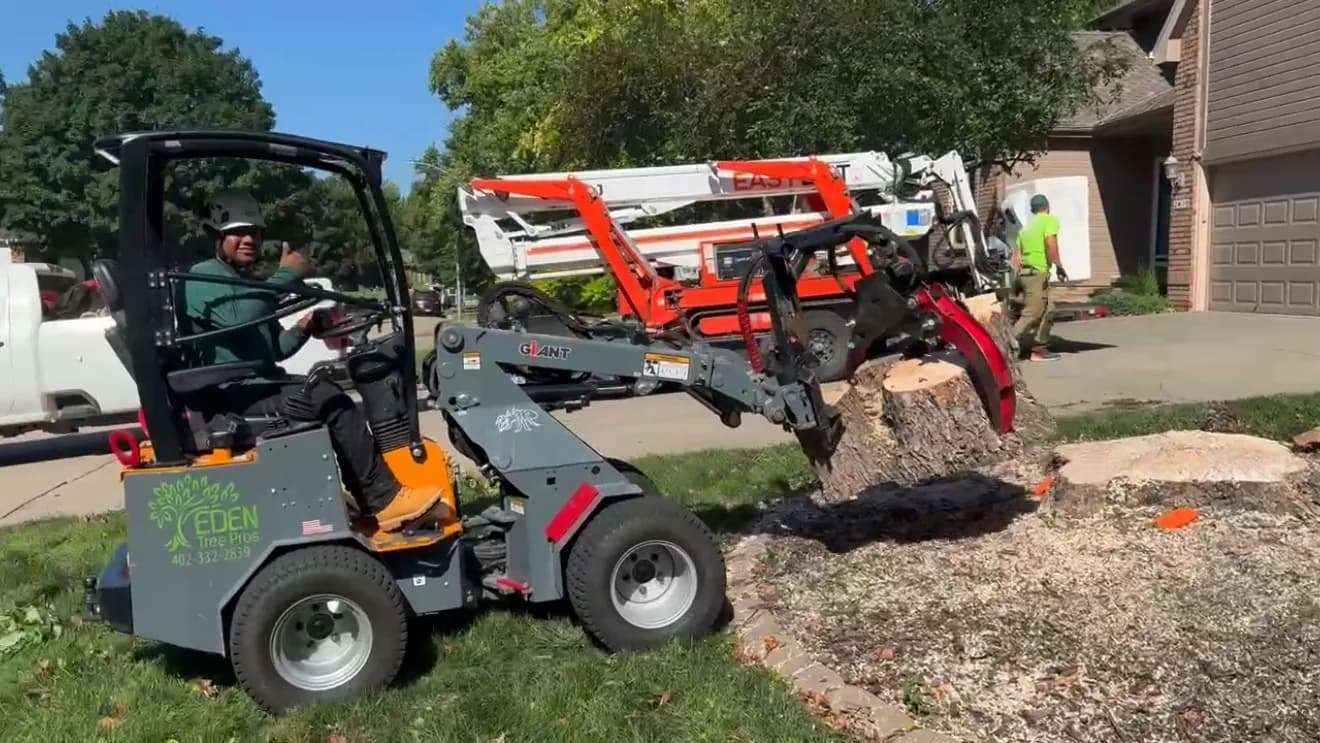
The first flagged branch
Photograph it with a date. How far it spreads in fourteen days is the most useful diagnostic there is.
Sapwood under the bark
A wilted branch an inch through, bark peeled back. Brown streaking in the outer ring confirms it in the field.
The next elm over
Within fifty feet, elms are frequently root grafted. If yours is infected, the neighbor's is the next question.
Stored elm firewood
Split elm with the bark on is a beetle nursery, and one of the commonest ways a clean block loses its elms.
Send a photo of the tree and one of the damage. An arborist will name it before anybody drives out.
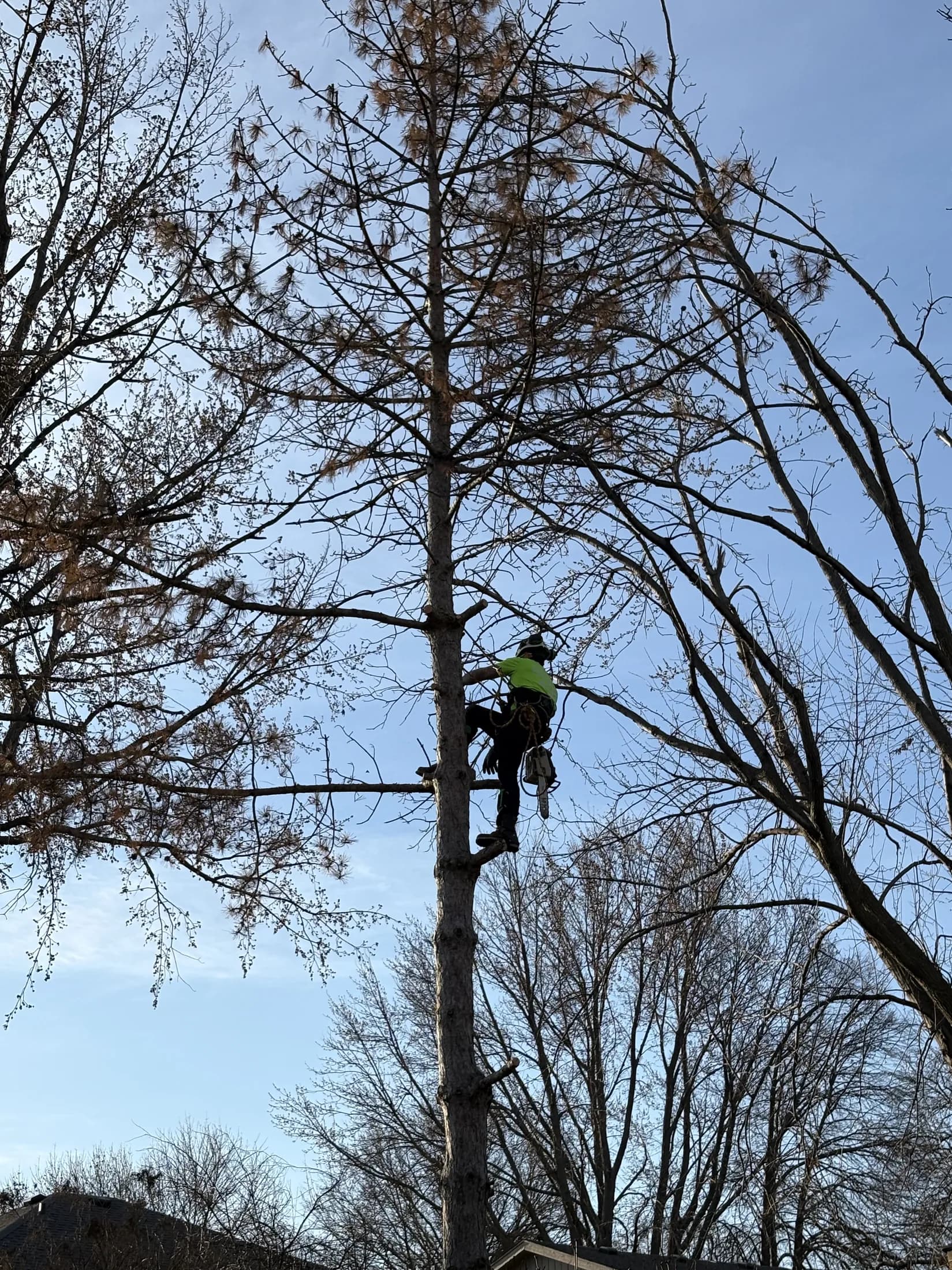
The same tree, and the street
Late spring
Beetles emerging from infected wood nearby feed in twig crotches high in a healthy elm and leave spores in the wounds.
Early summer
One branch flags in the upper crown. The homeowner assumes drought and waits to see what happens.
Midsummer
Several more branches. The fungus is in the trunk, and moving underground through root grafts into any elm in reach.
Late summer
Most of the crown is brown. The tree is now the inoculum source for the block, and beetles are breeding under its bark.
The following spring
The next elm on the street flags, usually the closest. Beetles emerge from the dead wood nobody removed over winter.
Removal is urgent not because of the dead tree but because of what emerges from it next April, and what has already traveled through the roots next door.
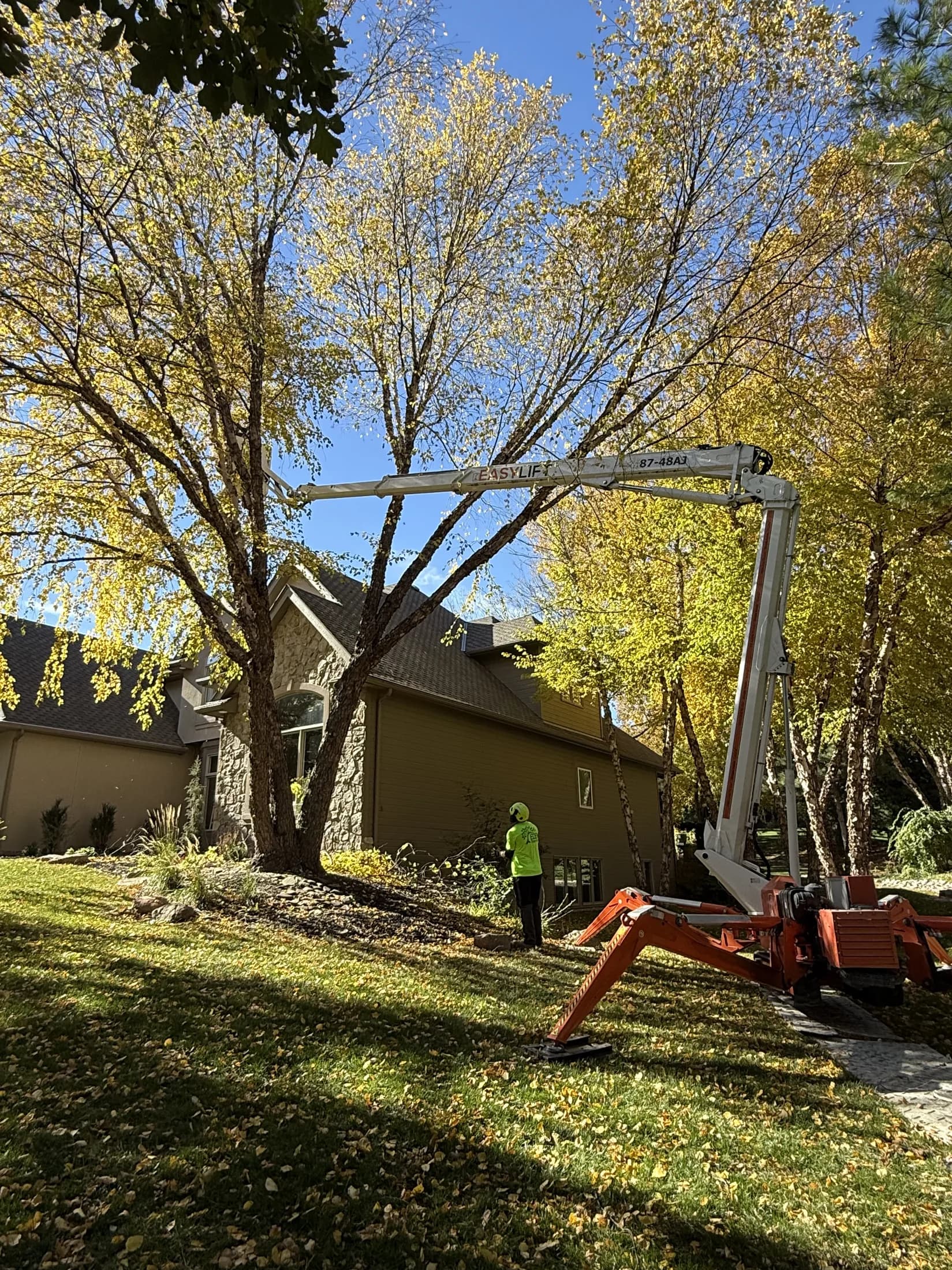
The Year-Round Calendar for Managing Dutch Elm Disease
Tree removalOne year, April through March
Beetle flight, no pruning
April
Fresh pruning wounds during beetle flight are an invitation. Healthy elms are left alone until the cold returns.
Flagging appears
May and June
Confirm it the same week. Root graft disruption between an infected tree and a healthy neighbor is still worth doing.
The disease runs
July and August
The fungus moves faster than anything can be done about it, and beetles are breeding under the bark of anything already dead.
Removal and sanitation season
September through November
Infected wood comes down and the bark is destroyed or chipped. Every dead elm left standing is next spring's problem.
Dormant, pruning and trenching
December through March
Beetles are not flying. Structural pruning on healthy elms happens now, along with any remaining sanitation.
The hard deadline is beetle emergence. Infected elm wood still standing, or stacked with bark on, when the weather warms puts the neighborhood back at the start.
What Waiting to Address Dutch Elm Disease Really Costs
See pricing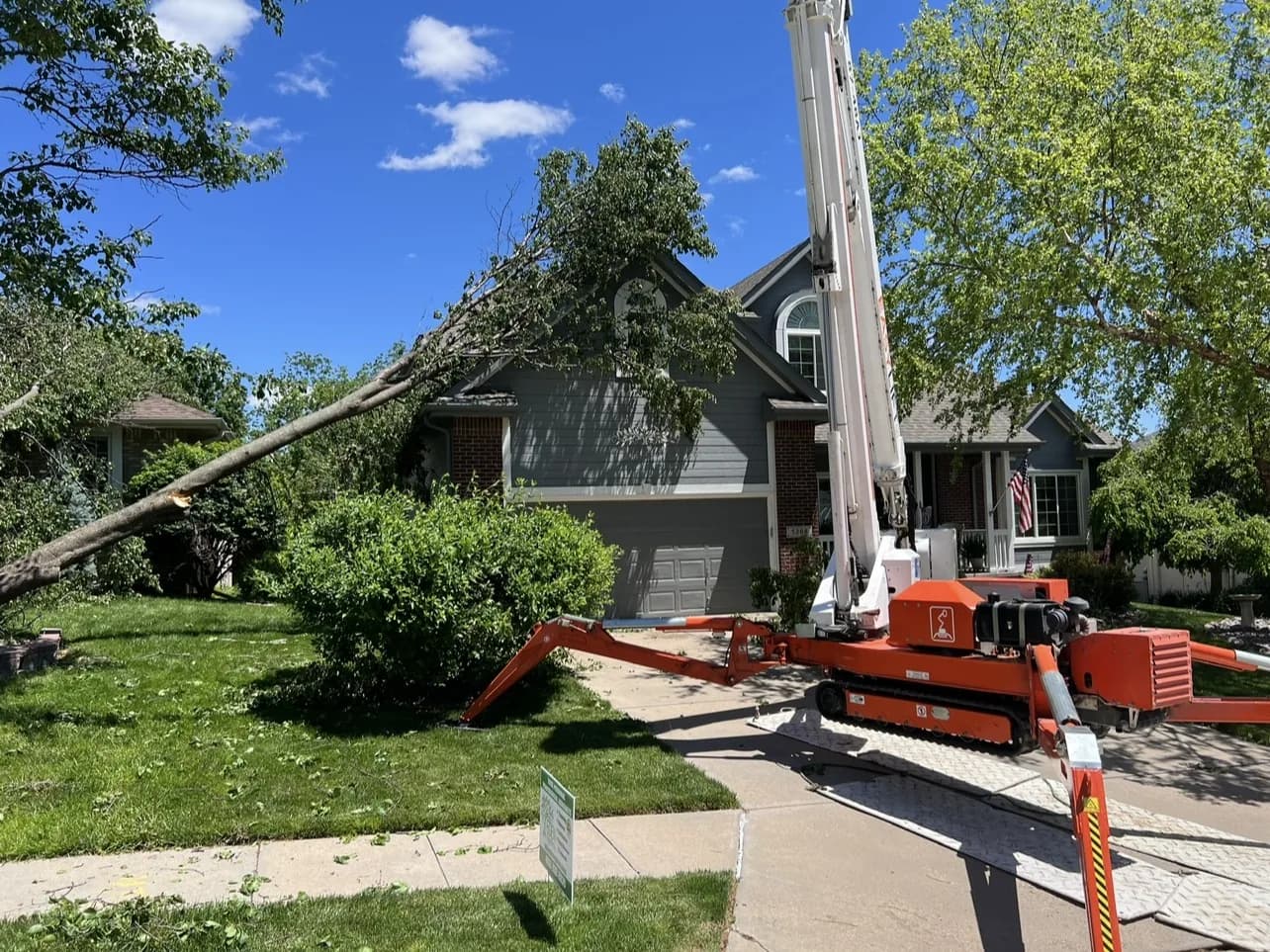
Preventive injection on a healthy elm
Routine
A fungicide injected on a cycle before any infection. Worth it on a large specimen elm, especially with infection on the block.
Trenching to cut the root grafts
One-time
A machine cut in the ground between an infected elm and a healthy one, made before removal, so the fungus cannot cross.
Removal and replanting
$1,000 – $8,000
A big elm over a house or street is at the upper end. Add stump grinding and a replacement that takes decades to fill the same sky.
Removal figures are Eden's published range and vary with size and access. Injection and trenching vary with tree size, soil, and what is buried between the trees.
“We have always used Eden Tree Pros for all of our tree trimming needs, and for iron treatments for our birch tree. We won't use anyone else. They have earned our trust.”

Common questions about Dutch elm disease
Ask us something elseHow fast does it kill an elm?
A susceptible American elm infected in spring can lose most of its crown in one season. Infections arriving later, or through the roots rather than a beetle wound, sometimes take a second year. Either way it does not give you seasons to watch.
Can you prune out the infected branch and save the tree?
Sometimes, and only if caught very early. If a single flagged branch is well out in the crown and the cut can be made far back into clean wood, it occasionally works. Once the fungus is in the trunk, cutting is money spent on a tree already lost.
What is a root graft and why does it matter?
Elms growing near each other frequently fuse their roots. The fungus travels through that connection into the neighboring tree with no beetle involved. It is why infection works along a street, and why cutting the ground between two elms before removing the sick one is worthwhile.
Do I need to talk to my neighbor?
If their elm is within fifty feet, yes, and before any removal is scheduled. Disrupting the root connection happens between the two trees, usually on somebody's property line. Two households acting together handle it far more cheaply than two jobs a year apart.
Can I keep the wood for firewood?
Not with the bark on. Beetles breed under the bark of dead elm and emerge from a woodpile in spring exactly as from a standing dead tree. Kept wood has to be debarked, chipped or burned before spring. This is one of the commonest ways a neighborhood reinfects itself.
Are the injections worth it?
On the right tree. A preventive injection, repeated on a cycle, is a genuine option for a large healthy elm, and makes most sense with a confirmed infection nearby. On a small or declining elm the arithmetic favors removal, and we will tell you which side of that line your tree is on.
Should I plant another elm?
You can, and it should be a disease-resistant selection rather than a straight American elm. Cultivars bred for resistance make excellent street trees here. Planting an unimproved American elm into a block that already lost one repeats the experiment with a known result.
Identification is free, including when the answer is that the tree needs nothing.
Related Shade Tree Symptoms and Services for Dutch Elm Disease
All tree problems
One whole limb wilted
Verticillium wilt, the other vascular disease that flags one limb.
Thinning at the top of the canopy
Crown decline, and how to tell it from a fast vascular collapse.
Tree Removal
How a large elm over a house comes down, and the sanitation afterward.
Borer Control
For the beetle side of it on other species in the yard.
Tree Risk Assessment
What a rapidly dying tree means for the roof under it.
Why Dutch Elm Disease Spreads Through Root Grafts to the Neighbor's Tree
Tree removalMost of what we treat stops at the property line. Dutch elm disease does not. Elms near each other routinely fuse their roots into one system, and the fungus uses that connection to move from a dying tree into a healthy one with no beetle, wind or weather. That is why the first question after a positive identification is not what removal costs. It is which other elms are in reach underground.
The work that follows is not glamorous and it is easy to skip. A machine cut between the two trees, deep enough to sever the grafts, made before the infected tree comes down rather than after. Prompt removal of the infected wood and destruction of the bark, because beetles breed under it and emerge next spring. A stack of elm firewood with the bark on is a nursery, and we say so to people looking forward to that wood.
There is a version of this business where the honest answer costs us the job, and this is one. Sometimes the flagging is early enough that a single well-placed cut buys the tree years, a much smaller invoice than a removal. Sometimes the elm is poor enough that injections are not worth the cycle. We would rather tell you which you have than quote the expensive option.